Why Semiconductor Fabs Need an Advanced EAP Host Integration Strategy

Introduction

Semiconductor manufacturing is one of the most complex and precision-driven industries in the world. As fabs evolve toward smart manufacturing and Industry 4.0 models, seamless communication between equipment and factory systems has become mission-critical. At the center of this transformation is the Equipment Automation Program (EAP)—a structured framework that connects process tools with MES, APC, and factory host systems.

An advanced EAP Host Integration strategy is no longer optional. It is foundational to ensuring operational stability, scalability, and long-term competitiveness. Modern fabs rely heavily on EAP in Semiconductor Manufacturing to orchestrate tool automation, manage process data, and maintain real-time communication across systems. Without a robust Semiconductor EAP Solution, equipment connectivity gaps can lead to yield loss, downtime, and integration inefficiencies.

This article explores why every fab needs a forward-looking Equipment Automation System (EAP) architecture and how strategic EAP Integration for Semiconductor Fabs enables sustainable growth.

The Role of Equipment Automation in Modern Fabs

Today’s semiconductor fabs operate thousands of process steps across hundreds of tools. Coordinating this environment requires a powerful Factory Automation EAP System capable of real-time decision-making and equipment synchronization.

A well-designed Semiconductor Equipment Automation strategy ensures:

  • Reliable communication between equipment and MES
  • Accurate process program management
  • Event-driven data collection
  • Seamless recipe downloads and uploads
  • Automated lot movement and tracking

A scalable Semiconductor Equipment Automation Platform allows fabs to standardize integration practices across tool types and generations. However, many fabs still operate with fragmented or legacy automation layers that lack a cohesive EAP Host Solutions framework.

This is where structured EAP Software for Semiconductor environments become critical. With professional EAP Integration Services, fabs can modernize host communication while maintaining compliance and operational continuity.

Why Basic Integration Is No Longer Enough

Traditional automation approaches focused only on connecting equipment to MES. But modern fabs demand far more. A true EAP Host Integration strategy goes beyond connectivity—it delivers intelligence, flexibility, and scalability.

Advanced EAP in Semiconductor Manufacturing supports:

  • Dynamic equipment state management
  • Context-aware event triggering
  • Automated exception handling
  • Integrated FDC and APC workflows
  • Real-time analytics pipelines

An optimized Equipment Automation Program (EAP) allows fabs to minimize manual intervention and reduce engineering overhead. Without structured EAP Implementation Services, incremental updates often create brittle architectures that increase risk over time.

Leading Semiconductor Automation Consulting firms recommend building a unified Semiconductor EAP Solution architecture rather than patching individual integration points. This ensures that the Equipment Automation System (EAP) grows alongside production requirements.

Enhancing Yield and Operational Stability

Yield improvement is directly tied to automation maturity. A properly integrated Factory Automation EAP System improves:

  • Recipe accuracy
  • Parameter validation
  • Alarm management
  • Data traceability
  • Equipment utilization

Through advanced EAP Integration for Semiconductor Fabs, engineers gain visibility into tool behavior and can detect anomalies earlier. A unified Semiconductor Equipment Automation Platform ensures that process deviations are captured and corrected before impacting production volume.

By working with an experienced Semiconductor Automation Company, fabs can deploy structured EAP Host Solutions that align with APC, FDC, and MES workflows. This integration strengthens the overall Semiconductor Equipment Automation backbone of the factory.

Supporting Scalability and Future Expansion

Fabs frequently add new tools, upgrade equipment generations, or expand facilities. Without a scalable Equipment Automation Program (EAP) architecture, each addition becomes a complex engineering project.

An advanced EAP Host Integration strategy ensures:

  • Standardized equipment onboarding
  • Configurable communication modules
  • Reusable integration templates
  • Reduced validation cycles
  • Faster tool qualification

A modular Equipment Automation System (EAP) simplifies expansion and reduces time-to-market for new production lines. Through structured EAP Integration Services, fabs can avoid custom-coded host logic that becomes difficult to maintain.

Professional Equipment Automation Consulting Services help define long-term integration roadmaps, ensuring the Semiconductor EAP Solution remains adaptable as technology evolves.

Enabling Data-Driven Smart Manufacturing

Modern semiconductor operations depend heavily on data. A high-performance Factory Automation EAP System acts as the communication bridge between tools and analytics platforms.

Advanced EAP in Semiconductor Manufacturing enables:

  • Automated data collection
  • Real-time event reporting
  • Integration with predictive maintenance systems
  • Centralized recipe management
  • Enhanced OEE monitoring

A mature Semiconductor Equipment Automation Platform provides consistent, structured data that feeds AI and machine learning models. Without a robust EAP Host Solutions framework, data pipelines become inconsistent and unreliable.

By engaging a specialized Fab Automation Solutions Provider, fabs can implement structured EAP Implementation Services that transform automation into a strategic data asset rather than a simple communication layer.

Risk Mitigation and Compliance

Regulatory compliance, customer audits, and internal quality standards demand stable and predictable automation systems. An advanced Equipment Automation Program (EAP) reduces risk by:

  • Standardizing communication behavior
  • Minimizing manual override errors
  • Ensuring deterministic state transitions
  • Enabling centralized configuration control

Structured EAP Integration for Semiconductor Fabs reduces the likelihood of integration-related failures during factory acceptance testing (FAT). A well-designed Semiconductor EAP Solution architecture also simplifies troubleshooting and change management.

Partnering with a trusted Semiconductor Automation Company ensures that Semiconductor Equipment Automation aligns with industry best practices and future standards.

Competitive Advantage Through Strategic EAP Planning

Fabs that treat EAP Host Integration as a strategic initiative rather than a technical afterthought gain measurable advantages:

  • Faster new tool deployment
  • Reduced downtime
  • Improved yield stability
  • Lower integration cost
  • Enhanced cross-factory standardization

An advanced Equipment Automation System (EAP) transforms the factory into a scalable, intelligent production environment. With proper EAP Software for Semiconductor, the automation layer becomes a competitive differentiator rather than an operational constraint.

Through expert Semiconductor Automation Consulting, fabs can define integration blueprints that align with long-term business objectives. Structured EAP Host Solutions ensure seamless interaction between equipment, MES, and advanced analytics platforms.

Conclusion

The future of semiconductor manufacturing depends on robust, scalable, and intelligent automation architectures. A well-implemented Equipment Automation Program (EAP) provides the foundation for operational excellence, yield optimization, and digital transformation.

An advanced EAP Host Integration strategy ensures that EAP in Semiconductor Manufacturing evolves beyond basic connectivity into a fully integrated Semiconductor Equipment Automation Platform. By investing in a modern Semiconductor EAP Solution, fabs gain stability, scalability, and a sustainable path toward smart manufacturing.

Through professional EAP Integration Services, structured EAP Implementation Services, and strategic Equipment Automation Consulting Services, semiconductor manufacturers can build a future-ready Factory Automation EAP System that supports innovation and growth.

In today’s competitive landscape, advanced Semiconductor Equipment Automation is not just an operational requirement—it is a strategic necessity.
Improving Yield with EAP Integration for Semiconductor Fabs

In semiconductor manufacturing, yield is everything. With increasingly complex processes, tighter process windows, and aggressive cost pressures, fabs must rely on advanced automation to keep variability in check. This is where the Equipment Automation System (EAP) becomes a mission-critical backbone. Effective EAP Integration for Semiconductor Fabs enables precise control, consistent data capture, and seamless interaction between factory systems and equipment. When combined with standardized automation frameworks such as SECS/GEM EAP Integration, HSMS Communication with EAP, and modern Equipment Interface (EI) with EAP, fabs gain the ability to detect issues earlier, manage recipes accurately, and reduce human error—directly contributing to higher yield.

In this blog, we’ll explore the role of EAP Host Integration, the value of a robust Semiconductor Equipment Automation Platform, and how the right Semiconductor EAP Solution transforms operational excellence and drives yield improvement. We’ll also highlight key capabilities like EAP Recipe Management Integration, EAP Alarm & Event Handling System, Equipment Data Collection via EAP, and GEM300 EAP Integration.

Why EAP Matters for Yield in Semiconductor Fabs

The Equipment Automation System (EAP) plays a crucial role in ensuring that every wafer processed on the tool meets stringent specifications. By acting as the bridge between equipment and higher-level factory systems—MES, APC, RMS—the EAP enforces process discipline, consistency, and traceability.

In most fabs, yield losses originate from process drift, recipe mismatch, operator error, missed alarms, or incomplete data capture. The Equipment Automation Program (EAP) solves these issues by providing:

  • Deterministic recipe management
  • Automated equipment state control
  • Real-time event and alarm handling
  • Standardized EAP Host Communication Architecture
  • Unified Equipment Data Collection via EAP across all tools

With technologies like SECS/GEM based EAP Integration, the EAP can communicate bi-directionally with tools regardless of vendor-specific differences. This standardization is essential for delivering a scalable Factory Automation EAP System across a heterogeneous fab.

As fabs push for aggressive yield targets, automation becomes not just beneficial—but indispensable.

Core Capabilities of a Semiconductor EAP Solution

A high-quality Semiconductor Equipment Automation Platform includes several core modules that directly influence yield improvement.

Real-Time Monitoring and Data Integrity

Consistent data capture is fundamental to understanding tool performance and process health. EAP Real-Time Equipment Monitoring ensures that equipment state changes, SVID values, CEIDs, and alarms are captured with no delay.

  • Detect process excursions early
  • Enable fast corrective action
  • Feed clean data to downstream analytics

This is particularly powerful when combined with HSMS Communication with EAP, which ensures secure, high-speed communication across the fab.

Recipe Management and Consistency

Recipe inconsistencies are a major cause of yield loss. With EAP Recipe Management Integration, the system can:

  • Validate recipes before execution
  • Ensure correct version selection
  • Prevent unqualified operator edits
  • Maintain traceability of recipe changes

For fabs operating with GEM300 standards, GEM300 EAP Integration allows precise management of Process Jobs (PJs) and Control Jobs (CJs), ensuring compliance with strict process flows.

Alarm & Event Handling

The EAP Alarm & Event Handling System helps capture and categorize every tool condition that may impact yield. This includes:

  • Real-time alarm notifications
  • Automatic lot hold on critical events
  • Correlation of alarms with process data
  • Logging for root-cause analysis

With standardized SECS/GEM EAP Integration, alarm handling becomes consistent across all tools, making fab-wide monitoring significantly easier.

Automated Equipment Control

The EAP Process Control System delivers deterministic control over equipment actions, reducing operator error and enforcing proper process flow. It enables:

  • Automated lot start/stop
  • Equipment state transitions
  • Wafer/lot validation checks
  • Enforcement of routing logic

This automation directly reduces misprocessing and unplanned rework.

Standardized Equipment Interface

Modern fabs require a unified way to interact with different types of tools. The Equipment Interface (EI) with EAP ensures that even legacy tools can be integrated into a consistent automation framework.

Key benefits include:

  • Vendor-neutral integration
  • Support for both GEM and non-GEM tools
  • Compatibility with SEMI standards
  • Reduced integration time for new tools

Together, these modules form the backbone of a scalable Semiconductor EAP Solution.

How EAP Integration Improves Yield

Yield improvement is driven by the EAP’s ability to eliminate variability and ensure consistent execution across all tools and operations. Let’s look at how EAP Host Solutions accomplish this.

Eliminating Recipe Errors

Recipe mismatches can cause catastrophic wafer scrap. With EAP Recipe Management Integration, the EAP validates recipes before processing begins and ensures that the correct version is always used.

Reducing Human Dependence

Manual operation introduces variability. Automated control via the Factory Automation EAP System ensures the process follows tightly defined sequences—reducing operator error and improving yield predictability.

Consistent Data Capture for Yield Analysis

Yield improvement relies on complete and accurate data. Equipment Data Collection via EAP ensures high-resolution, contextualized equipment data is always available for root cause analysis and SPC.

Faster Response to Equipment Issues

The EAP Alarm & Event Handling System enables instant detection and automated responses to tool anomalies—preventing further damage or misprocessing.

Process Window Management

With real-time monitoring and robust EAP Host Communication Architecture, fabs can track process drift and intervene sooner, preventing yield excursions.

SECS/GEM EAP Integration: The Automation Standard for Fabs

Modern fabs depend heavily on SECS/GEM EAP Integration because it offers:

  • Standardized communication
  • Vendor-neutral interaction
  • Comprehensive event & variable models
  • Seamless HSMS-based communication
  • High scalability in large fabs

For front-end fabs, GEM300 EAP Integration ensures wafer-level tracking, carrier management, and process job orchestration with SEMI compliance.

This combination forms the backbone of robust EAP Host Integration that supports all major fab processes.

Choosing the Right EAP Host Solutions for Yield Improvement

When selecting or upgrading a Semiconductor Equipment Automation Platform, fabs should consider the following:

✔ Robust HSMS/SECS/GEM support
Essential for modern equipment communication and long-term scalability.

✔ Advanced recipe management
Must handle version control, validation, upload/download, and traceability.

✔ Real-time monitoring dashboards
Critical for detecting drift and anomalies early.

✔ Comprehensive alarm & event management
Enables proactive intervention to protect yield.

✔ Support for legacy tools
Necessary for brownfield fabs with mixed-vintage equipment.

✔ High configurability
Fabs change frequently—your EAP should adapt without custom code every time.

✔ Proven EAP Host Integration experience
A reliable partner can accelerate roll-out, reduce risk, and ensure compliance.

Conclusion

The semiconductor industry demands absolute precision, consistency, and real-time visibility. A high-performance Equipment Automation System (EAP) provides exactly that. By enforcing recipe discipline, automating equipment actions, capturing complete and accurate data, and standardizing communication via SECS/GEM EAP Integration, fabs significantly reduce variability—the single biggest driver of yield loss.

From EAP Host Integration to EAP Real-Time Equipment Monitoring, recipe control, alarm management, and HSMS Communication with EAP, every layer of the automation stack contributes to a more intelligent, stable, and high-yield fab.

As the industry moves toward increasingly advanced nodes and complex manufacturing flows, a scalable Semiconductor EAP Solution is not just an automation tool—it’s a competitive advantage. Through robust EAP Integration for Semiconductor Fabs, fabs can unlock substantial improvements in yield, throughput, and operational efficiency.

A future-ready Factory Automation EAP System forms the backbone of next-generation fabs—and investing in the right integration strategy today creates the foundation for long-term manufacturing excellence.

Hire SECS/GEM Developers to Streamline Semiconductor Operations

Summary

  • Strategic Growth: Global semiconductor equipment sales reached $100 billion in 2024, necessitating advanced automation.
  • Operational Efficiency: Implementing SECS/GEM protocols reduces manual errors and improves tool-to-host communication.
  • Expert Integration: Professional developers handle complex GEM300 standards and HSMS configurations.
  • Scalability: Custom integration services ensure manufacturing execution systems (MES) communicate flawlessly with diverse hardware.
  • Reduced Downtime: Specialist consultants identify bottlenecks in data transmission before they cause production stalls.

Introduction

According to SEMI (2024), global semiconductor manufacturing equipment sales reached $100 billion, reflecting a massive push for expanded production capacity worldwide. As fabs scale, the complexity of equipment communication scales with them. To manage this growth, many industry leaders choose to hire SECS/GEM developers who possess the technical depth to bridge the gap between physical machinery and digital control systems. This specialized expertise ensures that every wafer processed is tracked, every alarm is logged, and every recipe is managed with absolute precision.

Effective semiconductor manufacturing relies on more than sharp lasers and clean rooms. It requires a robust communication backbone. The Semiconductor Equipment Communication Standard (SECS) and Generic Equipment Model (GEM) provide the language for this dialogue. Without a team of semiconductor automation engineers, a fab risks becoming a collection of “dark” machines that fail to share critical performance data.

Integrating these protocols is a task that demands a high level of specialization. Modern manufacturing environments require a seamless flow of information to maintain high yield rates. By bringing in dedicated talent, companies can avoid the pitfalls of generic software development and focus on industry-specific standards that govern the world of microchip production.

The Vital Role of Communication Protocols in Modern Fabs

The semiconductor industry runs on data. Every second, sensors report temperatures, pressures, and gas flow rates. SECS/GEM acts as the universal translator. It allows a Manufacturing Execution System (MES) to tell a tool what to do and allows the tool to report back its status. If the translation fails, production grinds to a halt. This is where SECS/GEM integration services become indispensable. They provide the connective tissue for the entire smart factory ecosystem.

Understanding SECS-II and HSMS

SECS-II (E5) defines the structure of the messages exchanged between the equipment and the host. It organizes data into streams and functions. However, the physical way these messages travel has evolved. High-Speed SECS Message Services (HSMS/E37) has largely replaced the older serial-based SECS-I. Expert developers ensure that these high-speed connections remain stable even under the heavy data loads of a high-volume manufacturing facility.

The GEM Layer: Beyond Basic Messages

While SECS-II provides the vocabulary, GEM (E30) provides the grammar. It defines how the equipment should behave. A tool must follow a specific state machine moving from “Idle” to “Executing” to “Completed.” When you hire SECS/GEM developers, they program these state models so the host always knows exactly what a tool is doing. This transparency is vital for calculating Overall Equipment Effectiveness (OEE).

Why You Need GEM300 Experts for Advanced Manufacturing

As the industry moved to 300mm wafers, the complexity of automation exploded. This shift introduced a suite of standards known as GEM300. These include E39 (Object Services), E40 (Process Management), and E87 (Carrier Management). Handling 300mm FOUPs (Front Opening Unified Pods) requires a level of precision that manual operations cannot match.

Managing Carrier Handoffs with E87

The E87 standard governs how carriers move in and out of a tool. It ensures the right material arrives at the right time. Mistakes here lead to broken wafers or, worse, cross-contamination of batches. GEM300 experts specialize in these specific handoffs, ensuring that the software correctly identifies every carrier ID and slot map before a single robotic arm moves.

Process and Slot Management

Standards like E40 and E94 manage the actual processing jobs. They define which recipe to use and which wafers within a carrier need processing. Have you ever considered how a machine knows to skip a dummy wafer while processing a prime wafer? That logic is baked into the GEM300 implementation. Specialists in this field ensure that these complex instructions are executed without a hitch.

The Business Case for Factory Automation Developers

Investing in factory automation developers is a move toward long-term cost reduction. While the initial setup of a fully automated line is significant, the reduction in human error pays dividends. Automated systems never get tired, they never misread a recipe, and they never forget to log a maintenance alarm.

Data Collection and Analytics

Modern fabs are essentially giant data centers that happen to make chips. According to McKinsey (2023), AI-driven analytics in semiconductor manufacturing can improve yields by up to 10%. However, AI needs clean, structured data. SECS/GEM provides that structure. By hiring specialists, you ensure that the data flowing into your “Big Data” lake is accurate and timestamped correctly.

Reducing Time-to-Market for OEMs

For Original Equipment Manufacturers (OEMs), getting a new tool into a fab requires meeting strict compliance standards. If a tool speaks a broken version of SECS/GEM, the fab will refuse to buy it. Specialized SECS/GEM consulting services help OEMs build compliant interfaces from the ground up, shortening the validation phase and getting the equipment onto the production floor faster.

Technical Challenges in SECS/GEM Implementation

Why is this so difficult? Unlike standard web development, SECS/GEM involves real-time constraints and hardware interfacing. If a message is delayed by a few milliseconds, it might trigger a safety interlock that shuts down the entire machine.

Message Congestion and Latency

In a busy fab, thousands of messages fly across the network every second. If the equipment software is poorly written, it might struggle to keep up. This leads to “timeouts,” where the host thinks the machine is dead because it didn’t respond fast enough. Experienced developers optimize the message-handling loops to ensure the software remains responsive under heavy load.

Handling Legacy Hardware

Many fabs still run equipment that is twenty years old. These machines might use SECS-I (RS-232 serial) rather than Ethernet. Integrating these “vintage” tools into a modern, cloud-based MES is a significant hurdle. Consultants often use SECS/GEM gateways or custom middleware to bridge this generational gap.

Key Skills to Look for When Hiring

If you are looking to build a team, what should you look for? It is a unique blend of software engineering and industrial automation knowledge.

Proficiency in C#, C++, or Java

Most SECS/GEM drivers are written in these languages. A candidate needs to understand memory management and multi-threading. Since the communication software often runs as a background service, it must be incredibly stable.

Deep Knowledge of SEMI Standards

A developer who knows “some” SECS/GEM is dangerous. You need someone who has read the SEMI manuals cover-to-cover. They should be familiar with:

  • E5: SECS-II Message Content
  • E30: Generic Model for Equipment Communication (GEM)
  • E37: High-Speed SECS Message Services (HSMS)
  • E10: Equipment Reliability, Availability, and Maintainability (RAM)

The Future: EDA and Interface A

While SECS/GEM remains the gold standard, a newer companion has emerged: Equipment Data Acquisition (EDA), also known as Interface A. According to Gartner (2023), the demand for high-frequency data collection is pushing fabs toward hybrid models.

EDA runs parallel to SECS/GEM. While GEM is for control (telling the machine to start), EDA is for massive data collection (sampling a sensor every 10 milliseconds). Hiring developers who understand both protocols allows a fab to maintain control while also feeding advanced machine learning models.

Common Pitfalls in SECS/GEM Projects

One major mistake is treating SECS/GEM integration as a “one-off” task. In reality, it is an ongoing process of refinement. As recipes change and new sensors are added, the GEM interface must evolve.

Inadequate Testing

Testing a SECS/GEM interface requires specialized “host simulators.” A developer might think their code works, but they haven’t tested how it reacts when the network drops or when the host sends a malformed message. Experts use robust simulation suites to “stress test” the interface before it ever touches a real wafer.

Ignoring Documentation

In the world of factory automation, documentation is as important as the code. If the “GEM Manual” for a tool is poorly written, the MES team will struggle to integrate it. Top-tier SECS/GEM integration services include the creation of clear, SEMI-compliant documentation as part of their package.

Choosing SECS/GEM Consulting Services

When selecting a partner, look at their track record with different equipment types. A developer who only knows metrology tools might struggle with a complex lithography track or a multi-chamber CVD system.

The “Full Stack” Automation Approach

The best consultants understand the entire stack, from the PLC (Programmable Logic Controller) level up to the ERP (Enterprise Resource Planning) level. They can see how a change in an SECS message might affect a production report three levels up.

Is it worth the investment? Considering that a single hour of downtime in a leading-edge fab can cost upwards of $1 million (Source: Industry average estimate, 2024), the answer is a resounding yes. Precision in communication is the only way to safeguard those margins.

Conclusion

The path to a fully automated, high-yield fab is paved with reliable data. To stay competitive in an era of unprecedented demand, you must hire SECS/GEM developers who can turn complex hardware into a cohesive, communicative system. By investing in professional SECS/GEM integration services, you protect your equipment investments and ensure that your production line is ready for the future of smart manufacturing.

Contact Us Today

Hire Expert SECS/GEM Developers for Your Automation Projects

MES SECS/GEM Integration for Semiconductor Fabs

In modern fabs, competitive advantage is increasingly determined by how quickly and accurately operational data can be collected, contextualized, and acted upon. That’s why MES SECS/GEM Integration has become a strategic imperative: it bridges the gap between manufacturing execution systems (MES) and tool controllers, enabling reliable, automated, real-time MES data collection using SECS/GEM. Many facilities still struggle with inconsistent equipment connectivity, slow data latency, and costly custom interfaces. By standardizing SECS/GEM for MES, fabs can improve utilization, traceability, and responsiveness—without reinventing the wheel per tool. In this post, we’ll explore the value of SECS/GEM MES Communication, common pitfalls, and architectural patterns that make SECS/GEM Integration with MES scalable across a heterogeneous toolset, from legacy to GEM300-compliant equipment. We’ll also cover SECS/GEM data mapping for MES systems, SECS/GEM host implementation for MES, and how to measure the impact—such as improving OEE with MES SECS/GEM integration—with practical guidance for the Best SECS/GEM integration solution for MES.

Why MES SECS/GEM Integration Matters Now

Semiconductor manufacturing demands precision and repeatability at scale. Yet, many fabs face fragmented data pipelines: some tools emit logs without structure, others rely on vendor-specific APIs, and legacy equipment lacks modern interfaces. SECS/GEM Equipment to MES Integration standardizes the communication layer so MES can interact with tools in a consistent manner—issuing commands, subscribing to events, collecting parameters, and enforcing process states. With MES and SECS/GEM Communication Protocol, the MES becomes the orchestrator of lot movement, recipe enforcement, alarms, and performance tracking.

Two megatrends make Semiconductor MES SECS/GEM non-negotiable. First, product complexity is increasing (advanced nodes, heterogeneous integration, compound semiconductors), creating more recipes, more process steps, and more interlocks to manage. Second, cycle-time expectations and yield pressures require SECS/GEM Automation for MES to eliminate manual data entry and reduce variability. Done right, SECS/GEM Host MES Interface enables deterministic data flow, faster exception handling, and closed-loop control—key ingredients for Improving OEE with MES SECS/GEM integration.

Core Concepts: From Protocol to Performance

SECS/GEM for MES is more than just a protocol handshake. It’s a blueprint for robust, model-driven equipment integration:

SECS/GEM MES Communication: The SECS (SEMI E5/E37) messaging and GEM (SEMI E30) model define how the host (MES or an integration service) and equipment exchange messages for status, alarms, collection events (CEIDs), variables (SVIDs), and control commands (remote start/stop, PP select, etc.).

SECS/GEM Integration with MES: Typically realized by a host layer that translates MES business logic into SECS/GEM operations—subscribing to events (e.g., lot start, process start), retrieving data (durations, temperatures, pressures), and enforcing workflows (recipe validation, carrier movement).

GEM300 compliance for MES integration: For 300mm fabs (SEMI E84/E87/E90/E94/E116, etc.), compliance enables standardized carrier handling, substrate mapping, process program management, and equipment status modeling. Ensuring a SECS/GEM host implementation for MES that aligns with GEM300 simplifies scale-out across a 300mm line.

When these elements align, SECS/GEM Equipment to MES Integration supports a stable, scalable data backbone—meeting latency targets for real-time MES data collection using SECS/GEM while ensuring data integrity and traceability.

Architecture That Works: Patterns for Reliability and Scale

A proven architecture for SECS/GEM Based MES Integration includes four layers:

Equipment Connectivity Layer

A host (or connectivity server) maintains persistent SECS/GEM sessions, handles primary/secondary messages, manages keepalives, and buffers transient network issues. This insulates the MES from tool-level instability and ensures robust SECS/GEM MES Communication.

Semantic Mapping Layer

Here, raw CEIDs/SVIDs/ALIDs are mapped to MES domain concepts: lot start/stop, process step, recipe name, parameter snapshot, SPC tags. Configurable templates make SECS/GEM data mapping for MES systems consistent across tools and vendors, paving the way for the Best SECS/GEM integration solution for MES that minimizes custom code.

Business Logic Orchestration

The MES (or an orchestration microservice) applies context: route enforcement, recipe/version validation, material tracking, and alarm policies. It leverages SECS/GEM Host MES Interface to send commands (e.g., PPSELECT), react to alarms, and coordinate multi-equipment flows. This is the heart of SECS/GEM Integration with MES.

Data Services and Analytics

Time-series storage for high-frequency variables, event-ledgers for genealogy, and dashboards/KPIs for Improving OEE with MES SECS/GEM integration. This layer supports SPC, predictive maintenance, and anomaly detection—closing the loop from sensor to decision.

In brownfield environments, you’ll likely blend native GEM300 tools with older equipment. A good SECS/GEM host implementation for MES should offer protocol adapters and simulators, enabling staged rollout and regression-free testing of SECS/GEM Automation for MES.

Closing Real-Time Data Gaps: Practical Techniques

Fabs often experience three types of data gaps: missing events, delayed updates, and unstructured parameters. Here’s how MES SECS/GEM Integration addresses them.

Event Completeness with CEID Governance

Audit your event model: every business-critical transition (e.g., lot arrival, process start/end, wafer transfer, alarm raised/cleared) should map to a CEID subscription. Use host-side health checks to detect silent failures (e.g., re-subscribe on connection drop). This ensures SECS/GEM for MES receives the complete state machine to drive dispatching and traceability workflows.

Latency Control with Edge Buffering

Implement edge buffering at the host to queue high-frequency SVIDs and batch commits to the MES data service. This hybrid pull/push approach maintains real-time MES data collection using SECS/GEM within SLA while avoiding backpressure on the MES. It’s foundational to SECS/GEM MES Communication at scale.

Deterministic Parameter Capture

Tie parameter snapshots (SVID reads) to CEIDs (e.g., PROCESS_START, PROCESS_END) with atomic transactions. Tag each snapshot with route step, recipe version, carrier ID, and EID (equipment ID). This practice standardizes SECS/GEM data mapping for MES systems, vital for audits and SPC.

GEM300 Material Handling Discipline

Enforce GEM300 compliance for MES integration—use E87 Carrier Management and E90 Substrate Tracking to prevent ambiguous material states. Coupled with E94 Control Job and E40 Processing Management, your SECS/GEM Host MES Interface gains precise control, reducing misprocessing and boosting OEE.

Measuring Impact: OEE, Yield, and Cycle Time

Improving OEE with MES SECS/GEM integration comes from three levers:

Availability: Proactive alarm handling via SECS/GEM MES Communication reduces MTTR. With structured ALIDs and automated e-notifications, maintenance responds faster; persistent sessions mean fewer “invisible” tool downtimes.

Performance: Dispatching driven by live state (RUN/IDLE/SETUP) and queue times reduces micro-stoppages. SECS/GEM Automation for MES can auto-release lots when prerequisites are met—cutting idle and setup times.

Quality: Parameter and recipe validation at start prevents excursions; atomic SECS/GEM data mapping for MES systems improves SPC sensitivity, reducing scrap and rework.

Track leading indicators: CEID-to-business-event coverage, message round-trip time, subscription health, and parameter completeness rate. These correlate strongly with sustained gains from SECS/GEM Integration with MES and help justify continued investment in Semiconductor MES SECS/GEM maturity.

Implementation Roadmap: From Pilot to Scale

A pragmatic rollout of SECS/GEM Equipment to MES Integration follows five steps:

Baseline Assessment

Inventory tool capabilities (GEM, GEM300, custom), existing host(s), and MES APIs. Identify critical routes/steps for a pilot that will demonstrate real-time MES data collection using SECS/GEM.

Canonical Data Model

Define a standard set of business events, variables, and metadata tags. This is your foundation for SECS/GEM data mapping for MES systems and reduces future integration friction—key to the Best SECS/GEM integration solution for MES.

Host Configuration and Adapters

Stand up or enhance your SECS/GEM host implementation for MES with equipment-specific profiles. Where GEM is partial, supplement with vendor APIs temporarily—but normalize into the canonical model so the MES and SECS/GEM Communication Protocol stays consistent.

Automation Policies

Codify recipe validation, alarm reaction, and material control policies into orchestrations that exercise the SECS/GEM Host MES Interface. Include GEM300 interlocks to ensure compliance during automated carrier handling.

Pilot, Telemetry, Scale-Out

Run a multi-week pilot; instrument everything—CEID subscription health, message latency, event coverage, exception frequency. Use insights to tune subscriptions, batching, and error handling. Then scale across similar tool families to expand SECS/GEM Integration with MES systematically.

Common Pitfalls and How to Avoid Them

Assuming GEM compliance equals complete coverage

Even GEM-compliant tools may expose different CEIDs/SVIDs. Validate your needs against actual equipment dictionaries to ensure SECS/GEM MES Communication covers all business-critical events.

Underestimating legacy variability

Legacy tools might require protocol gateways or soft-sensors. Budget time for adapters while maintaining the SECS/GEM for MES canonical model to avoid one-off MES logic.

Lack of version control for mappings

Treat SECS/GEM data mapping for MES systems like code: version mappings, test changes in a sandbox with simulators, and roll forward/back safely. This is crucial for the Best SECS/GEM integration solution for MES.

No KPIs for host health

Without visibility into the host’s connection state, subscriptions, and throughput, issues fester. Build dashboards for the SECS/GEM host implementation for MES and alert on anomalies.

Selecting the Best SECS/GEM Integration Solution for MES

Look for these capabilities when evaluating platforms and partners:

GEM/GEM300 breadth: Full coverage (E30, E37, E5, E87, E90, E94, E116) to assure GEM300 compliance for MES integration.

Config-driven mapping: Low-code templates for SECS/GEM data mapping for MES systems that reduce engineering lead time.

Scalability and resilience: Horizontal scaling of sessions, persistent queues, and replay; crucial for real-time MES data collection using SECS/GEM.

Testing toolchain: Simulators, protocol analyzers, and automated regression tests for the SECS/GEM Host MES Interface.

Security and governance: Audit trails, role-based access, and encryption without sacrificing SECS/GEM MES Communication performance.

The right choice empowers SECS/GEM Automation for MES to evolve with your fab—absorbing new tools quickly and keeping the MES at the center of digital operations.

Conclusion

As fabs push for higher yields, shorter cycle times, and resilient operations, MES SECS/GEM Integration delivers a durable foundation for automation and analytics. By operationalizing SECS/GEM for MES—from event coverage and latency control to GEM300 compliance for MES integration—you eliminate data blind spots and unlock deterministic control. A robust SECS/GEM Host MES Interface, backed by consistent SECS/GEM data mapping for MES systems, transforms disparate tools into a cohesive, orchestrated line. The payoff is tangible: fewer exceptions, faster response, and Improving OEE with MES SECS/GEM integration at scale. With a structured roadmap and the Best SECS/GEM integration solution for MES, your fab can turn equipment data into real-time decisions—closing the loop between process intent and process reality through world-class SECS/GEM Integration with MES and reliable SECS/GEM MES Communication.

Strategies for Enabling SECS/GEM on Non-GEM Tools

Introduction

The semiconductor manufacturing industry relies heavily on automation, connectivity, and real-time data exchange to maintain high productivity and yield. The SECS/GEM Communication Protocol has become the global standard for enabling communication between manufacturing equipment and host systems such as MES, SCADA, and factory automation platforms. However, many fabrication plants and assembly facilities still operate older machines that lack native SECS/GEM capabilities. These legacy tools create significant barriers to automation, monitoring, and data-driven decision-making.

Implementing SECS/GEM on Non-GEM Tools has become essential for semiconductor manufacturers looking to remain competitive in the era of smart manufacturing and Industry 4.0. Organizations are increasingly focusing on ways to Enable SECS/GEM on Legacy Equipment to improve production visibility and integrate older machines into modern automation ecosystems. Through effective SECS/GEM Integration for Legacy Tools, manufacturers can extend the lifespan of valuable equipment while achieving higher efficiency and improved operational control.

This article explores proven strategies for Non-GEM Equipment SECS/GEM Enablement, the challenges involved, and best practices for successful implementation.

Understanding the Need for SECS/GEM Enablement

Modern semiconductor fabs depend on seamless SECS/GEM Equipment Communication to support automated process control, recipe management, event handling, and equipment monitoring. Without standardized connectivity, older machines operate in isolation, limiting their contribution to overall factory optimization.

Deploying SECS/GEM Retrofit Solutions allows manufacturers to modernize equipment without replacing costly hardware. By adopting SECS/GEM Legacy Equipment Integration, fabs can ensure compatibility with modern automation frameworks and achieve GEM Compliance for Semiconductor Tools.

In addition, improved SECS/GEM Host Equipment Communication enables real-time data exchange between tools and factory systems. This capability enhances production scheduling, fault detection, and equipment utilization. Through effective SECS/GEM Implementation for Older Tools, semiconductor companies can achieve improved traceability and better process monitoring while maintaining existing capital investments.

Patented Plug and Play SECSGEM Solutions for Legacy Equipment

Strategy 1: Using SECS/GEM Gateway or Middleware Solutions

One of the most practical methods for implementing SECS/GEM on Non-GEM Tools is deploying a gateway or middleware platform. These solutions act as communication bridges between legacy equipment and host automation systems.

Gateway-based SECS/GEM Integration for Legacy Tools collects equipment signals and translates them into standardized SECS/GEM messages. This approach allows manufacturers to Enable SECS/GEM on Legacy Equipment without modifying the original machine controller. Middleware solutions also support advanced SECS/GEM Data Collection Solutions, enabling automated monitoring of equipment parameters, alarms, and process events.

These platforms often include configurable mapping tools that simplify SECS/GEM Interface Implementation, ensuring compatibility with factory MES and automation systems. Gateway-based Semiconductor Equipment SECS/GEM Upgrade strategies are cost-effective and minimize operational disruptions during deployment.

Strategy 2: Controller-Level Integration and Software Customization

In some cases, legacy equipment provides programmable controllers or communication interfaces that support custom software integration. Implementing controller-level modifications enables deeper SECS/GEM Legacy Equipment Integration and supports enhanced automation capabilities.

Custom software modules can facilitate SECS/GEM Equipment Communication by extracting machine data directly from PLCs or embedded controllers. This strategy supports more comprehensive SECS/GEM Factory Automation, enabling advanced features such as recipe download, remote start/stop commands, and automated parameter adjustments.

While this method requires engineering expertise, it provides long-term benefits by ensuring full GEM Compliance for Semiconductor Tools. Customized integration also supports scalable SECS/GEM Automation Solutions, allowing equipment to evolve alongside factory automation requirements.

Strategy 3: Sensor-Based Data Acquisition for Legacy Tools

Some older machines lack communication ports or digital control systems. In such cases, manufacturers can implement sensor-based monitoring as part of their Non-GEM Equipment SECS/GEM Enablement strategy.

Industrial sensors can capture operational parameters such as temperature, pressure, vibration, and equipment status signals. These data points are processed using SECS/GEM Data Collection Solutions, enabling communication with factory host systems through standardized SECS/GEM messages.

Sensor-based SECS/GEM Retrofit Solutions provide a non-invasive method to Enable SECS/GEM on Legacy Equipment, reducing implementation risks. This approach also enhances predictive maintenance and equipment monitoring, contributing to improved production efficiency and reduced downtime. It remains a popular strategy for organizations pursuing SECS/GEM Implementation for Older Tools without altering equipment hardware.

Strategy 4: Leveraging SECS/GEM SDK and Integration Frameworks

Another effective method for implementing SECS/GEM on Non-GEM Tools involves using specialized SECS/GEM SDKs or development frameworks. These tools simplify the creation of communication interfaces and accelerate SECS/GEM Integration for Legacy Tools.

SDK-based solutions support faster SECS/GEM Interface Implementation by providing prebuilt libraries, communication templates, and configuration utilities. They enable manufacturers to Enable SECS/GEM on Legacy Equipment while ensuring compatibility with the SECS/GEM Communication Protocol.

SDK-driven SECS/GEM Automation Solutions also support flexible system customization, enabling integration with MES, SCADA, and cloud analytics platforms. These frameworks streamline Semiconductor Equipment Integration, reducing engineering complexity and deployment time.

Strategy 5: Gradual Migration and Hybrid Integration Approach

Implementing SECS/GEM Legacy Equipment Integration does not always require a complete transformation of factory infrastructure. Many semiconductor facilities adopt phased or hybrid deployment strategies to manage costs and operational risks.

A gradual Semiconductor Equipment SECS/GEM Upgrade plan allows manufacturers to prioritize critical production tools while maintaining ongoing operations. Hybrid integration models combine gateway solutions, sensor-based monitoring, and controller-level modifications to achieve comprehensive Non-GEM Equipment SECS/GEM Enablement.

This approach ensures consistent SECS/GEM Host Equipment Communication across production lines while supporting scalable factory automation. Hybrid deployment strategies also improve overall SECS/GEM Factory Automation, enabling manufacturers to transition smoothly toward fully automated manufacturing environments.

Key Challenges in Enabling SECS/GEM on Non-GEM Tools

While implementing SECS/GEM on Non-GEM Tools offers numerous advantages, manufacturers must address several challenges during deployment. Legacy equipment often lacks standardized communication protocols, making SECS/GEM Interface Implementation technically complex.

Compatibility issues, data mapping difficulties, and hardware limitations can impact SECS/GEM Equipment Communication performance. Additionally, ensuring GEM Compliance for Semiconductor Tools requires careful validation and testing to confirm that equipment supports mandatory SECS/GEM functions.

Successful SECS/GEM Retrofit Solutions require collaboration between automation engineers, equipment vendors, and integration specialists. Organizations must also invest in training and system validation to ensure reliable SECS/GEM Automation Solutions deployment.

Business Benefits of SECS/GEM Enablement

Investing in SECS/GEM Integration for Legacy Tools delivers significant operational and financial benefits. Real-time SECS/GEM Data Collection Solutions improve production visibility and enable faster decision-making. Automated SECS/GEM Host Equipment Communication enhances scheduling, fault detection, and process control.

By implementing SECS/GEM Implementation for Older Tools, semiconductor manufacturers can extend equipment lifespan while achieving modern automation standards. Comprehensive Semiconductor Equipment SECS/GEM Upgrade strategies support improved productivity, reduced downtime, and enhanced yield performance.

Additionally, effective SECS/GEM Legacy Equipment Integration strengthens overall SECS/GEM Factory Automation, helping organizations remain competitive in evolving semiconductor markets.

Conclusion

As semiconductor manufacturing continues to advance toward fully automated and data-driven operations, enabling SECS/GEM on Non-GEM Tools has become a strategic priority. Legacy equipment remains valuable but must be integrated into modern automation ecosystems to support operational efficiency and production scalability.

By adopting proven strategies such as gateway-based SECS/GEM Retrofit Solutions, controller-level integration, sensor-based monitoring, and SDK-driven SECS/GEM Automation Solutions, manufacturers can successfully Enable SECS/GEM on Legacy Equipment. These approaches ensure seamless SECS/GEM Equipment Communication, improved SECS/GEM Host Equipment Communication, and reliable Semiconductor Equipment Integration.

A well-planned SECS/GEM Implementation for Older Tools not only ensures GEM Compliance for Semiconductor Tools but also enables organizations to maximize equipment value and production performance. Ultimately, comprehensive SECS/GEM Legacy Equipment Integration supports scalable automation and prepares semiconductor facilities for the future of smart manufacturing.

Frequently Asked Questions (FAQs)

What does SECS/GEM on Non-GEM Tools mean?

SECS/GEM on Non-GEM Tools refers to enabling legacy semiconductor manufacturing equipment that does not natively support the SECS/GEM Communication Protocol to communicate with factory host systems such as MES or SCADA. This process allows older machines to participate in automated production environments and supports real-time data exchange.

Why is it important to Enable SECS/GEM on Legacy Equipment?

To Enable SECS/GEM on Legacy Equipment is important because many semiconductor factories rely on older tools that still perform critical manufacturing processes. Integrating these tools improves production visibility, supports automation, enhances equipment monitoring, and reduces manual intervention. It also extends equipment lifespan while enabling smart factory adoption.

What are the common methods used for SECS/GEM Integration for Legacy Tools?

Several strategies are used for SECS/GEM Integration for Legacy Tools, including:
Gateway or middleware solutions
Controller-level software integration
Sensor-based monitoring and data acquisition
SDK-based SECS/GEM interface development
Hybrid integration approaches
These methods help achieve Non-GEM Equipment SECS/GEM Enablement efficiently and cost-effectively.

What are SECS/GEM Retrofit Solutions?

SECS/GEM Retrofit Solutions are technologies and tools designed to upgrade older semiconductor equipment with SECS/GEM communication capabilities. These solutions often include communication gateways, software adapters, and sensor-based monitoring systems that help modernize legacy machines without replacing them.

How does SECS/GEM Legacy Equipment Integration improve factory automation?

SECS/GEM Legacy Equipment Integration enhances SECS/GEM Factory Automation by allowing older machines to communicate with MES, SCADA, and other factory control systems. This integration improves production tracking, process control, alarm monitoring, and recipe management, leading to improved operational efficiency.

How does Semiconductor Equipment SECS/GEM Upgrade support smart manufacturing?

A Semiconductor Equipment SECS/GEM Upgrade allows manufacturing tools to exchange real-time production data, enabling predictive maintenance, process optimization, and automated workflow management. This upgrade supports Industry 4.0 initiatives and improves overall production efficiency.

What Communication Methods Are Utilized by the SECS/GEM Protocol?

In modern semiconductor manufacturing, seamless communication between equipment and host systems is critical for productivity, automation, and quality assurance. One of the most widely adopted standards enabling this connectivity is the SECS/GEM communication protocol. Designed specifically for semiconductor fabrication environments, this protocol ensures reliable, standardized, and automated data exchange between factory tools and manufacturing execution systems (MES).

This article explores the various SECS/GEM communication methods, their underlying technologies, architecture, and how they support high-performance semiconductor production. By understanding how the SECS/GEM protocol communication standard operates, manufacturers can better optimize tool connectivity, factory automation, and real-time process control.

Introduction to SECS/GEM Communication Protocol

The SECS/GEM communication protocol stands for Semiconductor Equipment Communications Standard / Generic Equipment Model. It is a globally accepted framework for enabling communication between semiconductor manufacturing equipment and host systems. The protocol standardizes SECS/GEM equipment communication, ensuring interoperability across different equipment vendors, fab environments, and automation systems.

At its core, Semiconductor SECS/GEM communication allows factories to automate data collection, remote equipment control, fault reporting, recipe management, and performance monitoring. This structured communication is essential for high-volume semiconductor manufacturing, where precision, consistency, and real-time monitoring are mandatory.

The SECS/GEM protocol communication standard defines message formats, data structures, transport methods, and operational workflows that govern SECS/GEM host equipment communication. These features together enable scalable, flexible, and secure factory-wide automation.

Core Communication Architecture of SECS/GEM

The SECS/GEM communication architecture is designed around standardized message exchange between host systems and factory equipment. This architecture enables bidirectional communication, ensuring continuous monitoring, command execution, and data feedback.

At a fundamental level, the SECS/GEM data communication protocol defines:

  • Message structures
  • Communication states
  • Event-driven messaging
  • Transport mechanisms
  • Error handling and acknowledgment

The architecture supports SECS/GEM automation communication, allowing factories to orchestrate tool operations automatically. Using structured messaging, host systems can issue commands, request data, and receive alerts in real time.

This robust design ensures consistent SECS/GEM communication interface behavior across tools, enabling centralized monitoring and control.

Primary SECS/GEM Communication Methods

Two primary transport mechanisms form the backbone of SECS/GEM communication methods:

1. SECS-I Communication Protocol

The SECS-I communication protocol is a serial-based communication standard that uses RS-232 or RS-422 physical connections. This method is suitable for short-distance, point-to-point connections.

Key Features of SECS-I:

  • Serial communication
  • Slower transmission speeds
  • Limited cable length
  • Simple configuration

While SECS-I laid the foundation for SECS/GEM equipment communication, it has limitations in scalability and performance. Due to these constraints, modern fabs increasingly rely on high-speed Ethernet-based methods.

Despite its limitations, SECS-I remains relevant for legacy tool integration and specific industrial environments.

2. HSMS Communication in SECS/GEM (High-Speed SECS Message Services)

HSMS is the modern transport method for SECS/GEM TCP/IP communication, offering high-speed, reliable, and scalable connectivity.

Key Features of HSMS:

  • TCP/IP-based communication
  • High-speed data transmission
  • Network scalability
  • Support for multiple equipment connections

HSMS communication in SECS/GEM enables seamless SECS/GEM network communication, allowing tools to connect over local or enterprise networks. This method supports modern factory layouts, high-throughput operations, and real-time data exchange.

HSMS is now the dominant method for SECS/GEM protocol communication standard implementations in advanced semiconductor fabs.

SECS/GEM Message Structure and Data Exchange

The SECS/GEM message structure defines how information is packaged, transmitted, and interpreted. Messages are organized using a hierarchical format of streams and functions (SxFy), allowing structured command execution and data retrieval.

Each message consists of:

  • Header (control information)
  • Data section (parameters and payload)

This structured design supports reliable SECS/GEM host equipment communication, ensuring accurate data transmission for monitoring, alarms, recipe downloads, and process control.

Standardized messaging also enhances interoperability, making it easier to integrate tools from multiple vendors using a unified SECS/GEM communication interface.

Semiconductor Equipment Communication Standards and Integration

The Semiconductor equipment communication standards are designed to ensure consistency across complex manufacturing ecosystems. SECS/GEM provides a unified framework for tool connectivity, reducing customization costs and simplifying deployment.

Using SECS/GEM integration communication methods, manufacturers can:

  • Integrate tools into MES platforms
  • Enable predictive maintenance
  • Automate production workflows
  • Collect real-time production data

This integration enables robust factory automation communication protocol capabilities, significantly improving production efficiency, yield, and uptime.

Equipment-to-Host Communication Using SECS/GEM

Equipment-to-host communication SECS/GEM ensures that all factory tools can communicate directly with central control systems. This allows host systems to:

  • Monitor equipment status
  • Collect sensor data
  • Receive alarm notifications
  • Control equipment remotely

Through the standardized SECS/GEM data communication protocol, this interaction enables full automation, traceability, and data-driven decision-making.

This model supports advanced manufacturing strategies such as smart factories, Industry 4.0, and AI-driven process optimization.

Role of SECS/GEM Communication Software

To implement the protocol, factories rely on SECS/GEM communication software. This middleware bridges the gap between equipment controllers and enterprise-level systems.

Key responsibilities include:

  • Message parsing and generation
  • Protocol compliance
  • Network management
  • Error handling
  • Performance optimization

High-quality SECS/GEM communication software ensures reliability, scalability, and security, especially when managing thousands of messages per second across complex fab networks.

SECS/GEM Network Communication and Factory Automation

SECS/GEM network communication allows multiple tools to operate on shared factory networks. This architecture supports:

  • Scalable deployments
  • Centralized monitoring
  • Multi-tool coordination

Through SECS/GEM automation communication, factories can achieve closed-loop process control, automatic fault detection, and dynamic recipe management.

This networked approach plays a critical role in achieving full digital transformation in semiconductor manufacturing.

Benefits of SECS/GEM Communication Methods

Implementing advanced SECS/GEM communication methods offers numerous benefits:

  • Increased production efficiency
  • Reduced manual intervention
  • Improved process consistency
  • Faster fault diagnosis
  • Better traceability and compliance

The SECS/GEM protocol communication standard ensures that these benefits can be achieved consistently across diverse toolsets and manufacturing environments.\

Future Trends in SECS/GEM Communication Architecture

With the growth of smart manufacturing and AI-driven factories, SECS/GEM communication architecture is evolving rapidly. Emerging trends include:

  • Cloud-based integration
  • Edge computing
  • AI-enhanced fault prediction
  • Big data analytics
  • Cybersecurity enhancements

These advancements strengthen SECS/GEM automation communication, enabling predictive maintenance, adaptive control, and continuous optimization.

Conclusion

The SECS/GEM communication protocol remains the backbone of semiconductor manufacturing automation. Through standardized SECS/GEM communication methods, including SECS-I and HSMS, the protocol enables seamless, reliable, and high-speed communication between factory equipment and host systems.

By leveraging SECS/GEM equipment communication, SECS/GEM host equipment communication, and SECS/GEM network communication, manufacturers can achieve superior automation, improved yield, and operational excellence.

As semiconductor production becomes increasingly complex, the importance of robust SECS/GEM protocol communication standard and SECS/GEM automation communication will only continue to grow—driving the next generation of smart, connected fabs.

레거시 장비를 위한 SECS/GEMs: EIGEMBox로 팹 현대화하기

요약

  • 과제: 많은 반도체 팹은 최신 통신 기능이 없는 노후 “레거시” 장비에 의존하고 있으며, 이로 인해 데이터 사일로가 발생함
  • 표준: SECS/GEM은 장비-호스트 간 통신 및 자동화를 위한 업계의 골드 스탠다드
  • 해결책: EIGEMBox는 레거시 장비에 SECS/GEMs를 적용하기 위한 비침습적 하드웨어·소프트웨어 브리지 제공
  • 주요 이점: 데이터 수집 향상, 원격 명령 실행, 최신 MES 플랫폼과의 원활한 통합
  • ROI: 레트로핏을 통해 장비 수명을 연장하고 신규 장비 구매에 따른 막대한 CAPEX를 피하면서도 Industry 4.0 목표 달성 가능

소개

SEMI(2024)에 따르면, 전 세계 반도체 제조 용량은 AI 및 자동차 수요 증가로 인해 올해 6% 성장하여 사상 최고치를 기록할 것으로 예상됩니다. 최첨단 공정 노드에 대한 관심이 집중되고 있지만, 글로벌 생산의 상당 부분은 여전히 200mm 웨이퍼와 함께 엔지니어보다 오래된 장비에서 이루어지고 있습니다. 이러한 “성숙 공정” 장비는 막대한 자산 가치가 있지만, 스마트 팩토리를 위한 연결성이 부족한 경우가 많습니다.


핵심 문제는 노후 하드웨어의 표준화 부족입니다. 많은 장비가 독자적인 프로토콜을 사용하거나, 아예 통신 인터페이스 자체가 없는 경우도 있습니다. 이 격차를 해소하기 위해 팹은 레거시 장비용 SECS/GEMs를 구현하여 모든 장비가 공장 전체 데이터 생태계에 기여하도록 해야 합니다. 연결성이 없으면 팹은 자동화된 하나의 시스템이 아닌, 고립된 섬들의 집합에 불과합니다.
이러한 자산을 현대화하려면 단순한 패치로는 부족합니다. 아날로그 신호나 오래된 시리얼 데이터를 고속 SECS/GEM 프로토콜로 변환할 수 있는 정교한 변환 계층이 필요합니다. 본 글에서는 EIGEMBox와 같은 솔루션이 어떻게 레거시 장비를 전면 교체하지 않고도 스마트 제조 환경에 참여시킬 수 있는지 살펴봅니다.

현대 팹에서의 SECS/GEM 표준 이해

반도체 산업은 장비와 제조 실행 시스템(MES) 간 데이터 교환을 위해 GEM(Generic Equipment Model)과 SECS(Semiconductor Equipment Communication Standard)에 의존합니다. SECS/GEM 표준은 장비의 동작 방식, 보고해야 할 데이터, 명령 수신 방식을 정의합니다. 이는 클린룸의 공용 언어입니다.

통신 스택의 구성 요소

통신 스택의 핵심은 전송 계층을 담당하는 SECS-I(RS-232 시리얼) 또는 HSMS(TCP/IP 기반 고속 SECS 메시지 서비스)입니다.
SECS-II는 메시지 구조를 정의하고, GEM은 로직 계층을 추가합니다. GEM은 알람 보고, 원격 제어, 공정 상태 추적 등 특정 상황에서 사용해야 할 메시지를 규정합니다.

구형 장비에서 연결이 실패하는 이유

레거시 장비는 HSMS가 보급되기 이전에 설계된 경우가 많습니다. 일부는 장거리에서 간섭에 취약한 느린 SECS-I에 의존하고, 일부는 SECS 인터페이스 자체가 없어 작업자가 레시피를 수동 입력하고 클립보드에 기록해야 합니다. 이러한 수작업은 비효율의 원인이며, 오류율 증가와 공정 이상 대응 지연으로 이어집니다.

레거시 장비용 SECS/GEMs 구현을 통해 팹은 다음을 실현할 수 있습니다.

  • 레시피 관리를 자동화하여 인적 오류 방지
  • 장비 상태(Idle, Processing, Down) 실시간 수집
  • 변수 모니터링을 통한 예지 정비
  • 장비 제조사·세대 간 보고 방식 표준화

고가의 웨이퍼 배치를 위해 레시피 파라미터를 매번 수동으로 입력하는 것을 즐기는 사람이 있을까요? 다이얼업 모뎀 소리를 그리워하는 사람들과 비슷할 겁니다. 대부분에게 자동화는 해방입니다.

레거시 장비를 위한 SECS/GEM의 필요성

1998년에 제작된 장비를 업그레이드하는 것은 고유한 난관을 동반합니다. 빈티지 노광 장비를 최신 클라우드 MES와 대화시키기 위해 “앱 하나”를 설치할 수는 없습니다. 하드웨어와 소프트웨어 제약이 큽니다.

하드웨어 장애물과 포트 부족

많은 구형 장비에는 이더넷 포트가 없습니다. 프린터나 로컬 터미널용 RS-232 포트 하나만 있는 경우도 많습니다. 일부는 문서조차 없는 독자적 블랙박스 컨트롤러를 사용합니다. 이런 장비의 내부 소프트웨어를 수정하는 것은 수백만 달러 자산을 무용지물로 만들 위험이 있습니다.

소프트웨어 및 프로토콜 격차

시리얼 포트가 있더라도 비표준 프로토콜을 사용하는 경우가 많습니다. 단순 텍스트나 바이너리 데이터를 출력해 MES가 해석하지 못합니다. 팹의 모든 레거시 장비에 대해 개별 드라이버를 개발하는 것은 IT 팀에게 악몽입니다. 이때 장비와 네트워크 사이에 위치하는 전문 “번역기”가 필요합니다.

EIGEMBox 솔루션 소개

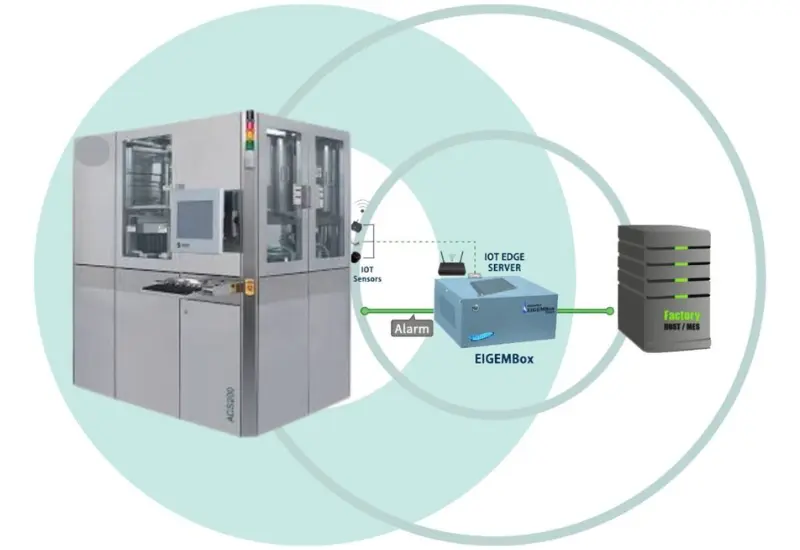
EIGEMBox는 반도체 팹을 위한 범용 번역기로 설계되었습니다. 이는 레거시 장비에 직접 연결되어 내부 신호를 표준 SECS/GEM 메시지로 변환하는 산업용 하드웨어 장치입니다. 장비의 원래 소프트웨어나 하드웨어를 변경할 필요 없이 연결성을 제공합니다.

EIGEMBox가 격차를 해소하는 방법

EIGEMBox는 다음과 같은 방식으로 장비와 인터페이스합니다.

  • 디지털/아날로그 I/O: 센서, 타워 램프, 릴레이 모니터링
  • 프로토콜 변환: SECS-I, 비표준 시리얼, PLC 데이터를 HSMS로 변환
  • 외부 센서: 데이터 출력이 없는 장비에도 진동·온도 센서를 추가하여 GEM 데이터 보고

레거시 장비의 GEM 규격 준수 달성

외부 박스를 사용함으로써, MES 관점에서 장비는 최신 GEM 호환 장비처럼 보입니다. 실제 장비는 기존 방식 그대로 동작합니다. 이 비침습적 접근은 다운타임과 공정 리스크를 최소화하기 때문에 팹 관리자들이 선호합니다.

현대화된 연결성의 기술적 이점

노후 장비에 반도체 장비 연결성을 적용하면 이전에는 불가능했던 핵심 GEM 기능을 활용할 수 있습니다.

원격 제어 및 레시피 관리

GEM은 “START”, “STOP”, “레시피 선택”과 같은 명령을 호스트에서 전송할 수 있게 합니다. EIGEMBox는 PLC나 제어 보드와 연동하여 이러한 명령을 구현함으로써 잘못된 레시피 선택으로 인한 웨이퍼 손실을 방지합니다.

알람 및 이벤트 처리

작업자가 경고등을 확인할 때까지 기다릴 필요가 없습니다. 알람 발생 시 즉시 SECS 메시지가 MES로 전송되어, 유지보수팀이 필요한 부품을 준비한 상태로 대응할 수 있습니다.

데이터 변수 수집

GEM은 상태 변수(SV)와 데이터 변수(DV)를 지원합니다. EIGEMBox는 챔버 압력, 가스 유량, 공정 시간과 같은 값을 수집해 호스트로 전송합니다. Gartner(2024)에 따르면, 실시간 센서 데이터를 MES에 통합한 기업은 비계획 정지를 15% 줄였습니다.

구현 프로세스

팹 현대화는 하루아침에 이루어지지 않지만, 생각보다 부담이 크지 않습니다. 일반적인 절차는 다음과 같습니다.

1단계: 장비 평가

연결성이 전혀 없는 핵심 장비를 우선 선정하고, 사용 가능한 포트와 수집 가능한 신호를 분석합니다.

2단계: 구성 및 매핑

EIGEMBox에서 원시 신호를 GEM 이벤트로 매핑합니다. 예를 들어, “Run” 램프 신호를 “Processing” 상태로 정의합니다.

3단계: MES 통합

HSMS 통신이 시작되면, MES에는 표준 장비로 추가만 하면 됩니다.

팹의 미래 대비

무인 제조(Lights Out)로 갈수록 연결성의 중요성은 커집니다. 30년 된 오븐이나 습식 장비도 데이터 대화에 참여해야 합니다. 레거시 장비용 SECS/GEMs를 활용하면 AI 기반 예지 정비나 자동 로트 라우팅 같은 미래 기술을 도입할 준비가 됩니다.
스마트 팩토리는 퍼즐과 같습니다. 장비의 20%가 연결되지 않으면 퍼즐의 20%가 빠진 셈입니다. 현대화는 큰 비용 없이 그림을 완성하게 해줍니다.

결론

반도체 팹의 현대화는 신뢰성 높은 노후 장비를 폐기하는 것을 의미하지 않습니다. EIGEMBox와 같은 솔루션을 통해 레거시 장비용 SECS/GEMs를 구현하면 디지털 격차를 해소할 수 있습니다. 이는 자본을 보존하고, 데이터 기반 수율 향상을 이루며, 모든 장비를 자동화 시대에 맞게 연결합니다. 200mm 소규모 팹이든 대규모 양산 팹이든, 경쟁력을 유지하는 핵심은 연결성입니다. 아직도 장비가 90년대에 머물러 있다면, 이제 현대적인 목소리를 부여할 때입니다.

Contact Us Today

EIGEMBox 기반 팹 현대화에 대한 전문가 가이드 받기

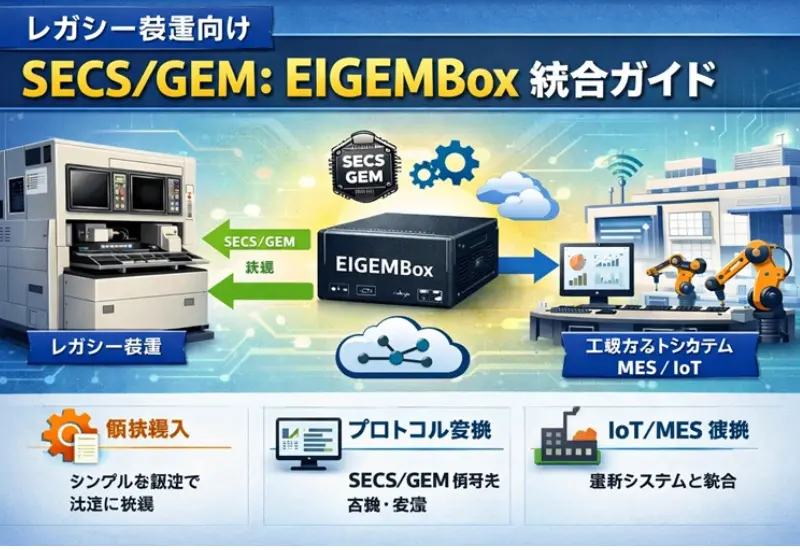
レガシー装置向け SECS/GEM:EIGEMBox 統合ガイド

概要

  • 古い半導体装置の多くは、SECS/GEM のような最新の通信プロトコルを備えていません。
  • EIGEMBox は、レガシーハードウェアと最新 MES をつなぐプラグ&プレイ型ソリューションを提供します。
  • 業界レポートによると、200mm 市場ではレガシー装置の継続稼働が極めて重要です。
  • 接続性により、リアルタイム監視、レシピ管理、OEE 改善が可能になります。
  • 非侵入型の統合により、装置保証やプロセス安定性を損ないません。
  • ファブ全体の通信レイヤーを標準化することで、ヒューマンエラーを削減し、スループットを向上させます。

はじめに

SEMI の 2024 年レポートによると、世界の 200mm ファブ生産能力は 2026 年までに月産 800 万枚という過去最高水準に達すると予測されています(SEMI — 2024)。この拡張は、クリーンルームで何十年も稼働してきたビンテージ装置に大きく依存しています。これらの信頼性の高い装置は工程自体は完璧にこなしますが、最新のソフトウェア環境と通信できないという課題があります。レガシー装置向け SECS/GEM を導入することで、こうした旧型システムもデータ駆動型ファクトリーの一員として機能できるようになります。

成熟したファブを歩くと、まるで技術博物館を巡っているかのように感じることがあります。最先端の露光装置の隣に、フロッピーディスクドライブを使う炉が並んでいる光景も珍しくありません。炉自体は高品質な酸化膜を生成できますが、「プロセス終了」を中央サーバーに通知できないことが大きなボトルネックになります。このデジタルギャップを埋めるには、単なるケーブル接続ではなく、高度な翻訳レイヤーが必要です。

EIGEMBox は、その重要な橋渡し役を果たします。いわば「無口」な装置を、スマートで接続された資産へと変換します。標準化されたインターフェースを提供することで、手入力や紙ベースのログを不要にします。エンジニアは、ちらつくモノクロ CRT モニターの前に立たずとも、レガシー装置群の状態をリアルタイムで把握できるようになります。

なぜビンテージ装置は引退しないのか

半導体業界は常に限界へ挑戦しますが、古い装置を驚くほど長く使い続けます。完全に償却済みで正常に動作する装置を新型に置き換えるには、数百万ドルのコストがかかります。さらに、特定のレガシープロセスは極めて高度に最適化されており、新しいプラットフォームへ移行すること自体が不要なリスクになります。

こうした装置を維持するのは経済的に合理的ですが、接続性の欠如は「ダークデータ」問題を生み出します。装置状態、アラーム、プロセス変数といった情報がハードウェア内部に閉じ込められ、真の Industry 4.0 を実現できません。

EIGEMBox:ファブのためのユニバーサル翻訳機

EIGEMBox は、レガシー装置を SECS/GEM 対応にするために設計された専用のハードウェア/ソフトウェアモジュールです。装置から信号を収集し、標準 SECS/GEM メッセージへ変換する仲介役として機能します。これにより、MES(ホスト)は 30 年前のエッチャーを、最新の接続装置であるかのように扱えます。

非侵入型統合

SECS/GEM 統合における最大の懸念は、高価な装置の内部ロジックに手を加えてしまうことです。EIGEMBox は既存の信号灯、センサー、PLC レジスタなどから非侵入的にデータを取得し、元の装置ソフトウェアを変更しません。

プロトコル変換アーキテクチャ

RS-232、デジタル I/O、独自 PLC プロトコルなど、装置ごとの多様な通信方式を、統一された SECS/GEM ストリームへ変換します。この柔軟性こそが、半導体レガシー装置自動化において選ばれ続ける理由です。

レガシー装置向け SECS/GEM のアーキテクチャ

統合プロジェクトではデータフローの理解が不可欠です。EIGEMBox は装置と工場ネットワークの間に配置され、装置状態の「仮想モデル」を維持しながらホストへ報告します。

データ取得レイヤー

  • 物理レイヤー: センサー、リレー、シリアルポートから信号を取得
  • ロジックレイヤー: 信号を解釈(例:特定電圧変化=「ウェハ処理開始」)
  • 通信レイヤー: 解釈結果を SECS/GEM(HSMS / SECS-I)形式に変換

この構造により、MES は常にクリーンで標準化された情報を受け取れます。アラーム発生時には、EIGEMBox が即座に S5F1 メッセージを送信し、迅速な対応を可能にします。

古い装置のレシピ管理

手動レシピ管理は事故の元です。GEM インターフェースを使えば、MES から正しいレシピ ID を直接装置へ送信できます。オペレーターの入力ミスを防ぎ、安定したプロセスを実現します。

SECS/GEM 統合の戦略的メリット

最大の利点は「可視化」です。すべての装置が同じ言語を話すことで、OEE の正確なレポートが可能になります。

手作業エラーの排除

手動ログは信頼性に欠けます。自動データ収集により、MES の記録が実際の装置状態と一致し、品質管理や規制対応に不可欠な正確性が確保されます。

予知保全の実現

温度、圧力、モーター電流などを監視することで、異常傾向を早期に検知できます。突発停止を防ぎ、計画保全へ移行できます。

実運用における ROI(ケーススタディ視点)

50 台のレガシー露光装置を持つファブを想定すると、各オペレーターが 1 時間あたり 5 分を手動記録に費やすだけで、全体では毎時 4 時間以上の生産性損失になります。SECS/GEM 導入により、この時間は回収できます。

年間では、これだけで導入コストを十分に回収できるケースが多く、誤レシピによるスクラップ削減は利益に直結します。McKinsey(2023)によれば、こうしたデータに基づく改善は EBITDA を最大 15% 向上させます。

導入時の一般的な課題

最大の課題はドキュメント不足です。製造元が既に存在しない装置も珍しくありません。

ブラックボックス問題

EIGEMBox チームは信号解析により装置挙動を解析し、必要なデータポイントを特定します。1990 年代ハードウェアの“デジタル探偵”です。

ネットワーク制約

EIGEMBox は安全なゲートウェイとして機能し、装置内部を保護しつつデータを外部へ提供します。

技術仕様と接続性

  • HSMS(E37
  • SECS-I(E4
  • GEM(E30)準拠

RS-232 時代から最新ネットワークまで対応します。

ファブの将来対応

標準化された EIGEMBox を導入することで、将来の MES 更新や AI 分析にも対応可能です。

結論

レガシー装置向け SECS/GEM は、もはや贅沢ではなく必須条件です。EIGEMBox により、OEE 向上、ヒューマンエラー削減、競争力維持が実現します。

Contact Us Today

レガシー装置への SECS/GEM 統合を段階的にサポートします


Software ng Kagamitan para sa Smart Manufacturing | Mga Function at Use Case

Buod

Paglago ng Smart Manufacturing: Mabilis na inaampon ng sektor ng industriya ang mga digital na solusyon upang manatiling kompetitibo.

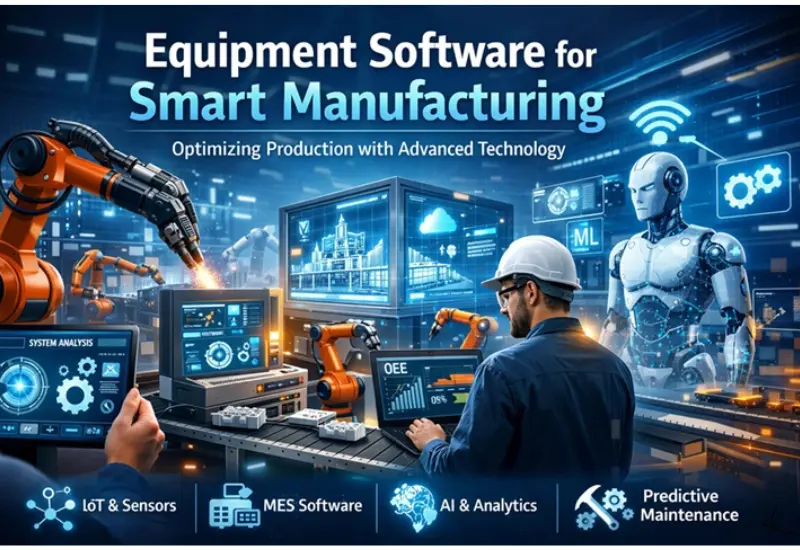
Pangunahing Papel ng Software: Ang modernong equipment software ay nagsisilbing sentral na nervous system ng factory floor, na nagpapahintulot ng komunikasyon sa pagitan ng magkakaibang makina.

Mga Benepisyong Operasyonal: Ang pagpapatupad ng industrial equipment software ay nagpapababa ng downtime sa pamamagitan ng predictive maintenance at nagpapahusay sa paggawa ng desisyon na batay sa datos.

Mga Pangunahing Function: Pinangangasiwaan ng mga sistemang ito ang protocol conversion, data collection, at real-time monitoring.

Estratehikong Kalamangan: Ang mga kumpanyang gumagamit ng smart manufacturing software ay nakakakita ng malaking pagbuti sa throughput at alokasyon ng mga mapagkukunan, na nagbubukas ng daan patungo sa ganap na digital maturity.

Panimula

Ayon sa Statista (2024), inaasahang lalampas sa USD 600 bilyon ang laki ng pandaigdigang smart manufacturing market pagsapit ng 2029. Ipinapakita ng malaking paglawak na ito ang isang pagbabago kung saan ang pisikal na hardware ay hindi na gumagana nang hiwalay. Ang tagumpay sa ganitong kapaligiran ay lubos na nakadepende sa matatag na equipment software na nagsisilbing tulay sa pagitan ng mekanikal na aksyon at digital intelligence.

Ang mga modernong factory floor ay kahawig ng mga komplikadong ekosistema kung saan ang bawat sensor at motor ay kailangang magsalita ng iisang wika. Kung walang sopistikadong manufacturing equipment software, mananatiling “tahimik” ang mga bahaging ito, na pumipigil sa mga manager na makita ang kabuuang larawan ng kanilang operasyon. Tinitiyak ng software layer na ito na ang datos ay dumadaloy nang maayos mula sa pinakamaliit na actuator hanggang sa pinakamataas na antas ng enterprise resource planning.

Ang pagpapatupad ng de-kalidad na digital tools ay nagbibigay-daan sa mga pasilidad na lumampas sa reaktibong pag-aayos. Sa pamamagitan ng integrasyon ng factory automation software, maaaring i-synchronize ng mga lider ang kanilang mga production line nang may mataas na katumpakan, na tinitiyak na bawat segundo ng oras ng makina ay nag-aambag sa kita. Tinutuklas ng artikulong ito kung paano binabago ng mga digital na solusyong ito ang industriyal na mundo.

Paglalarawan ng Papel ng Equipment Software

Sa kasalukuyang industriyal na kalagayan, ang hardware ay isa lamang koleksyon ng metal at electronics na naghihintay ng mga utos. Ang software ang nagbibigay ng lohika na nagdidikta kung paano kikilos ang isang makina, tutugon sa mga error, at ibabahagi ang kalagayan nito sa iba pang bahagi ng pasilidad. Ito ay nagsisilbing parehong tagapagsalin at konduktor ng simponiya ng produksyon.

Mga Communication Protocol at Interoperability

Isa sa mga pangunahing hamon sa pagmamanupaktura ay ang pagpapakipag-usap ng iba’t ibang brand ng makina sa isa’t isa. Karamihan sa mga legacy hardware ay gumagamit ng proprietary na mga wika na lumilikha ng data silo. Gumagamit ang mga espesyal na software solution ng mga standard protocol tulad ng SECS/GEM o OPC UA upang pag-isahin ang mga komunikasyong ito.

Data Acquisition at Edge Computing

Mahalaga ang pagkuha ng datos mula mismo sa pinagmulan para sa katumpakan. Ang mga high-performance system ay nagpoproseso ng impormasyon sa “edge,” ibig sabihin ang datos ay nananatiling malapit sa makina para sa mas mabilis na pagsusuri. Binabawasan nito ang latency at tinitiyak na ang mga kritikal na alerto sa kaligtasan o kalidad ay nagaganap sa loob lamang ng ilang millisecond.

Mga Pangunahing Function ng Industrial Equipment Software

Ang maaasahang industrial equipment software ay higit pa sa simpleng pag-on at pag-off ng mga switch. Pinamamahalaan nito ang mga komplikadong workflow habang tinitiyak na ang bawat galaw ay naaayon sa mga pamantayan ng kaligtasan at layunin ng produksyon. Lumilikha ang kakayahang ito ng pundasyon para sa advanced analytics at autonomous na operasyon.

Naisip mo na ba kung ang iyong CNC machine ay may mas aktibong “buhay-panlipunan” sa pamamagitan ng mga data port nito kaysa sa iyo? Bagama’t wala itong social media profile, patuloy itong “nakikipag-usap” sa iba pang mga tool upang matiyak na hindi nagkakaproblema ang assembly line.

Remote Configuration at Control

Maaaring baguhin ng mga engineer ang mga parameter ng makina mula sa isang sentral na workstation. Inaalis nito ang pangangailangang manu-manong i-program ang bawat indibidwal na unit sa sahig ng pabrika, na nakakatipid ng daan-daang oras tuwing may pagbabago ng produkto.

Error Logging at Diagnostics

Kapag pumalya ang isang makina, ang paghahanap ng ugat ng problema ay maaaring pakiramdam na parang paghahanap ng karayom sa isang digital na bunton ng dayami. Itinatala ng modernong software ang bawat pangyayari, na nagbibigay ng malinaw na bakas na maaaring sundan ng mga technician. Pinapabilis ng ganitong visibility ang pagkukumpuni at pinipigilan ang pag-ulit ng parehong pagkakamali.

Pagpapalaki ng ROI gamit ang Equipment Monitoring Software

Ang pamumuhunan sa equipment monitoring software ay nagbabayad sa sarili nito sa pamamagitan ng paglalantad ng mga nakatagong inefficiency. Maraming planta ang tumatakbo sa mas mababang kapasidad kaysa sa kanilang aktuwal na kakayahan dahil kulang sila sa real-time na visibility sa kalusugan ng makina. Ayon sa ulat ng McKinsey (2024) tungkol sa Industry 4.0, ang mga digital leader ay nakakakita ng 30–50% pagbawas sa downtime ng makina sa pamamagitan ng paggamit ng mga insight na ito.

Paglipat patungo sa Predictive Maintenance

Mahal at nakakagambala ang reaktibong maintenance. Sinusuri ng mga software tool ang vibration, temperatura, at bilang ng cycle upang hulaan kung kailan posibleng pumalya ang isang bahagi. Pinahihintulutan nito ang mga team na mag-iskedyul ng pagkukumpuni sa panahon ng planadong shutdown sa halip na sa gitna ng peak production.

Real-Time na Pagsubaybay ng OEE

Ang Overall Equipment Effectiveness (OEE) ang pamantayang ginto sa pagsukat ng produktibidad. Awtomatikong kinukwenta ng software ang metrikang ito sa pamamagitan ng pagsubaybay sa availability, performance, at quality. Inaalis nito ang hula sa mga performance review at itinatampok kung aling mga makina ang nangangailangan ng upgrade.

Mga Estratehikong Use Case para sa Factory Automation Software

Ang iba’t ibang industriya ay nangangailangan ng iba’t ibang uri ng software upang makamit ang kanilang mga layunin. Bagama’t nananatili ang pangkalahatang layunin na kahusayan, nag-iiba ang mga partikular na aplikasyon batay sa komplikasyon ng produkto at kapaligirang regulasyon.

Semiconductor Fabrication

Sa paggawa ng chip, kahit isang butil ng alikabok o pagkaantala ng isang microsecond ay maaaring makasira ng batch na nagkakahalaga ng milyon-milyon. Dito, pinamamahalaan ng manufacturing equipment software ang matinding katumpakan at kinokoordina ang daan-daang hakbang sa mga vacuum chamber at robotic arm. Kailangang hawakan ng software ang high-speed data upang mapanatili ang yield.

Mga Linya ng Assembly ng Sasakyan

Ang paggawa ng sasakyan ay kinabibilangan ng libu-libong piyesa na sabay-sabay pinagsasama. Ang automation software ay nagsi-synchronize ng robotic welding, painting, at assembly. Tinitiyak nito na ang tamang piyesa ay dumarating sa tamang chassis sa eksaktong tamang oras, na pumipigil sa magastos na bottleneck.

Pagproseso ng Pagkain at Inumin

Sa sektor na ito, napakahalaga ng pagsunod sa regulasyon at traceability. Sinusubaybayan ng software ang mga batch mula sa hilaw na sangkap hanggang sa nakabalot na produkto. Kapag may isyu sa kalidad, natutukoy ng sistema ang eksaktong makina at takdang oras na sangkot, kaya mas maliit at hindi gaanong nakapipinsala ang recall.

Paglampas sa mga Hadlang sa Implementasyon

Ang paglipat patungo sa smart manufacturing software ay isang malaking hakbang. Bakit kumikilos ang ilang hardware na parang matigas ang ulo na bata kapag walang tamang code? Karaniwang sagot dito ang technical debt o kakulangan ng standardisadong istruktura ng datos sa loob ng organisasyon.

  • Pagpapahusay ng Kasanayan ng Empleyado: Kailangang matutunan ng mga team kung paano magbigay-kahulugan sa datos, hindi lamang maghigpit ng turnilyo.
  • Cybersecurity: Ang pagkonekta ng mga makina sa network ay nagdadala ng mga panganib na nangangailangan ng matibay na mga layer ng depensa.
  • Gastos sa Integrasyon: Nangangailangan ang paunang setup ng oras at kapital, bagama’t karaniwang mas matimbang ang pangmatagalang pagtitipid.

Hinaharap ng Smart Manufacturing Software

Ang susunod na yugto ng industriyal na ebolusyon ay kinabibilangan ng mas malalim na integrasyon ng Artificial Intelligence. Papunta na tayo sa mga “self-healing” na makina na kayang ayusin ang sarili nilang mga parameter upang tumbasan ang pagkasira. Ang antas ng autonomiyang ito ay imposible kung walang matibay na pundasyon ng kagamitan at software.

Sa pamamagitan ng pagsentro ng kontrol at visibility, nagiging mas mabilis ang pagtugon ng mga kumpanya sa pagbabago ng merkado. Maging ito man ay biglaang pagtaas ng demand o pagkagambala sa supply chain, ang mga pabrikang pinapagana ng software ay kayang baguhin ang iskedyul ng produksyon sa loob lamang ng ilang pag-click.

Konklusyon

Ang pagpili ng tamang equipment software ang pinakamahalagang desisyon para sa anumang pasilidad na naglalayong sa digital transformation. Ibinibigay ng mga tool na ito ang visibility, kontrol, at kakayahang maghula na kailangan upang magtagumpay sa isang kompetitibong pandaigdigang merkado. Sa pamamagitan ng pamumuhunan sa isang pinag-isang digital na estratehiya, masisiguro ng mga manufacturer na ang kanilang hardware ay gagana sa pinakamataas na antas nito sa mga darating na taon.

Contact Us Today

Kumuha ng Gabay mula sa Eksperto sa Equipment Software para sa Industry 4.0


Challenges Integrating Old Equipment with a New SECS/GEM Host

Introduction

The semiconductor manufacturing industry continues to evolve rapidly, with increasing demand for automation, real-time monitoring, and seamless equipment connectivity. Modern fabrication facilities rely heavily on advanced communication standards to ensure smooth data exchange between production equipment and host systems such as Manufacturing Execution Systems (MES). However, many fabs and OSAT facilities still operate older tools that were designed long before modern automation standards became widespread. This creates significant hurdles when attempting Legacy equipment SECS/GEM integration, which is often essential for maintaining competitiveness in today’s highly automated manufacturing environment.

Companies pursuing semiconductor equipment modernization frequently encounter technical and operational barriers when integrating older machines into modern factory networks. These systems were typically built without standardized communication protocols, making the transition to automated environments complex and resource-intensive. As fabs attempt to connect outdated machines to modern host systems, they face multiple SECS/GEM integration challenges that require specialized engineering knowledge, retrofit technologies, and strategic planning.

This blog explores the most common obstacles encountered while integrating legacy semiconductor equipment with modern host systems and provides insight into how manufacturers can overcome these semiconductor equipment automation challenges.

Understanding the Need for Legacy Equipment Integration

Despite the rapid introduction of new tools, many semiconductor manufacturers continue to rely on older equipment due to high capital costs and long operational lifecycles. These machines still deliver reliable production results but often lack built-in automation interfaces required for modern manufacturing.

Implementing Legacy equipment SECS/GEM integration allows fabs to extend the lifespan of these valuable assets while enabling communication with centralized host systems. By connecting legacy tools through SECS/GEM host integration, manufacturers can achieve improved process control, better equipment monitoring, and enhanced production efficiency.

However, upgrading older systems introduces various SECS/GEM implementation challenges because legacy equipment often lacks standardized communication hardware, compatible software architecture, or accessible data structures. These limitations create substantial barriers during semiconductor equipment modernization initiatives.

Hardware Limitations in Older Equipment

One of the most significant obstacles in Legacy equipment SECS/GEM integration is the absence of proper communication hardware. Many legacy semiconductor tools were designed with proprietary control systems and limited digital connectivity. These machines often rely on outdated communication ports, analog signals, or custom control interfaces.

During SECS/GEM retrofit solutions, engineers frequently need to install additional hardware modules, gateway devices, or interface controllers to enable communication between legacy equipment and modern host systems. These hardware modifications can be technically complex, particularly when documentation for older machines is limited or unavailable.

Additionally, semiconductor equipment automation challenges arise when attempting to capture real-time operational data from older sensors or control units. Without proper signal mapping and hardware interfacing, achieving reliable data acquisition becomes difficult, increasing project complexity during SECS/GEM host integration.

Software and Protocol Compatibility Issues

Another major barrier in Legacy equipment SECS/GEM integration involves software compatibility. Older tools often run proprietary or outdated software that does not support modern communication standards. Integrating these systems requires developing custom middleware, protocol translators, or firmware modifications.

These compatibility challenges frequently lead to SECS/GEM communication issues, such as inconsistent data formatting, incomplete message handling, or unstable host connectivity. Successfully integrating legacy semiconductor equipment requires ensuring that the equipment can support essential SECS/GEM functions, including event reporting, alarm management, and variable data collection.

Furthermore, addressing SECS/GEM integration challenges involves implementing proper state models, communication timing, and host control commands. Without thorough testing and validation, integration efforts may result in unreliable communication, data loss, or production delays, ultimately affecting semiconductor equipment automation performance.

Data Mapping and Standardization Challenges

Effective Legacy equipment SECS/GEM integration requires accurate mapping of equipment variables, process parameters, and event triggers to standardized SECS/GEM data structures. However, legacy tools often use inconsistent naming conventions, undocumented parameters, or proprietary data formats.

These inconsistencies create significant difficulties when performing SECS/GEM host integration because host systems rely on standardized data definitions to monitor and control equipment operations. Engineers must carefully analyze legacy control logic to ensure proper data mapping and event generation during SECS/GEM retrofit solutions.

Data mapping challenges also contribute to broader semiconductor equipment automation challenges, as incorrect parameter interpretation can lead to inaccurate monitoring, false alarms, or incomplete production data. Addressing these SECS/GEM implementation challenges requires a deep understanding of both equipment operation and communication protocol requirements.

Operational Downtime and Production Risks

One of the most critical concerns during Legacy equipment SECS/GEM integration is minimizing production downtime. Semiconductor manufacturing environments operate under strict production schedules, and any integration work must be carefully planned to avoid operational disruptions.

During Semiconductor equipment modernization, integrating legacy tools often requires temporary shutdowns, system testing, and validation procedures. These activities introduce risks related to production delays, equipment instability, or unexpected integration failures.

Managing these semiconductor equipment automation challenges requires detailed planning, phased deployment strategies, and thorough system testing. Implementing effective SECS/GEM retrofit solutions helps reduce integration risks while ensuring reliable communication between equipment and host systems.

Skill and Resource Constraints

Another common issue in Legacy equipment SECS/GEM integration is the shortage of specialized expertise required to perform successful integrations. SECS/GEM communication protocols, equipment automation logic, and legacy control system architectures require highly specialized engineering skills.

Many organizations face difficulties finding professionals capable of handling both legacy tool automation and semiconductor requirements and modern host communication systems. Without experienced integration partners, companies often struggle to overcome SECS/GEM integration challenges and achieve seamless connectivity.

Partnering with experienced automation solution providers can significantly simplify the integration of legacy semiconductor equipment while reducing development time and implementation risks.

Security and Compliance Concerns

As semiconductor factories adopt modern automation technologies, cybersecurity and regulatory compliance become critical considerations. Implementing Legacy equipment SECS/GEM integration introduces potential security vulnerabilities because older machines were not designed with modern cybersecurity protocols.

During SECS/GEM host integration, legacy equipment must be secured against unauthorized access, data breaches, and communication interference. Addressing these SECS/GEM communication issues requires implementing network security layers, encrypted communication channels, and secure authentication mechanisms.

Ensuring compliance with industry standards during semiconductor equipment modernization is essential for maintaining production reliability and protecting sensitive manufacturing data.

Strategies to Overcome Integration Challenges

Successfully achieving Legacy equipment SECS/GEM integration requires a structured and strategic approach. Companies should begin with comprehensive equipment assessments to identify hardware limitations, software compatibility gaps, and communication requirements.

Implementing scalable SECS/GEM retrofit solutions allows manufacturers to gradually modernize legacy tools while maintaining production continuity. Utilizing modular integration architectures also simplifies future equipment upgrades and host system expansions.

Additionally, collaborating with experienced automation partners helps address complex SECS/GEM implementation challenges while ensuring compliance with industry standards. Continuous monitoring and performance validation further support successful semiconductor equipment automation.

Patented Plug and Play SECSGEM Solutions for Legacy Equipment

Conclusion

As semiconductor manufacturing continues to advance toward fully automated and data-driven production environments, the importance of Legacy equipment SECS/GEM integration continues to grow. While older tools remain valuable production assets, their lack of modern communication capabilities creates significant barriers during semiconductor equipment modernization initiatives.

Manufacturers attempting to integrate legacy semiconductor equipment must overcome multiple technical and operational challenges, including hardware limitations, software compatibility issues, data standardization difficulties, and production risks. Addressing these SECS/GEM integration challenges requires careful planning, specialized engineering expertise, and advanced retrofit technologies.

By implementing reliable SECS/GEM retrofit solutions and focusing on seamless SECS/GEM host integration, semiconductor manufacturers can extend equipment lifespan, improve operational efficiency, and enable real-time production monitoring. Successfully overcoming semiconductor equipment automation challenges not only enhances manufacturing performance but also positions companies for long-term success in an increasingly digital and automated semiconductor industry.

Ultimately, investing in Legacy equipment SECS/GEM integration enables manufacturers to bridge the gap between traditional production systems and modern smart factory environments, ensuring sustainable growth and improved operational excellence.