Challenges Integrating Old Equipment with a New SECS/GEM Host

Introduction

The semiconductor manufacturing industry continues to evolve rapidly, with increasing demand for automation, real-time monitoring, and seamless equipment connectivity. Modern fabrication facilities rely heavily on advanced communication standards to ensure smooth data exchange between production equipment and host systems such as Manufacturing Execution Systems (MES). However, many fabs and OSAT facilities still operate older tools that were designed long before modern automation standards became widespread. This creates significant hurdles when attempting Legacy equipment SECS/GEM integration, which is often essential for maintaining competitiveness in today’s highly automated manufacturing environment.

Companies pursuing semiconductor equipment modernization frequently encounter technical and operational barriers when integrating older machines into modern factory networks. These systems were typically built without standardized communication protocols, making the transition to automated environments complex and resource-intensive. As fabs attempt to connect outdated machines to modern host systems, they face multiple SECS/GEM integration challenges that require specialized engineering knowledge, retrofit technologies, and strategic planning.

This blog explores the most common obstacles encountered while integrating legacy semiconductor equipment with modern host systems and provides insight into how manufacturers can overcome these semiconductor equipment automation challenges.

Understanding the Need for Legacy Equipment Integration

Despite the rapid introduction of new tools, many semiconductor manufacturers continue to rely on older equipment due to high capital costs and long operational lifecycles. These machines still deliver reliable production results but often lack built-in automation interfaces required for modern manufacturing.

Implementing Legacy equipment SECS/GEM integration allows fabs to extend the lifespan of these valuable assets while enabling communication with centralized host systems. By connecting legacy tools through SECS/GEM host integration, manufacturers can achieve improved process control, better equipment monitoring, and enhanced production efficiency.

However, upgrading older systems introduces various SECS/GEM implementation challenges because legacy equipment often lacks standardized communication hardware, compatible software architecture, or accessible data structures. These limitations create substantial barriers during semiconductor equipment modernization initiatives.

Hardware Limitations in Older Equipment

One of the most significant obstacles in Legacy equipment SECS/GEM integration is the absence of proper communication hardware. Many legacy semiconductor tools were designed with proprietary control systems and limited digital connectivity. These machines often rely on outdated communication ports, analog signals, or custom control interfaces.

During SECS/GEM retrofit solutions, engineers frequently need to install additional hardware modules, gateway devices, or interface controllers to enable communication between legacy equipment and modern host systems. These hardware modifications can be technically complex, particularly when documentation for older machines is limited or unavailable.

Additionally, semiconductor equipment automation challenges arise when attempting to capture real-time operational data from older sensors or control units. Without proper signal mapping and hardware interfacing, achieving reliable data acquisition becomes difficult, increasing project complexity during SECS/GEM host integration.

Software and Protocol Compatibility Issues

Another major barrier in Legacy equipment SECS/GEM integration involves software compatibility. Older tools often run proprietary or outdated software that does not support modern communication standards. Integrating these systems requires developing custom middleware, protocol translators, or firmware modifications.

These compatibility challenges frequently lead to SECS/GEM communication issues, such as inconsistent data formatting, incomplete message handling, or unstable host connectivity. Successfully integrating legacy semiconductor equipment requires ensuring that the equipment can support essential SECS/GEM functions, including event reporting, alarm management, and variable data collection.

Furthermore, addressing SECS/GEM integration challenges involves implementing proper state models, communication timing, and host control commands. Without thorough testing and validation, integration efforts may result in unreliable communication, data loss, or production delays, ultimately affecting semiconductor equipment automation performance.

Data Mapping and Standardization Challenges

Effective Legacy equipment SECS/GEM integration requires accurate mapping of equipment variables, process parameters, and event triggers to standardized SECS/GEM data structures. However, legacy tools often use inconsistent naming conventions, undocumented parameters, or proprietary data formats.

These inconsistencies create significant difficulties when performing SECS/GEM host integration because host systems rely on standardized data definitions to monitor and control equipment operations. Engineers must carefully analyze legacy control logic to ensure proper data mapping and event generation during SECS/GEM retrofit solutions.

Data mapping challenges also contribute to broader semiconductor equipment automation challenges, as incorrect parameter interpretation can lead to inaccurate monitoring, false alarms, or incomplete production data. Addressing these SECS/GEM implementation challenges requires a deep understanding of both equipment operation and communication protocol requirements.

Operational Downtime and Production Risks

One of the most critical concerns during Legacy equipment SECS/GEM integration is minimizing production downtime. Semiconductor manufacturing environments operate under strict production schedules, and any integration work must be carefully planned to avoid operational disruptions.

During Semiconductor equipment modernization, integrating legacy tools often requires temporary shutdowns, system testing, and validation procedures. These activities introduce risks related to production delays, equipment instability, or unexpected integration failures.

Managing these semiconductor equipment automation challenges requires detailed planning, phased deployment strategies, and thorough system testing. Implementing effective SECS/GEM retrofit solutions helps reduce integration risks while ensuring reliable communication between equipment and host systems.

Skill and Resource Constraints

Another common issue in Legacy equipment SECS/GEM integration is the shortage of specialized expertise required to perform successful integrations. SECS/GEM communication protocols, equipment automation logic, and legacy control system architectures require highly specialized engineering skills.

Many organizations face difficulties finding professionals capable of handling both legacy tool automation and semiconductor requirements and modern host communication systems. Without experienced integration partners, companies often struggle to overcome SECS/GEM integration challenges and achieve seamless connectivity.

Partnering with experienced automation solution providers can significantly simplify the integration of legacy semiconductor equipment while reducing development time and implementation risks.

Security and Compliance Concerns

As semiconductor factories adopt modern automation technologies, cybersecurity and regulatory compliance become critical considerations. Implementing Legacy equipment SECS/GEM integration introduces potential security vulnerabilities because older machines were not designed with modern cybersecurity protocols.

During SECS/GEM host integration, legacy equipment must be secured against unauthorized access, data breaches, and communication interference. Addressing these SECS/GEM communication issues requires implementing network security layers, encrypted communication channels, and secure authentication mechanisms.

Ensuring compliance with industry standards during semiconductor equipment modernization is essential for maintaining production reliability and protecting sensitive manufacturing data.

Strategies to Overcome Integration Challenges

Successfully achieving Legacy equipment SECS/GEM integration requires a structured and strategic approach. Companies should begin with comprehensive equipment assessments to identify hardware limitations, software compatibility gaps, and communication requirements.

Implementing scalable SECS/GEM retrofit solutions allows manufacturers to gradually modernize legacy tools while maintaining production continuity. Utilizing modular integration architectures also simplifies future equipment upgrades and host system expansions.

Additionally, collaborating with experienced automation partners helps address complex SECS/GEM implementation challenges while ensuring compliance with industry standards. Continuous monitoring and performance validation further support successful semiconductor equipment automation.

Patented Plug and Play SECSGEM Solutions for Legacy Equipment

Conclusion

As semiconductor manufacturing continues to advance toward fully automated and data-driven production environments, the importance of Legacy equipment SECS/GEM integration continues to grow. While older tools remain valuable production assets, their lack of modern communication capabilities creates significant barriers during semiconductor equipment modernization initiatives.

Manufacturers attempting to integrate legacy semiconductor equipment must overcome multiple technical and operational challenges, including hardware limitations, software compatibility issues, data standardization difficulties, and production risks. Addressing these SECS/GEM integration challenges requires careful planning, specialized engineering expertise, and advanced retrofit technologies.

By implementing reliable SECS/GEM retrofit solutions and focusing on seamless SECS/GEM host integration, semiconductor manufacturers can extend equipment lifespan, improve operational efficiency, and enable real-time production monitoring. Successfully overcoming semiconductor equipment automation challenges not only enhances manufacturing performance but also positions companies for long-term success in an increasingly digital and automated semiconductor industry.

Ultimately, investing in Legacy equipment SECS/GEM integration enables manufacturers to bridge the gap between traditional production systems and modern smart factory environments, ensuring sustainable growth and improved operational excellence.

What Cybersecurity Challenges Does SECS/GEM Face in Modern Manufacturing Environments?

Introduction

As semiconductor manufacturing rapidly evolves toward smart fabs and fully connected Industry 4.0 environments, equipment communication standards such as SECS/GEM have become the backbone of factory automation. SECS/GEM enables reliable data exchange between equipment and host systems, supporting productivity, traceability, and real-time control. However, with increased connectivity comes increased exposure to cyber threats.

Today, SECS/GEM cybersecurity challenges are no longer theoretical concerns. Modern fabs operate in hybrid environments where legacy tools coexist with advanced digital infrastructure, creating new attack surfaces. Many organizations underestimate SECS GEM security risks, assuming that factory networks are isolated or inherently secure. In reality, SECS/GEM cybersecurity in semiconductor manufacturing faces mounting pressure from ransomware, insider threats, insecure protocols, and unprotected equipment interfaces.

This blog explores Cybersecurity issues in SECS GEM, analyzes SECS GEM vulnerabilities, and explains why SECS GEM protocol security must be a top priority for manufacturers seeking Secure SECS GEM communication in modern manufacturing environments.

Understanding SECS/GEM in Modern Manufacturing

SECS/GEM was designed decades ago to standardize communication between semiconductor equipment and host systems. While it excels at interoperability and reliability, security was not a primary design goal. As fabs digitize, SECS/GEM is now integrated with MES, SCADA, cloud analytics, AI platforms, and remote monitoring systems.

This evolution introduces SECS GEM security in modern manufacturing challenges. Equipment once isolated on closed networks is now connected to enterprise IT systems and external vendors. This convergence of IT and OT significantly increases Industrial automation cybersecurity risks, especially when communication protocols lack encryption, authentication, or access control.

The growing reliance on real-time data makes SECS GEM data security critical. Any compromise in equipment communication can impact yield, safety, and production continuity. As a result, Semiconductor equipment cybersecurity must now address SECS/GEM at both the protocol and network levels.

Legacy Design and Inherent Protocol Vulnerabilities

One of the most significant SECS GEM vulnerabilities stems from its legacy design. SECS/GEM was developed in an era when factory networks were physically isolated and trusted. As a result, SECS GEM protocol security lacks built-in mechanisms such as encryption, authentication, or message integrity checks.

These weaknesses create substantial Cybersecurity issues in SECS GEM, including:

  • Plain-text data transmission
  • No native user or device authentication
  • Limited ability to detect message tampering
  • Trust-based session establishment

In modern fabs, these limitations translate directly into Legacy fab equipment security risks. Attackers who gain network access can intercept, replay, or manipulate SECS/GEM messages. This exposes fabs to Cyber threats in semiconductor fabs, including unauthorized equipment control and data exfiltration.

Without compensating controls, SECS/GEM cybersecurity challenges become more severe as factories adopt remote access and centralized monitoring.

Network Exposure and Attack Surface Expansion

Modern fabs rely on interconnected networks to enable smart manufacturing. Unfortunately, this connectivity amplifies SECS GEM network security risks. Flat network architectures, common in older facilities, allow attackers to move laterally once inside the network.

Inadequate segmentation significantly increases Industrial automation cybersecurity risks. If SECS/GEM traffic is accessible beyond the equipment zone, attackers can exploit SECS GEM security risks to disrupt operations. This makes Equipment Communication Security SECS GEM a critical concern for modern manufacturers.

Common network-related threats include:

  • Unauthorized access to equipment interfaces
  • Man-in-the-middle attacks on SECS/GEM communication
  • Malware propagation across OT networks
  • Unmonitored vendor connections

Without proper controls, SECS/GEM cybersecurity in semiconductor manufacturing can become the weakest link in an otherwise advanced security strategy.

Data Integrity and Confidentiality Risks

SECS/GEM handles sensitive production data such as process parameters, alarms, recipes, and equipment states. If compromised, this information can be used to disrupt manufacturing or steal intellectual property. This makes SECS GEM data security a critical aspect of Semiconductor equipment cybersecurity.

Because SECS/GEM does not natively encrypt data, attackers can easily capture or modify messages. These Cybersecurity issues in SECS GEM can result in:

  • Unauthorized recipe changes
  • False alarms or suppressed alerts
  • Corrupted production data
  • Loss of traceability and compliance

Ensuring Secure SECS GEM communication is essential to prevent data manipulation and maintain operational integrity. Without additional security layers, SECS GEM vulnerabilities can directly impact yield and quality.

Authentication and Access Control Challenges

Another major contributor to SECS/GEM cybersecurity challenges is the lack of strong authentication mechanisms. Traditional SECS/GEM implementations assume that any connected host or tool is trusted.

In modern manufacturing environments, this assumption no longer holds. Shared credentials, default configurations, and unmanaged access points increase SECS GEM security risks. These weaknesses allow unauthorized users or compromised systems to interact with equipment.

Poor access control directly affects SECS GEM security in modern manufacturing, especially when combined with remote access and third-party integrations. Strengthening Equipment communication security SECS GEM requires external controls such as secure gateways, firewalls, and role-based access enforcement.

Integration with IT, Cloud, and Industry 4.0 Systems

Smart manufacturing initiatives require SECS/GEM data to flow into MES, analytics platforms, and cloud environments. While this improves visibility, it also expands the attack surface. SECS/GEM cybersecurity in semiconductor manufacturing becomes more complex when OT data crosses into IT domains.

Cloud connectivity introduces additional Industrial automation cybersecurity risks, including:

  • Insecure APIs
  • Improper data exposure
  • Weak identity management
  • Supply chain vulnerabilities

Without secure architectures, Cyber threats in semiconductor fabs can propagate from IT systems back into equipment networks. Maintaining SECS GEM protocol security across hybrid environments requires careful design and continuous monitoring.

Compliance, Safety, and Operational Impact

Cyber incidents involving SECS/GEM can have far-reaching consequences beyond data loss. Equipment manipulation can affect worker safety, regulatory compliance, and production uptime. This makes SECS GEM security risks a business-critical issue, not just a technical one.

Many manufacturers must comply with OT security standards and customer audits. Failing to address SECS GEM vulnerabilities can result in:

  • Audit failures
  • Production shutdowns
  • Loss of customer trust
  • Regulatory penalties

Addressing SECS/GEM cybersecurity challenges proactively supports both operational resilience and long-term competitiveness.

Best Practices for Securing SECS/GEM Communication

 Although SECS/GEM has inherent limitations, manufacturers can significantly reduce risk by implementing compensating controls. Achieving Secure SECS GEM communication requires a layered security approach.

Key strategies include:

  • Network segmentation and zoning for SECS GEM network security
  • Secure gateways to protect legacy equipment
  • Encrypted tunnels for SECS/GEM traffic
  • Continuous monitoring for Cybersecurity issues in SECS GEM
  • Access control and authentication enforcement
  • Regular vulnerability assessments for Semiconductor equipment cybersecurity

By addressing Legacy fab equipment security risks, manufacturers can safely modernize without disrupting production.

Conclusion

As semiconductor manufacturing embraces digital transformation, SECS/GEM cybersecurity challenges are becoming increasingly urgent. The protocol’s legacy design, combined with modern connectivity demands, creates significant SECS GEM security risks that cannot be ignored.

From unencrypted communication and weak authentication to network exposure and data integrity concerns, Cybersecurity issues in SECS GEM affect every layer of the smart fab. Addressing SECS GEM vulnerabilities is essential to protect operations, intellectual property, and safety.

By prioritizing SECS GEM protocol security, strengthening SECS GEM network security, and implementing strategies for Secure SECS GEM communication, manufacturers can mitigate Cyber threats in semiconductor fabs while continuing to benefit from automation and Industry 4.0 innovation.

In modern manufacturing environments, cybersecurity is no longer optional. Securing SECS/GEM is a foundational step toward resilient, future-ready semiconductor production.

Secure Your SECS/GEM Communication Today

Legacy SECS/GEM implementations were never designed for modern cyber threats. If your fab or equipment still relies on unsecured equipment communication, it’s time to act.

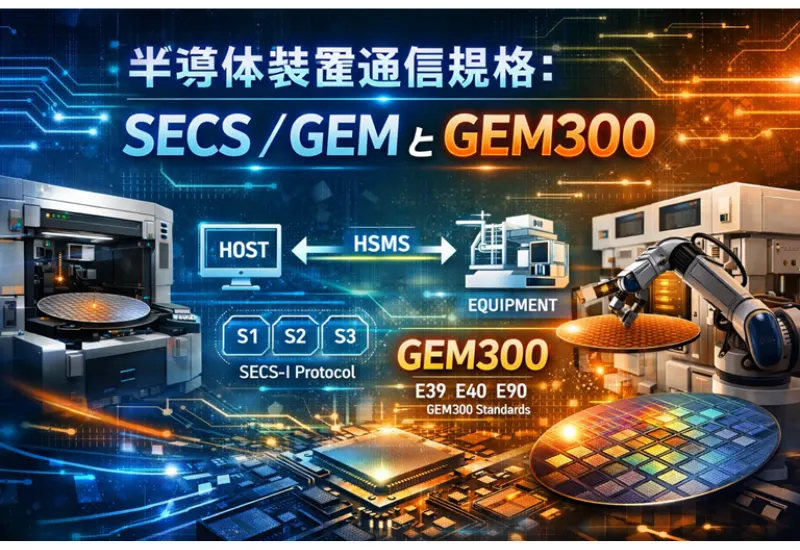
半導体装置通信規格:SECS/GEM と GEM300

概要

  • 定義: SECS/GEM や GEM300 などの SEMI 規格は、半導体製造装置がファクトリホストシステム(MES)とどのように接続・通信するかを規定します。
  • SECS/GEM: 小径ウェーハや比較的シンプルな装置向けに、状態監視、リモート制御、データ収集を可能にする中核プロトコルです。
  • GEM300: 300mm 自動化ファブ向けに設計された規格群で、キャリア管理、ジョブ処理、マテリアルトラッキングのための追加レイヤを提供します。
  • 利点: 装置統合の高度化により人的ミスを削減し、スループットを向上させ、リアルタイムデータ分析を可能にします。
  • 将来: Interface A(EDA)は、ビッグデータおよび AI 主導のプロセス制御に向けた高帯域通信を提供します。

はじめに

Statista(2024)によると、世界の半導体製造装置市場は、各メーカーが生産能力拡大を競う中、2025 年末までに 1,200 億ドルを超えると予測されています。この巨大な規模では、手作業では到底実現できない精度が求められます。歩留まりを維持するためには、工場内のすべての装置が同じ言語を話す必要があります。その共通言語こそが、半導体装置通信規格です。これにより、あるベンダーの装置が、別のベンダーのファクトリシステムと翻訳なしで通信できます。

最新の製造ファブでは、これらのプロトコルを使用して、数千に及ぶ複雑な工程を制御しています。データを標準化された方法で扱えなければ、現代のファブは高価で沈黙した金属の箱の集合体に過ぎません。統一された SECS/GEM 規格を採用することで、メーカーは大量生産に不可欠な相互運用性を実現します。

標準化は「ライトアウトファブ」の基盤です。装置が自律的に状態、アラーム、プロセス変数を通信することで、人的ミスのリスクは大幅に低減されます。本記事では、SECS/GEM を基礎とし、GEM300 の特殊要件、そして EDA による高速通信の将来まで、これらのプロトコル階層を解説します。

SECS/GEM 規格の基盤

1980 年代以前、装置通信は無秩序な状態でした。各ベンダーが独自方式でデータを送信していたのです。SEMI(Semiconductor Equipment and Materials International)は、この混乱を整理するために介入しました。その結果誕生したのが、総称して SECS/GEM と呼ばれる一連のプロトコルです。このフレームワークは現在でも、世界中で最も広く利用されている半導体装置統合手法です。

SECS-I と HSMS(物理レイヤ)

スタックの最下層に位置するのが物理接続です。歴史的には、SEMI E4(SECS-I)が RS-232 シリアルケーブルによる通信を定義していました。信頼性は高いものの、シリアル通信の速度は現代のデータ要求には不十分です。そのため、多くの工場では TCP/IP 上で高速通信を行う SEMI E37(HSMS)へ移行しています。これにより、標準 Ethernet を用いた接続が可能となり、高速なデータ転送と容易なネットワーク構築が実現します。

SECS-II(メッセージレイヤ)

SEMI E5、すなわち SECS-II は、送信されるメッセージの構造を定義します。「ストリーム」と「ファンクション」に分類された標準メッセージ群を規定しています。例えば、ストリーム 1 は状態要求を処理し、ストリーム 6 はデータ収集を担当します。この構造化された形式により、ホストが温度を要求した場合、装置はホストが理解できる形式で応答します。

GEM レイヤ(インテリジェンス)

SEMI E30 として知られる GEM(Generic Model for Communication and Control of Manufacturing Equipment)は、SECS-II の上位に位置します。GEM は、どの SECS-II メッセージを使用し、どのように動作させるかを定義します。

GEM 準拠装置が提供する主な機能:

  • 状態監視: 装置の現在状態(Idle、Executing、Error)を報告
  • アラーム: 異常発生時の即時通知
  • リモート制御: ホストによる装置の起動・停止
  • データ収集: 圧力やガス流量などのプロセス変数をリアルタイムで報告

高度なファブ向け GEM300 への進化

業界が 300mm ウェーハへ移行するにつれ、自動化の複雑性は飛躍的に増加しました。標準的な GEM だけでは、天井搬送ロボットや自動マテリアルハンドリングシステムの複雑さに対応できなくなりました。そこで導入されたのが GEM300 規格です。

E87 と E90 によるマテリアル管理

300mm ファブでは、人が直接ウェーハに触れることはほとんどありません。FOUP(Front Opening Unified Pod)は天井レールを通じて搬送されます。SEMI E87(キャリア管理)は、FOUP の到着、クランプ、ドッキング状態を管理します。同時に、SEMI E90(基板トラッキング)は、装置内部における各ウェーハの正確な位置を把握します。

E40 と E94 によるジョブ処理

高スループットファブでは、キュー管理が効率の鍵となります。SEMI E40(プロセスジョブ管理)は、ホストが装置へ複数の「ジョブ」を送信することを可能にします。各ジョブには、処理対象ウェーハや使用レシピが含まれます。SEMI E94(コントロールジョブ管理)は、複数のプロセスジョブを調整し、ボトルネックなしで装置を稼働させます。

E116(装置性能トラッキング)の重要性

McKinsey & Company(2023)の半導体製造レポートによると、装置稼働率の最適化により、ファブの収益性は最大 10% 向上するとされています。SEMI E116 は、以下の装置状態を標準化された方法で記録します。

  • 生産稼働中
  • 待機状態
  • 計画停止

これにより、OEE(総合設備効率)を極めて高精度に算出できます。

GEM を超えて:EDA(Interface A)の台頭

GEM が安定した会話だとすれば、EDA(Equipment Data Acquisition)、別名 Interface A は、まさに大量放出型のデータ通信です。プロセスノードが 3nm 以下へ縮小するにつれ、プロセス制御に必要なデータ量は爆発的に増加しました。従来の通信プロトコルでは、高度なビッグデータ解析に必要な帯域を確保できない場合があります。

GEM を補完する EDA

EDA は GEM の代替ではありません。装置上の別ポートで動作します。GEM が「コマンドと制御」(Start、Stop、Alarm)を担当する一方、EDA はデータ収集に特化しています。SEMI(2023)のガイドラインによると、EDA(E120、E125、E132、E134)は XML や Protocol Buffers を使用し、装置の制御ロジックに影響を与えることなく大量データを送信します。

スマートファブの実現

制御とデータを分離することで、「高度プロセス制御(APC)」が可能になります。EDA から取得される高頻度データを用い、欠陥が発生する前に装置性能の微細な変化を検知できます。これは、サブ 5nm 世代における歩留まり維持に不可欠です。

1 枚のウェーハが 1,000 工程を経て、それぞれがミリ秒単位で正確な通信を必要とすることを、私たちはどれほど意識しているでしょうか。これは、一般的なオフィスの Zoom 会議が、糸電話のように見えてしまうほどの工学的偉業です。

半導体装置統合における実装上の課題

半導体装置通信規格の導入は、決して「プラグアンドプレイ」ではありません。統合フェーズでは、ファクトリ受入試験を遅延させるさまざまな課題に直面します。

規格の曖昧さ: SEMI はルールを定義していますが、解釈の余地が残る場合があります。2 台の「GEM 準拠」装置が、同一機能を微妙に異なる方法で実装することもあります。

レガシー装置: SECS-I シリアル接続のみをサポートする旧型装置を、最新の HSMS ネットワークへ統合するには、専用ゲートウェイや変換ハードウェアが必要です。

テストの複雑性: FOUP の予期せぬ取り外しなど、GEM300 のすべてのシナリオを検証するには、厳密なシミュレーションが求められます。

メーカー向けベストプラクティス

円滑な統合を実現するため、装置メーカーはプロトコルを一から構築するのではなく、標準化された GEM ドライバや SDK を活用すべきです。実績あるソフトウェアスタックを使用することで、非準拠リスクを低減し、市場投入までの時間を短縮できます。また、出荷前に自動テストツールを用いた検証を行うことで、顧客ファブでの高額な現地修正を防止できます。

標準化の戦略的価値

ファブ運営者にとって、最大の目標は予測可能な生産です。標準化された通信は、それを実現するための可視性を提供します。すべての装置が同一の通信プロトコルに従うことで、MES(Manufacturing Execution System)は生産ライン全体を俯瞰できます。

これにより可能となること:

  • 動的スケジューリング: 最も空いている装置へロットを移動
  • 迅速なトラブルシューティング: 偏差を引き起こした装置を即座に特定
  • 自動レポート: 手作業によるログやデータ入力を排除

結論

半導体装置通信規格の世界は、グローバルな電子産業を支える見えない糸です。基盤となる SECS/GEM から、高度に調整された GEM300、そしてデータ集約型の EDA インターフェースまで、これらの規格は現代社会に不可欠な自動化を可能にしています。さらなる微細化や 3D 構造が進む中で、装置同士が迅速かつ正確に通信できる能力は、今後も製造成功の決定的要因であり続けるでしょう。

Contact Us Today

半導体装置の SECS/GEM 通信を専門家に相談する


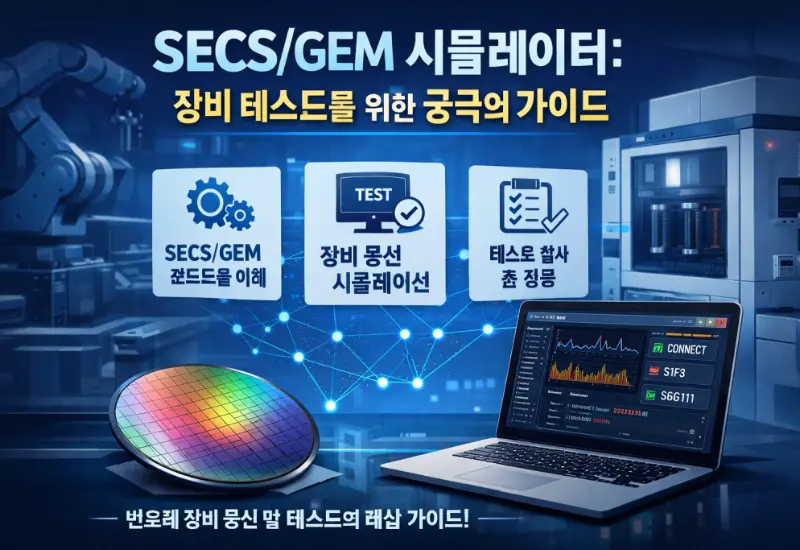
SECS/GEM 시뮬레이터: 장비 테스트를 위한 궁극의 가이드

요약

  • SECS/GEM 시뮬레이터는 반도체 장비와 팩토리 호스트 간의 통신을 테스트하기 위한 핵심적인 가교 역할을 합니다.
  • 초기 개발 및 QA 단계에서 고가의 물리적 하드웨어가 필요 없도록 해줍니다.
  • 주요 기능에는 HSMS 지원, 자동화 스크립팅, 실시간 메시지 로깅이 포함됩니다.
  • 생성형 AI와 고성능 컴퓨팅은 산업 매출을 21% 증가시키며 자동화 테스트에 대한 수요를 확대하고 있습니다.
  • 시뮬레이션 소프트웨어를 사용하면 출시 기간을 단축하고 비용이 많이 드는 장비 크래시를 방지할 수 있습니다.

소개

Gartner(2026)에 따르면, 전 세계 반도체 매출은 2025년에 7,930억 달러에 달했으며, 이는 AI 인프라의 폭발적인 성장에 힘입어 21% 증가한 수치입니다. 2026년을 거치면서 업계는 더욱 복잡하고 데이터 집약적인 제조 환경으로 이동하고 있습니다. 이러한 대규모 확장은 Original Equipment Manufacturer(OEM)에게 그 어느 때보다 빠르게 신뢰할 수 있고 팩토리 준비가 완료된 장비를 제공해야 한다는 막대한 압박을 가하고 있습니다. 이러한 신뢰성의 중심에는 장비가 팩토리의 두뇌와 대화할 수 있도록 해주는 통신 인터페이스가 있습니다.

이러한 인터페이스를 개발하는 과정은 일반적으로 물리적 장비에 대한 접근이 필요하기 때문에 병목 현상을 초래합니다. SECS/GEM 시뮬레이터를 사용하면 통신 프로토콜을 검증할 수 있는 가상 환경을 제공함으로써 이러한 구조를 변화시킬 수 있습니다. 개발자는 호스트 또는 장비를 모방할 수 있으며, 단 하나의 케이블도 팹에 연결되기 전에 모든 SECS-II 메시지와 GEM 상태 전이가 완벽하게 작동하는지 확인할 수 있습니다.

신뢰할 수 있는 SECS/GEM 시뮬레이터를 QA 파이프라인에 통합하는 것은 이제 최상위 제조사에게 선택 사항이 아닌 필수 요소가 되었습니다. 이는 안전하게 문제를 발생시키고, 버그를 조기에 발견하며, 최종 제품이 현대의 대량 생산 제조 시설에 요구되는 엄격한 SEMI 표준을 충족하도록 보장하는 데 필요한 샌드박스를 제공합니다.

SECS/GEM 프로토콜 환경 이해

시뮬레이션이 왜 필요한지를 이해하기 위해서는 관련 표준의 복잡성을 이해해야 합니다. SECS(Semiconductor Equipment Communication Standard)와 GEM(Generic Equipment Model)은 팩토리 자동화의 근간을 이룹니다. 이 프로토콜들은 장비가 어떻게 공정을 시작하는지, 데이터를 어떻게 보고하는지, 그리고 오류를 어떻게 팩토리에 알리는지를 정의합니다.

연결성의 기반 (SECS-II 및 HSMS)

SECS-II, 즉 SEMI E5는 장비와 호스트 간에 교환되는 메시지의 구조를 정의합니다. 이는 상태 요청부터 레시피 관리까지 모든 것을 포괄하는 메시지 라이브러리를 제공합니다. 그러나 이러한 메시지는 전송될 수단이 필요합니다.

SEMI E37로 정의된 HSMS(High-Speed Messaging Service)는 TCP/IP를 사용하는 현대적인 전송 계층입니다. 과거에는 직렬 연결이 사용되었지만, 오늘날의 팹에서는 HSMS가 표준입니다. 고품질의 SECS GEM 시뮬레이션 소프트웨어는 메시지 구조와 전송 핸드셰이크를 모두 완벽하게 처리해야 합니다.

지능 계층 (GEM / SEMI E30)

GEM 표준, 즉 SEMI E30은 SECS-II 상위에 위치합니다. 이는 장비가 어떻게 동작해야 하는지를 정의합니다. 상태 모델, 변수 수집, 알람 관리가 이에 포함됩니다. 시뮬레이터 없이 실제 생산 사이클을 실행하지 않고 장비의 상태 머신이 “Idle”에서 “Executing”으로 올바르게 전이되는지를 검증하는 것은 거의 불가능합니다.

SECS/GEM 시뮬레이터의 핵심 구성 요소

견고한 시뮬레이터는 단순히 몇 개의 핑을 보내는 수준을 넘습니다. 이는 스마트 팩토리의 복잡성을 재현하는 포괄적인 환경으로 기능합니다. 장비를 개발하든, 팩토리의 Manufacturing Execution System(MES)을 개발하든, 시뮬레이터는 퍼즐에서 빠진 조각을 채워줍니다.

호스트 및 장비 시뮬레이션 모드

가장 다재다능한 도구는 이중 기능을 제공합니다. “Host Mode”에서는 소프트웨어가 팩토리 역할을 하여 작업 시작이나 상태 조회를 위해 장비로 명령을 전송합니다. “Equipment Mode”에서는 장비를 모방하여 호스트 명령에 응답하고 실제 장비처럼 이벤트를 생성합니다.

주요 상호작용 시나리오

  • Remote Command Testing: 공정을 시작하기 위해 S2F41 메시지를 전송합니다.
  • Alarm Verification: 호스트가 오류를 기록하는지 확인하기 위해 S5F1 메시지를 트리거합니다.
  • Data Collection: 장비 상태를 모니터링하기 위해 특정 변수(S2F33)를 구독합니다.

메시지 정의 및 관리

SECS Message Language(SML)을 처리하는 것은 핵심 요구 사항입니다. 최신 시뮬레이터는 사용자가 사용자 정의 메시지를 정의하거나 표준 메시지를 수정할 수 있도록 지원합니다. 이러한 유연성은 OEM이 기본 GEM 요구 사항을 넘어서는 특수 기능을 장비에 추가할 때 필수적입니다.

최신 SECS GEM 시뮬레이션 소프트웨어의 주요 기능

엔지니어링 팀을 위한 도구를 선택할 때, 기본 유틸리티와 전문가급 개발 환경을 구분 짓는 특정 기능들이 있습니다. 목표는 팹 자동화 테스트를 최대한 수월하게 만드는 것입니다.

실시간 모니터링 및 트레이스 로깅

장시간 테스트 중 새벽 3시에 통신 오류가 발생한다면, 무엇이 잘못되었는지를 정확히 알아야 합니다. 고급 시뮬레이터는 연결을 통해 전송된 모든 비트와 바이트에 대한 상세 로그를 제공합니다. 이러한 로그에는 타임스탬프와 사람이 읽을 수 있는 SECS-II 데이터 해석이 포함되는 경우가 많아 디버깅 속도를 크게 향상시킵니다.

자동화 테스트 및 스크립팅

수동 테스트는 간단한 확인에는 충분하지만 확장성은 부족합니다. 전문적인 SECS GEM 시뮬레이션 소프트웨어에는 일반적으로 Python이나 C#을 사용하는 스크립팅 엔진이 포함됩니다. 이를 통해 QA 팀은 수천 가지 시나리오를 야간에 실행하는 자동화 테스트 스위트를 생성하여 사람이 놓칠 수 있는 엣지 케이스를 점검할 수 있습니다.

  • Alarm Flooding: 호스트가 1초에 100개의 알람을 처리할 수 있는가?
  • Network Latency: HSMS 연결이 3초 동안 끊어질 경우 장비는 어떻게 반응하는가?
  • Data Integrity: 장비가 모든 변수 보고에서 올바른 데이터 타입을 전송하는가?

반도체 장비 시뮬레이터의 재무적 가치

반도체 하드웨어를 구축하는 것은 매우 비용이 많이 듭니다. 해당 하드웨어를 테스트하는 과정에서는 불필요한 비용을 피해야 합니다. SEMI(2025)에 따르면, 전 세계 반도체 장비 매출은 1,330억 달러로 사상 최고치를 기록했으며, 이는 신규 생산 능력에 대한 막대한 투자를 반영합니다. 이러한 고가 시설에서 소프트웨어 버그로 인해 다운타임이 발생할 위험을 줄이는 것은 매우 중요한 재무적 목표입니다.

개발 라이프사이클 단축

하드웨어가 완성될 때까지 기다린 후 소프트웨어를 테스트하는 것은 프로젝트 지연의 원인이 됩니다. 반도체 장비 시뮬레이터를 사용하면, 소프트웨어 엔지니어는 기능 요구 사항이 정의되는 즉시 통신 코드를 작성하고 검증할 수 있습니다. 이러한 병렬 개발은 제품 출시 시점을 수개월 단축시킬 수 있습니다.

고가 하드웨어 사고 방지

검증되지 않은 제어 스크립트를 500만 달러짜리 리소그래피 장비에서 테스트하는 것은 초보 운전자에게 포뮬러 1 차량을 맡기는 것과 같습니다. 단 하나의 잘못된 명령이 기계적 충돌이나 웨이퍼 손상을 초래할 수 있습니다. 시뮬레이터는 실수가 개발자의 몇 분만 소모할 뿐인 “페일 세이프” 영역을 제공합니다.

팹 자동화 테스트 강화

시스템 통합업체와 팹 운영자에게 가장 큰 과제는 공급업체의 신규 장비가 기존 팩토리 자동화 환경과 원활하게 연동되는지를 보장하는 것입니다. 이때 SECS/GEM 테스트 도구는 팩토리 안정성을 위한 보험 역할을 합니다.

출하 전 규정 준수 검증

팹은 종종 OEM에게 “컴플라이언스 성명서”를 요구합니다. 시뮬레이터를 사용하면 OEM은 장비가 해당 팹의 특정 GEM 요구 사항을 준수한다는 것을 증명하는 보고서를 생성할 수 있습니다. 이는 항상 고압적인 기간인 장비 “Hook-up” 단계에서 현장 작업 시간을 줄여줍니다.

통신 한계 스트레스 테스트

통신 인터페이스는 고주파 데이터 수집을 처리할 수 있을까요? 일부 장비는 몇 밀리초마다 상태를 보고해야 합니다. GEM 통신 시뮬레이터는 고부하 환경을 시뮬레이션하여 소프트웨어 스택이 데이터 부하로 인해 크래시되지 않는지 확인할 수 있습니다.

적합한 SECS/GEM 테스트 도구 선택

모든 시뮬레이터가 동일하게 만들어진 것은 아닙니다. 일부는 경량 유틸리티이고, 다른 일부는 엔터프라이즈급 플랫폼입니다. 선택은 장비의 복잡성과 팩토리 고객의 구체적인 요구 사항에 따라 달라져야 합니다.

SEMI 표준과의 호환성

도구가 E5, E30, E37의 최신 버전을 지원하는지 확인하십시오. 장비가 300mm 표준을 목표로 한다면, E39(Object Services), E40(Process Job Management), E94(Control Job Management)를 포함한 “GEM 300” 스위트 지원 여부를 확인해야 합니다.

사용 편의성 및 UI

설정에 박사 학위가 필요한 도구는 팀의 속도를 떨어뜨릴 뿐입니다. 드래그 앤 드롭 방식의 메시지 생성과 상태 머신의 명확한 시각화를 제공하는 직관적인 인터페이스를 찾으십시오. 현대적인 그래픽 인터페이스가 데이터를 훨씬 명확하게 보여주는데 왜 굳이 커맨드라인 도구와 씨름해야 할까요?

고급 시뮬레이션을 통한 미래 대응

팹이 “Industry 4.0”과 “Smart Manufacturing”으로 이동함에 따라 SECS/GEM 인터페이스에 대한 요구 사항도 변화하고 있습니다. 더 많은 데이터, 더 빈번한 업데이트, 그리고 더 복잡한 로직이 이 프로토콜을 통해 전달되고 있습니다.

최신 SECS/GEM 시뮬레이터를 사용하면 이러한 변화에 발맞출 수 있습니다. AI 기반 예지 보전 통합을 테스트하든, 방대한 “빅 데이터” 수집을 검증하든, 가상 환경은 현대적 혁신 속도에 맞춰 테스트를 확장하는 데 가장 적합한 방법입니다.

전용 시뮬레이터 없이 이러한 복잡성을 관리하려는 것은 설계도 없이 마천루를 짓는 것과 같습니다. 한동안은 서 있을 수 있겠지만, 상황이 흔들릴 때 그 안에 있고 싶지는 않을 것입니다.

결론

반도체 산업은 끊임없이 빠른 속도로 움직입니다. 경쟁력을 유지하기 위해 OEM과 팹 엔지니어는 자동화 계층의 효율성과 신뢰성을 최우선으로 고려해야 합니다. SECS/GEM 시뮬레이터는 고품질 소프트웨어 개발과 엄격한 QA를 위한 필수 기반을 제공합니다. 하드웨어 의존성을 줄이고 자동화된 스크립트 기반 테스트를 가능하게 함으로써, 이러한 도구는 통신 인터페이스를 위험 요소가 아닌 강력한 자산으로 만들어 줍니다.


SECS/GEM 데이터 아이템 설명: 구조, 유형 및 산업적 활용

요약

  • SECS/GEM 데이터 아이템은 반도체 제조 장비와 공장 호스트 시스템 간 정보 교환의 기본 단위로 작동합니다.
  • SEMI E5 표준(SECS-II)은 글로벌 상호 운용성을 보장하기 위해 이러한 데이터 아이템의 포맷과 구조적 요구 사항을 정의합니다.
  • 데이터 아이템은 상태 변수(Status Variables, SV), 장비 상수(Equipment Constants, EC), 데이터 변수(Data Variables, DV)의 세 가지 주요 변수로 분류됩니다.
  • GEM 데이터 구조를 올바르게 구현하면 통합 시간이 단축되고 실시간 모니터링을 위한 데이터 정확성이 향상됩니다.
  • 산업적 활용은 공정 제어, 알람 관리, 장비 통신 데이터를 통한 원격 구성에 집중됩니다.

소개

Statista(2024)에 따르면, 전 세계 반도체 제조 장비 매출은 약 1,060억 달러에 달하며, 이는 산업 전반에 걸친 초자동화(hyper-automation) 추진을 반영합니다. 공장이 확장됨에 따라 서로 다른 장비 간의 원활한 통신에 대한 필요성은 점점 더 중요해지고 있습니다. 이러한 환경은 클린룸 현장의 하드웨어와 팹을 관리하는 소프트웨어 간의 격차를 해소하기 위해 SECS/GEM 데이터 아이템에 크게 의존합니다.

SECS GEM 프로토콜은 장비가 공정 중에 발생하는 상황을 호스트에 정확히 전달할 수 있는 표준화된 방법을 제공합니다. 웨이퍼 이송이든 온도 변화이든, 모든 세부 사항은 특정 데이터 구조로 패키징됩니다. 이러한 표준이 없다면 공장은 서로 다른 언어를 사용하는 기계들의 혼란스러운 집합체가 될 것입니다.

엔지니어와 아키텍트는 견고한 자동화 계층을 구축하기 위해 이러한 데이터 아이템이 어떻게 작동하는지 반드시 이해해야 합니다. 이 가이드는 반도체 통신 표준의 아키텍처와 그것이 고속·고신뢰 데이터 교환을 어떻게 가능하게 하는지를 살펴봅니다. 변수 유형부터 포맷 규칙까지, SEMI E5 표준의 핵심 요소를 자세히 분석합니다.

디코딩 DNA: SECS/GEM 데이터 아이템이란 무엇인가?

가장 단순하게 말해 데이터 아이템은 특정한 형식과 의미를 가진 정보 조각입니다. SECS/GEM 데이터 아이템의 맥락에서 이는 장비의 어휘 역할을 합니다. 호스트 시스템이 질문을 하거나 명령을 내리면, 장비는 이러한 사전 정의된 단위를 사용해 응답합니다.

이러한 아이템은 SECS-II(SEMI E5) 메시징 계층 내에 존재합니다. 센서 상태나 현재 실행 중인 소프트웨어 버전과 같은 메시지의 맥락을 제공합니다. 적절한 데이터 아이템 정의가 없다면 메시지는 편지 없는 봉투에 불과합니다.

신뢰할 수 있는 데이터 교환은 호스트와 장비가 이 아이템들의 ID와 형식에 대해 모두 합의할 때 가능합니다. 이러한 합의는 초기 통합 단계에서 이루어집니다. 이를 통해 장비가 “1”을 전송했을 때, 호스트는 그것이 “True” 불리언 값인지 특정 오류 코드를 의미하는 정수인지 정확히 인식할 수 있습니다.

데이터 아이템의 구성 요소

각 데이터 아이템은 두 가지 핵심 구성 요소를 포함합니다: 포맷 코드와 값입니다. 포맷 코드는 수신자가 이후에 따라오는 바이트를 어떻게 해석해야 하는지를 알려줍니다. 예를 들어, 포맷은 4바이트 정수 또는 가변 길이 문자열을 지정할 수 있습니다.

값은 실제 측정치 또는 상태입니다. 반도체 산업에서는 정밀성이 모든 것을 좌우합니다. 온도 측정값은 웨이퍼 한 배치를 망칠 수 있는 미세한 변화를 포착하기 위해 부동소수점 형식을 필요로 할 수 있습니다.

SEMI E5 표준의 중요성

SEMI E5 표준은 사용 가능한 데이터 포맷의 라이브러리를 정의합니다. 이를 통해 유럽에서 제작된 장비가 아시아에서 설계된 호스트 시스템과 통신할 수 있습니다. 이러한 표준화 덕분에 산업은 글로벌 공급망 전반에 걸쳐 효율적으로 확장할 수 있습니다.

GEM 데이터 구조 분류

제조 장비 통신 및 제어를 위한 일반 모델(GEM)을 사용할 때, 데이터 아이템은 특정 기능 범주로 그룹화됩니다. 이러한 범주를 이해하는 것은 GEM 데이터 구조를 관리하는 모든 사람에게 필수적입니다.

상태 변수(Status Variables, SV)

상태 변수는 장비의 현재 “실시간” 상태를 나타냅니다. 이는 일반적으로 호스트 관점에서 읽기 전용입니다. 호스트가 진공 챔버의 현재 압력을 알고 싶다면, 해당 SV의 값을 요청합니다.

장비 상수(Equipment Constants, EC)

장비 상수는 장비의 동작 방식을 정의하는 변수입니다. SV와 달리, 이들은 보통 읽기 및 쓰기가 가능합니다. 엔지니어는 EC를 변경하여 타임아웃 기간을 조정하거나 레시피 설정값을 수정할 수 있습니다.

데이터 변수(Data Variables, DV)

데이터 변수는 일시적입니다. 일반적으로 특정 이벤트에 연결됩니다. 예를 들어 웨이퍼가 처리될 때, DV는 시작 시간을 기록할 수 있습니다. 이 값은 이벤트 발생 시점에만 유효하며, 공정이 완료되면 변경되거나 무효화될 수 있습니다.

포맷과 장비 통신 데이터

그렇다면 이러한 장비 통신 데이터를 실제로 어떻게 패키징할까요? SECS-II 표준은 다양한 요구 사항을 충족하기 위해 여러 데이터 유형을 제공합니다. 잘못된 포맷을 선택하면 데이터 절단이나 통신 오류가 발생할 수 있습니다.

  • List (L): 다른 데이터 아이템을 포함하는 컨테이너로, 중첩 구조를 가능하게 합니다.
  • Boolean (B): True/False 또는 0/1을 나타내는 단순한 지표입니다.
  • ASCII (A): 레시피 이름이나 시리얼 번호와 같은 사람이 읽을 수 있는 문자열에 사용됩니다.
  • Integers (I1, I2, I4, I8): 다양한 바이트 길이를 가진 부호 있는 정수입니다.
  • Unsigned Integers (U1, U2, U4, U8): 양의 정수 값입니다.
  • Floating Point (F4, F8): 소수점 정밀도를 가진 숫자입니다.

변수 ID가 누락되었을 때 MES가 마치 투덜거리는 유아처럼 행동하는 이유가 궁금한 적이 있나요? 이는 프로토콜이 이러한 포맷을 엄격하게 준수할 것을 기대하기 때문입니다. 시스템이 U4를 기대하는데 ASCII 문자열을 받으면, 통신 연결은 유지될 수 있지만 논리 계층은 실패할 가능성이 큽니다.

변수 ID(Variable IDs, VIDs)

모든 데이터 아이템에는 고유한 변수 ID가 할당됩니다. 이 숫자 식별자는 호스트가 이름을 알 필요 없이 특정 정보를 가리킬 수 있게 해줍니다. 대규모 운영 환경에서는 이러한 VID를 관리하는 것이 MES 엔지니어에게 중요한 과제가 됩니다.

SECS/GEM 데이터 아이템의 산업적 활용

현대 팹에서 SECS/GEM 데이터 아이템은 “스마트 팩토리”의 생명선입니다. McKinsey의 2023년 보고서에 따르면, AI 기반 제조는 더 나은 데이터 활용을 통해 반도체 수율을 최대 10%까지 향상시킬 수 있습니다. 이러한 활용은 장비 데이터 수집 및 활용 방식에서 시작됩니다.

실시간 공정 모니터링

특정 상태 변수를 구독함으로써, 호스트 시스템은 전체 공장 현황을 실시간 대시보드로 구성할 수 있습니다. 이를 통해 운영자는 라인 정지를 초래하기 전에 병목 현상을 파악할 수 있습니다. 모터의 진동 SV가 상승 추세를 보이면, 유지보수를 사전에 계획할 수 있습니다.

레시피 관리

장비 통신 데이터는 레시피 무결성에 필수적입니다. 호스트가 장비에 레시피를 다운로드할 때, 데이터 아이템을 사용해 파라미터를 지정합니다. 이후 장비는 이 아이템을 사용해 로드된 레시피가 특정 웨이퍼 배치 요구 사항과 일치하는지 검증합니다.

알람 및 이벤트 보고

문제가 발생하면 장비는 수집 이벤트(Collection Event, CE)를 트리거합니다. 이 이벤트는 관련 SECS/GEM 데이터 아이템과 함께 번들로 전송되어 맥락을 제공합니다. 단순한 “Error” 메시지 대신, 호스트는 이벤트 ID와 알람을 유발한 특정 센서 값을 함께 수신합니다.

데이터 아이템 구현: 모범 사례

성공적인 통합은 매뉴얼을 따르는 것 이상을 요구합니다. 데이터 조직 및 확장성을 고려한 전략이 필요합니다. 반도체 소프트웨어 아키텍트는 단 한 줄의 코드도 작성하기 전에 이러한 아이템을 매핑하는 데 수 주를 소비하기도 합니다.

일관성이 핵심입니다: 유사한 장비 유형 간에 동일한 명명 규칙과 ID 범위를 사용하십시오.
오버헤드 최소화: 호스트가 한두 개의 값만 필요로 할 경우, 대규모 데이터 아이템 리스트 전송을 피하십시오. 대신 특정 리포트를 사용하십시오.

모든 것을 문서화하십시오: 모든 VID, 포맷, 유효 범위를 나열한 상세한 GEM 매뉴얼을 유지하십시오.

검증: 장비 측에서 작성된 장비 상수가 안전한 운전 범위 내에 있는지 확인하는 검사를 구현하십시오.

SEMI 표준 문서는 보트 닻으로도 사용할 수 있을 만큼 두껍지만, 변수 명명 방법에 대한 구체적인 지침은 부족합니다. 이 지점에서 인간의 직관과 경험이 중요해집니다. 잘 정리된 데이터 맵은 원활한 가동과 수개월의 디버깅 사이의 차이를 만듭니다.

장비 통합의 과제

반도체 통신 표준이 존재함에도 불구하고, 통합은 거의 “플러그 앤 플레이” 방식으로 이루어지지 않습니다. 서로 다른 장비 벤더는 SEMI E5 표준을 약간씩 다르게 해석할 수 있습니다. 이는 엔지니어들이 흔히 “GEM 플레이버링”이라고 부르는 현상을 초래합니다.

일반적인 과제 중 하나는 데이터 동기화입니다. 호스트가 SV를 요청하는 순간 장비가 이를 갱신하고 있다면, 내부 폴링 속도가 맞지 않을 경우 오래된 데이터를 읽을 위험이 있습니다. 엔지니어는 장비 내부 데이터 갱신 속도가 호스트 통신 주파수보다 빠르도록 보장해야 합니다.

또 다른 장애물은 레거시 장비입니다. 오래된 장비는 GEM 표준의 일부만 지원할 수 있습니다. 이러한 경우, MES 엔지니어는 제한된 데이터 세트를 현대적인 팹 호스트가 이해할 수 있는 형식으로 변환하기 위해 “래퍼” 또는 미들웨어를 작성해야 하는 경우가 많습니다.

결론

SECS/GEM 데이터 아이템의 구조와 활용을 숙달하는 것은 현대 반도체 제조를 위한 기본 요건입니다. 이러한 아이템은 수십억 달러 규모의 시설을 최소한의 인간 개입으로 관리하는 데 필요한 명확성과 정밀성을 제공합니다. SEMI E5 표준을 준수함으로써, 제조사는 장비가 자동화 생태계의 가치 있는 구성 요소로 남도록 보장할 수 있습니다. 산업이 더욱 복잡한 노드와 더 높은 생산량으로 나아갈수록, 표준화된 통신의 역할은 더욱 중요해질 것입니다.

Contact Us Today

산업 현장에서 활용 가능한 SECS/GEM 데이터 설계 지원 받기


10 Common Mistakes to Avoid When Using SECS GEM SDK

Introduction

As semiconductor manufacturing continues to evolve toward fully connected, smart fabs, SECS/GEM has become a critical standard for reliable equipment communication. Whether you are an OEM building new tools or a fab integrating equipment into MES, the SECS GEM SDK plays a central role in achieving compliant and stable automation.

However, many teams underestimate the complexity of SECS/GEM implementation. Missteps during development or integration often lead to certification delays, unstable communication, or recurring production issues. This blog highlights 10 common mistakes to avoid when using a SECS GEM SDK, helping you reduce integration risks and improve overall semiconductor equipment automation

1. Not Fully Understanding SEMI Standards

One of the most common mistakes is assuming that SECS/GEM is just a messaging protocol. In reality, SECS/GEM is built on multiple SEMI standards such as E4, E5, E30, and often GEM300. Using a SECS GEM SDK without understanding these standards can lead to incomplete or non-compliant implementations.

2. Ignoring Proper State Model Implementation

Incorrect control and process state handling is a frequent cause of SECS/GEM communication errors. Many developers hardcode states or skip edge cases, which leads to unpredictable behavior during production. A robust SECS/GEM implementation must strictly follow defined state transitions.

3. Hardcoding SVIDs, CEIDs, and Alarms

Hardcoding variables, events, and alarms reduces flexibility and makes future updates difficult. A good SECS GEM SDK should allow configuration-driven management of SVIDs, CEIDs, and alarm definitions to support scalable SECS/GEM integration.

4. Poor Error and Exception Handling

Ignoring timeout handling, retry mechanisms, or invalid message scenarios is a major risk. SECS/GEM communication operates in real-time production environments, and poor error handling can cause equipment downtime or MES disconnections.

5. Incomplete Alarm and Event Reporting

Many tools technically “support” alarms but fail to provide meaningful context. In semiconductor equipment automation, alarms should be clear, traceable, and actionable. Improper alarm reporting weakens the value of SECS/GEM data for operators and engineers.

6. Skipping Host Simulation and Testing

Relying solely on on-site testing is a costly mistake. Every SECS GEM SDK integration should be validated using host simulators before fab deployment. This helps identify SECS/GEM communication errors early and reduces commissioning time.

7. Treating SECS/GEM as an Afterthought

Some OEMs add SECS/GEM implementation late in the development cycle. This often leads to rushed design, missing features, or failed certifications. SECS/GEM should be considered a core part of equipment architecture from day one.

8. Lack of Version and Configuration Management

Without proper version control and configuration tracking, changes to SECS/GEM integration can introduce regressions. Maintaining configuration history is essential for audits, troubleshooting, and long-term support.

9. Limited Performance and Load Testing

High message volumes, especially in advanced semiconductor equipment automation, can stress communication layers. Failing to test performance under load may result in delays, message drops, or unstable host connections when production scales.

10. Choosing the Wrong SECS GEM SDK

Not all SDKs are created equal. A weak or poorly supported SECS GEM SDK can limit flexibility, increase maintenance effort, and slow down integration. Choosing a mature, configurable, and well-supported SDK is critical for long-term success with SECS/GEM.

Conclusion

Avoiding these common mistakes can dramatically improve the success of your SECS/GEM implementation. A well-designed SECS GEM SDK integration leads to faster equipment qualification, fewer communication issues, and more reliable semiconductor equipment automation. By focusing on standards compliance, testing, scalability, and long-term maintainability, OEMs and fabs can unlock the full value of SECS/GEM connectivity.

Planning a SECS/GEM integration or struggling with communication issues?

Our experts specialize in SECS GEM SDK integration, troubleshooting, and compliance testing for OEMs and fabs.

Contact us today to schedule a consultation and ensure your equipment is fully SECS/GEM compliant, production-ready, and future-proof.

More Blog Post:

FAQ

What is a SECS GEM SDK and why is it important?

A SECS GEM SDK is a software development kit that helps semiconductor equipment communicate with factory host systems using the SECS/GEM standard. It is essential for achieving reliable automation, real-time monitoring, and compliance with SEMI standards in semiconductor equipment automation.

What are the most common SECS/GEM communication errors?

Common SECS/GEM communication errors include incorrect state model handling, message timeouts, improper alarm reporting, and mismatched SVIDs or CEIDs. These issues usually arise from incomplete SECS/GEM implementation or insufficient testing during integration.

How long does SECS/GEM integration typically take?

The timeline for SECS/GEM integration depends on tool complexity and readiness. A well-planned SECS GEM SDK integration usually takes a few weeks, while advanced tools or GEM300 implementations may take several months.

Can SECS/GEM be added to existing semiconductor equipment?

Yes, SECS/GEM can be retrofitted into existing equipment using a compatible SECS GEM SDK. However, older systems may require additional customization to meet modern SECS/GEM implementation and automation requirements.

How do I choose the right SECS GEM SDK?

The right SECS GEM SDK should be standards-compliant, configurable, scalable, and well-supported. It should simplify SECS/GEM integration, reduce communication errors, and support long-term semiconductor equipment automation needs.

SEMI PV2 Fotovoltaïsche Productie: Gids voor Standaarden & Automatisering

Samenvatting

  • Precisienormen: SEMI PV2 definieert het communicatieprotocol (PVECMS) voor apparatuur-naar-host-connectiviteit in zonneproductie.
  • Naadloze integratie: De standaard weerspiegelt halfgeleiderprotocollen voor snelle data-uitwisseling en interoperabiliteit van apparatuur.
  • Operationele efficiëntie: Implementatie vermindert stilstand en verhoogt de opbrengst via realtime monitoring.
  • Toekomstbestendig: Slimme PV-fabrieken gebruiken deze protocollen voor Industry 4.0, AI en geavanceerde analyses.
  • Wereldwijde schaalbaarheid: Uniforme standaarden maken snelle opschaling mogelijk om aan de stijgende wereldwijde energievraag te voldoen.

Introductie

Volgens Statista (2024) bedroeg de wereldwijde investering in zonne-energie in 2023 ongeveer 393 miljard dollar, wat een sterke verschuiving naar hernieuwbare infrastructuur weerspiegelt. Deze kapitaalstroom vereist een gelijke sprong in productiebetrouwbaarheid en doorvoer. SEMI PV2 voor fotovoltaïsche productie vormt de ruggengraat van deze industriële evolutie en levert de technische taal waarmee machines communiceren.

Efficiëntie in een moderne zonnefabriek hangt af van meer dan hardware; ze berust op de onzichtbare datastroom over de werkvloer. Zonder gestandaardiseerde communicatie wordt een fabriek een verzameling losse eilanden. De PV2-standaard zorgt ervoor dat elke sensor en robotarm dezelfde taal spreekt.

Moderne faciliteiten moeten duizenden wafers per uur verwerken met microscopische precisie. Dit niveau is onhaalbaar zonder robuuste automatiseringskaders voor fotovoltaïsche productie. Door vast te houden aan SEMI-richtlijnen minimaliseren fabrikanten fouten en maximaliseren zij het rendement op hun investeringen.

Inzicht in de SEMI PV2-standaard voor zonneproductie

Het SEMI PV2-protocol, formeel bekend als de Specification for PV Equipment Communication Interfaces (PVECMS), definieert hoe apparatuur communiceert met fabrieksbeheersystemen. Het functioneert vergelijkbaar met SECS/GEM in de chipindustrie. Hoewel de halfgeleiderwortels duidelijk zijn, richt deze versie zich op de unieke hogesnelheidseisen van zonnecelproductie.

Standaardisatie voorkomt de “spaghetti-code”-valkuil. In plaats van maatwerkdrivers voor elk apparaat gebruiken engineers een plug-and-play-aanpak. Dit verkort de inbedrijfstelling van nieuwe productielijnen van maanden naar weken.

Kerncomponenten van PVECMS

Het PV2-framework focust op berichtstructuren: statusvariabelen, apparatuurconstanten en dataverzamelplannen. Bij fouten ontvangt het hostsysteem duidelijke, actiegerichte alarmen in plaats van vage codes.

Dataverzameling en traceerbaarheid

In een slimme fabriek heeft elke wafer een digitale tweeling. SEMI PV2 maakt gedetailleerde dataverzameling mogelijk in elke stap van doping en coating. Bij rendementsverlies kan de oorzaak worden herleid tot een specifieke thermische cyclus of depositiestap.

De rol van automatisering in fotovoltaïsche productie

Automatisering is de motor van de energietransitie. Handmatige omgang met fragiele siliciumwafers leidt tot breuk en variatie. Met automatisering bereiken bedrijven herhaalbaarheid die mensen niet kunnen evenaren.

Robots nemen het zware werk over: van het laden van kwartsboten in ovens tot eindtesten met elektroluminescentie. Dit verhoogt snelheid en veiligheid, vermindert fysieke belasting en beperkt menselijke contaminatie in de cleanroom.

Hogedoorvoer-handlingsystemen

Moderne zonnecellijnen verwerken soms meer dan 8.000 wafers per uur. Op deze snelheid kan zelfs een microseconde vertraging leiden tot een “wafer jam”. Door SEMI-gestuurde hogesnelheidsautomatisering worden zulke knelpunten voorkomen.

Visiesystemen en kwaliteitscontrole

AI speelt een sleutelrol bij inspectie. Geautomatiseerde vision-systemen detecteren microbarsten en pasta-defecten die het oog mist. Via PV2 wordt feedback direct teruggekoppeld voor onmiddellijke procesaanpassing.
Opmerking: Zelfs de beste robot faalt zonder interoperabiliteit—de geheime saus van hoge opbrengsten.

De slimme PV-fabriek bouwen

Een slimme fabriek is een levend systeem. Met PV-automatisering past zij zich aan haar omgeving aan—bijvoorbeeld door droogtijden te wijzigen bij veranderende luchtvochtigheid.

Dit vereist diepe integratie van SEMI-standaarden. Als machines dezelfde regels volgen, kan machine learning uitval voorspellen voordat die optreedt. De overgang van reactief naar voorspellend onderhoud is cruciaal voor winstgevendheid.

Industry 4.0 en de zonne-sector

De vierde industriële revolutie brengt gedecentraliseerde besluitvorming. Machines optimaliseren lokaal de flow, verlagen serverbelasting en verhogen robuustheid.

Is jouw fabriek slim of alleen snel? Een echte slimme fabriek gebruikt PV2-data voor simulaties—“what-if”-scenario’s testen procesparameters virtueel voordat materiaal wordt ingezet.

Voordelen van naleving van SEMI PV2-standaarden

Waarom certificeren? Voor markttoegang en betrouwbaarheid. Tier-1 afnemers vereisen vaak SEMI-conforme apparatuur—een vertrouwenslaag in een markt met dunne marges.

Lagere integratiekosten

Gestandaardiseerde interfaces verlagen integratiekosten. Minder tijd aan debugging, meer aan procesoptimalisatie—essentieel in een markt met voortdurende prijsdruk per watt.

Toekomstbestendige assets

De sector beweegt snel. SEMI PV2 is uitbreidbaar en laat nieuwe datatypen toe zonder complete herbouw van de software-architectuur.

Uitdagingen bij implementatie

De overgang naar volledige SEMI PV2-compliance kent obstakels. Oudere machines missen soms rekenkracht voor moderne stacks; “bridge”-apparaten vertalen legacy-signalen naar PV2-data.

Ook mensen zijn cruciaal. Engineers hebben nichekennis nodig op het snijvlak van software en industriële fysica—talent vinden blijft lastig.

Cybersecurity in de slimme fabriek

Meer connectiviteit betekent meer risico. SEMI-implementatie moet gepaard gaan met sterke netwerkbeveiliging om data te beschermen tegen spionage en aanvallen.

De toekomst van zonneproductiesystemen

We bewegen richting “lights-out” productie met minimale menselijke aanwezigheid. Toekomstige systemen gebruiken waarschijnlijk 5G voor ultralage latency.

Misschien voeden zonnepanelen straks de fabrieken die ze maken—een poëtische cirkel die absolute synchronisatie vereist. De drang naar efficiëntie stopt niet; standaarden wijzen de weg.

Conclusie

De energietransitie vraagt om schaalbare, hoogwaardige zonneproductie. Met SEMI PV2 ontstaat een fundament voor innovatie en betrouwbaarheid. Deze standaarden maken geavanceerde automatisering mogelijk en blijven cruciaal voor succes in slimme PV-fabrieken.

Contact Us Today

Krijg stapsgewijze hulp bij het implementeren van SEMI PV2-automatiseringsnormen


Gids voor halfgeleidercommunicatiestandaarden: SECS/GEM & verder

Samenvatting

  • Kernprotocollen: SECS/GEM blijft de ruggengraat van halfgeleidercommunicatiestandaarden en maakt naadloze gegevensuitwisseling mogelijk tussen apparatuur en hostsysteem.
  • Industrie-evolutie: De overgang naar Industry 4.0 vereist geavanceerde protocollen zoals GEM300 en EDA (Interface A) voor hogere databandbreedte.
  • Operationele impact: Gestandaardiseerde communicatie verlaagt integratiekosten, minimaliseert menselijke fouten en maakt realtime monitoring mogelijk in high-volume fabs.
  • Toekomstperspectief: Opkomende AI- en machine-learningtoepassingen zijn afhankelijk van hoogwaardige datastromen uit moderne halfgeleiderfabriek-hostcommunicatiesystemen.

Introductie

Volgens SEMI (2024) zal de wereldwijde markt voor halfgeleiderproductieapparatuur naar verwachting in 2025 124 miljard dollar bereiken, grotendeels gedreven door de behoefte aan slimmere en beter verbonden faciliteiten. In deze omgeving met hoge inzet fungeren halfgeleidercommunicatiestandaarden als een universele taal die voorkomt dat een miljarden kostende fabriek (fab) verandert in een hightech Toren van Babel. Zonder deze protocollen zouden je wafersorteerder en je Manufacturing Execution System (MES) net zo weinig gemeen hebben als een platenspeler en een smartphone.

De complexiteit van moderne chipproductie vereist dat elk stuk hardware zijn status rapporteert, recepten ontvangt en fouten in realtime signaleert. Deze connectiviteit is geen luxe; het is de ruggengraat van de volledige productielijn. Voor engineers en automatiseringsarchitecten is het begrijpen van deze protocollen het verschil tussen een soepel draaiende “lights-out” fabriek en een chaotische storingsnachtmerrie.

Naarmate we dieper het tijdperk van de slimme fabriek ingaan, is de afhankelijkheid van stabiele communicatie­standaarden alleen maar toegenomen. Deze kaders zorgen ervoor dat een machine, ongeacht of die van een leverancier uit Europa, Azië of de VS komt, direct kan aansluiten op het centrale zenuwstelsel van de fabriek.

De basis van connectiviteit: SECS/GEM

In het hart van de industrie staat het SECS/GEM-protocol. Dit is geen enkel regelboek, maar een gelaagde communicatie-aanpak die al decennia standhoudt.

Uitleg van de SECS-standaarden

SECS staat voor Semiconductor Equipment Communication Standard. Het bestaat uit twee hoofdonderdelen die bepalen hoe data wordt verzonden. SECS-I (E4) was oorspronkelijk gericht op seriële communicatie, terwijl HSMS (High-Speed SECS Message Services, E37) het protocol aanpaste voor moderne Ethernet-omgevingen. Zie SECS als de envelop en de postdienst: het definieert hoe het bericht wordt verpakt en waar het naartoe gaat.

De rol van GEM (E30)

Als SECS de envelop is, dan is GEM (Generic Model for Communication and Control of Manufacturing Equipment) de brief erin. Het definieert de daadwerkelijke inhoud van de berichten. Volgens PeerGroup (2023) zorgt de GEM-standaard voor een consistente interface voor alle apparatuur, ongeacht de functie. Het beschrijft hoe een machine moet starten, stoppen en zijn status rapporteren aan de fab-hostcommunicatiesystemen.

Verder dan de basis: GEM300 en 300mm-fabstandaarden

Toen de industrie overstapte van 200mm- naar 300mm-wafers, explodeerde de complexiteit van automatisering. Handmatig zware FOUP’s (Front Opening Unified Pods) door een enorme cleanroom dragen was geen optie meer. Dit leidde tot de ontwikkeling van GEM300-standaarden.

Automatisering en carriermanagement

De GEM300-suite omvat standaarden zoals E40 (Process Management), E87 (Carrier Management) en E94 (Control Job Management). Deze protocollen stellen de fab-host in staat niet alleen de machine, maar ook het materiaal dat erdoorheen beweegt te beheren. Hoe weet het systeem welke wafer bij welke klant hoort? Deze standaarden geven het antwoord.

Hogere precisie met E90 en E116

E90 volgt de locatie van substraten binnen een tool, terwijl E116 een kader biedt voor prestatiemonitoring van apparatuur. Heeft de machine onderhoud nodig of is het slechts een geplande pauze? Deze standaarden houden het MES continu op de hoogte.

Data-gedreven evolutie: EDA / Interface A

Hoewel SECS/GEM uitstekend is voor besturing, kan het moeite hebben met “Big Data”. Als je ooit geprobeerd hebt een 4K-film te downloaden via een inbelverbinding uit de jaren ’90, herken je de frustratie. Deze bottleneck leidde tot Equipment Data Acquisition (EDA), ook bekend als Interface A.

De kracht van parallelle datastromen

In tegenstelling tot SECS/GEM, dat vaak gekoppeld is aan de besturingslogica van de machine, werkt EDA via een aparte “alleen-lezen” dataroute. Volgens Cimetrix (2023) maakt EDA veel hogere bemonsteringsfrequenties mogelijk zonder de primaire taken van de apparatuur te verstoren. Dit is cruciaal voor geavanceerde procescontrole en voorspellend onderhoud.

Ondersteuning van Industry 4.0-standaarden

In een omgeving met slimme fabriekscommunicatie gebruikt EDA webservices en XML/HTTP om enorme hoeveelheden metadata te verzenden. Engineers kunnen exact zien wat er in een kamer gebeurde tijdens een specifieke microseconde van een plasma-etsproces. Het is het verschil tussen een foto van een auto-ongeluk en een vluchtgegevensrecorder.

Implementatie-uitdagingen voor systeemintegrators

Het verbinden van een legacy-tool met een modern MES is niet altijd eenvoudig. Apparatuur wordt vaak als “SECS-compliant” geleverd, maar spreekt in de praktijk een iets ander dialect dan de fab verwacht.

Standaardconformiteit en testen

Integratie vereist vaak grondige karakterisering. Dat een tool GEM ondersteunt, betekent niet dat hij alle variabelen levert die jouw fabriek nodig heeft. Waarom rapporteert de machine de temperatuur niet elke vijf seconden? Meestal is dit een mappingprobleem in de GEM-interface.

De kloof tussen IT en OT overbruggen

De botsing tussen Information Technology (IT) en Operational Technology (OT) zorgt voor spanning. Fab-IT-teams willen veiligheid en hoge bandbreedte; equipment engineers willen stabiliteit en lage latency. Het balanceren van deze belangen is de kern van het werk van moderne systeemintegrators.

De toekomst van halfgeleidercommunicatiestandaarden

Met de overgang naar 2nm-nodes en verder zal de hoeveelheid data per fab enorm toenemen. Volgens McKinsey (2023) kan AI-gedreven productie tegen 2030 tot 300 miljard dollar aan waarde toevoegen aan de halfgeleiderindustrie. Maar AI is slechts zo goed als de data die het ontvangt.

Daarom moeten communicatie­standaarden blijven evolueren. We zien een verschuiving naar meer gestandaardiseerde plug-and-play-mogelijkheden, waarbij handmatige datamapping verdwijnt. Als een machine zichzelf automatisch aan de host kan beschrijven, verkort dit de time-to-market aanzienlijk.

Zullen we ooit volledig afscheid nemen van SECS/GEM? Onwaarschijnlijk. De industrie is conservatief, omdat één uur downtime miljoenen kan kosten. In plaats daarvan zullen legacy-protocollen naast nieuwere, snellere standaarden blijven bestaan in een hybride ecosysteem.

Conclusie

Het beheersen van halfgeleidercommunicatiestandaarden is geen nichevaardigheid meer, maar een strategische noodzaak voor iedereen in de chipketen. Van de betrouwbare basis van SECS/GEM tot het hoge-bandbreedtepotentieel van EDA: deze protocollen houden het meest complexe productieproces ter wereld efficiënt en schaalbaar. Terwijl we de grenzen van silicium blijven verleggen, zorgen communicatiestandaarden ervoor dat mens en machine op één lijn blijven.

Contact Us Today

Krijg stapsgewijze hulp bij SECS/GEM-communicatiestandaarden


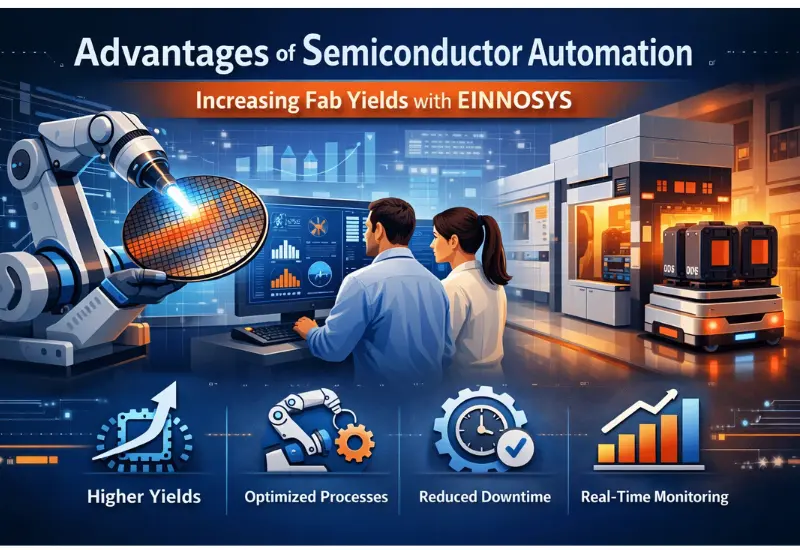
Automatisierungsvorteile in der Halbleiterindustrie und EINNOSYS-Lösungen für die IT

Zusammenfassung

  • Effizienzsteigerung: Automatisierung reduziert menschliche Fehler und erhöht direkt den Wafer-Durchsatz sowie die Anlagenverfügbarkeit.
  • Kostensenkung: Intelligente Systeme optimieren die Ressourcenzuteilung und senken die Kosten pro funktionsfähigem Die.
  • Datenbasierte Entscheidungen: Echtzeitüberwachung ermöglicht vorausschauende Wartung und verhindert kostspielige ungeplante Stillstände.
  • Wettbewerbsvorteil: Der Übergang zu Industry-4.0-Standards sichert langfristige Wettbewerbsfähigkeit in einem volatilen Markt.
  • Strategische Partnerschaft: EINNOSYS IT Solutions schlagen die Brücke zwischen Legacy-Hardware und modernen digitalen Steuerungssystemen.

Einleitung

Der globale Halbleitermarkt dreht sich längst nicht mehr nur um die kleinsten Transistoren, sondern darum, wer sie mit dem geringsten Ausschuss produzieren kann. Laut einem Bericht von McKinsey & Company (2024) können Halbleiterunternehmen, die KI-gestützte Automatisierung erfolgreich einsetzen, eine Steigerung des EBIT (Ergebnis vor Zinsen und Steuern) von 15 % bis 20 % erzielen. Dieser finanzielle Unterschied entscheidet oft darüber, ob ein Unternehmen Marktführer bleibt oder Mühe hat, den Betrieb aufrechtzuerhalten.

Um diese Gewinne zu realisieren, reicht es nicht aus, einfach neue Maschinen zu kaufen. Erforderlich ist ein ganzheitlicher Ansatz der Halbleiterautomatisierung, der Software, Hardware und menschliche Expertise integriert. Mit zunehmender Chip-Komplexität schrumpft die Fehlertoleranz nahezu auf null, wodurch manuelle Eingriffe eher zum Risiko als zur Absicherung werden.

Fab-Manager stehen heute vor einem „perfekten Sturm“ aus steigenden Lohnkosten und dem dringenden Bedarf an höheren Ausbeuten. Um dem zu begegnen, konzentrieren sich die EINNOSYS IT Solutions darauf, einen nahtlosen Datenfluss über den gesamten Shopfloor zu schaffen. Durch die Digitalisierung des Produktionsrückgrats wird der Wandel von reaktivem Krisenmanagement hin zu proaktiver Optimierung möglich.

Die zentralen Vorteile der Halbleiterautomatisierung

Der Übergang zur intelligenten Halbleiterfertigung ist kein Trend, sondern eine Überlebensstrategie. Wenn wir über die Vorteile der Halbleiterautomatisierung sprechen, geht es um eine grundlegende Neugestaltung der Art und Weise, wie Silizium durch die Fertigungslinie fließt.

Eliminierung menschlicher Variabilität

Selbst der erfahrenste Techniker hat einmal einen schlechten Tag. In einer Reinraumumgebung kann ein falsch platzierter Wafer oder eine minimale Verzögerung bei der Chemikalienzufuhr eine komplette Charge ruinieren. Automatisierung stellt sicher, dass jeder Prozessschritt rund um die Uhr mit Sub-Millisekunden-Präzision ausgeführt wird.

Skalierung des Durchsatzes ohne Flächenerweiterung

Der physische Ausbau einer Fab ist extrem kostspielig. Fabrikautomatisierungssoftware ermöglicht es jedoch, mehr Produktivität aus der bestehenden Fläche herauszuholen. Durch die Optimierung der „Verkehrssteuerung“ von automatisierten Materialtransportsystemen (AMHS) werden Engpässe reduziert, die zuvor teure Lithografietools ungenutzt ließen.

Echtzeit-Fehlererkennung

Bis zum Ende eines Produktionszyklus zu warten, um einen Defekt zu entdecken, ist ein Rezept für finanzielle Verluste. Moderne Automatisierungslösungen nutzen Machine Vision und Sensorfusion, um Abweichungen sofort zu erkennen. Wenn ein Plasmaätzprozess außerhalb der Spezifikation läuft, stoppt das System die Linie, bevor weitere Wafer beschädigt werden.

Vorantreiben der digitalen Transformation in der Halbleiterfertigung

Der Weg zur vollständig autonomen „Lights-Out“-Fab wird häufig als digitale Transformation der Halbleiterindustrie bezeichnet. Es handelt sich um einen mehrschichtigen Prozess, der physische Anlagen (die „Edge“) mit übergeordneten Planungssystemen (der „Cloud“) verbindet.

Überbrückung der OT- und IT-Lücke

Eine der größten Herausforderungen in jeder Fab ist die Kommunikation zwischen Operational Technology (OT) auf dem Shopfloor und Information Technology (IT) im Büro. Laut Gartner (2023) bleiben 80 % der Fertigungsdaten ungenutzt, weil Systeme isoliert arbeiten. EINNOSYS IT Solutions ist darauf spezialisiert, diese Silos aufzubrechen, sodass Führungskräfte dieselben Echtzeit-Yield-Daten sehen wie Ingenieure vor Ort.

SECS/GEM-Standardisierung

Kommunikation ist alles. Ohne standardisierte Protokolle wie SECS/GEM würden Maschinen unterschiedlicher Hersteller verschiedene Sprachen sprechen. Automatisierungsplattformen fungieren als universeller Übersetzer und ermöglichen es, eine heterogene Anlagenlandschaft als ein einheitliches, kohärentes System zu betreiben.

Implementierung von Fab-Automatisierungslösungen für hohe Ausbeuten

Yield ist die Kennzahl, die einen CTO nachts wach hält. Werden die Ziele nicht erreicht, schwindet der ROI. Laut SEMI (2024) wird die globale Halbleiterindustrie über 100 Milliarden US-Dollar in Fab-Equipment investieren – doch ohne geeignete Fab-Automatisierungslösungen schöpfen viele Unternehmen dieses Potenzial nicht aus.

Vorausschauende Wartung vs. reaktive Reparatur

Warum warten, bis eine Pumpe ausfällt, wenn Daten bereits zeigen, dass sie in drei Tagen versagen wird? Predictive Maintenance nutzt Vibrations- und Temperaturdaten, um Wartungen während geplanter Stillstände einzuplanen. So wird das „katastrophale Dienstag“-Szenario verhindert, bei dem ein Haupttool während einer Hochlaufphase ausfällt.

Ressourcen- und Energieoptimierung

Der Betrieb einer Fab ist energieintensiv. Automatisierung kann den Energieverbrauch je nach Tool-Auslastung regulieren und so sowohl den CO₂-Fußabdruck als auch die Energiekosten senken. Ein seltener Win-Win-Fall, bei dem Nachhaltigkeit auch wirtschaftlich sinnvoll ist.

Ein kurzer Realitätscheck: Haben Sie sich schon einmal gefragt, warum Ihr Lieblingsgerät ständig ausverkauft ist? Meist liegt es nicht am Silizium, sondern an Engpässen im Backend. Automatisierung ist die „Rohrleitung“, die den Siliziumfluss aufrechterhält.

Warum eine Partnerschaft mit EINNOSYS IT Solutions?

Der Markt ist voller Softwareanbieter, doch nur wenige verstehen die „Seele“ einer Halbleiter-Fab. Die Lösungen von EINNOSYS IT Solutions werden von Menschen entwickelt, die jahrelang im Reinraum gearbeitet haben – nicht nur am Schreibtisch.

Maßgeschneiderte Lösungen statt Einheitsansatz

Jede Fab hat ihre Eigenheiten, Legacy-Tools und spezifischen Schwachstellen. Standardsoftware verursacht oft mehr Probleme, als sie löst. Individuell angepasste Lösungen stellen sicher, dass neue Technologien auch mit einem 20 Jahre alten Ätztool harmonieren, das man noch nicht ersetzen kann.

Zukunftssicherheit für Industry 5.0

Während viele noch zu Industry 4.0 aufholen, ist die nächste Welle der Mensch-Roboter-Kollaboration bereits da. Ist Ihre aktuelle Infrastruktur bereit für eine Welt, in der KI-Agenten untereinander über Tool-Zeiten verhandeln? Die richtige Basis heute verhindert einen kompletten Neuaufbau in fünf Jahren.

Fühlt sich ein vollständiges System-Upgrade an wie eine Herzoperation während eines Marathons? Das sollte es nicht. Der richtige Partner macht den Übergang schrittweise und beherrschbar.

Fazit

Die Ära der manuellen Halbleiterfertigung neigt sich dem Ende zu. Die enorme Komplexität moderner Chip-Architekturen macht eine rein menschliche Steuerung unmöglich. Durch die Nutzung der vielfältigen Vorteile der Halbleiterautomatisierung – von höheren Ausbeuten bis hin zu niedrigeren Betriebskosten – sichern Hersteller ihre Wettbewerbsfähigkeit auf dem globalen Markt. Ob Optimierung einer einzelnen Linie oder vollständige digitale Transformation: EINNOSYS IT Solutions bieten das Know-how und die Werkzeuge, um Daten in einen

Contact Us Today

Erhalten Sie Expertenberatung zu Einnosys IT- und Automatisierungslösungen

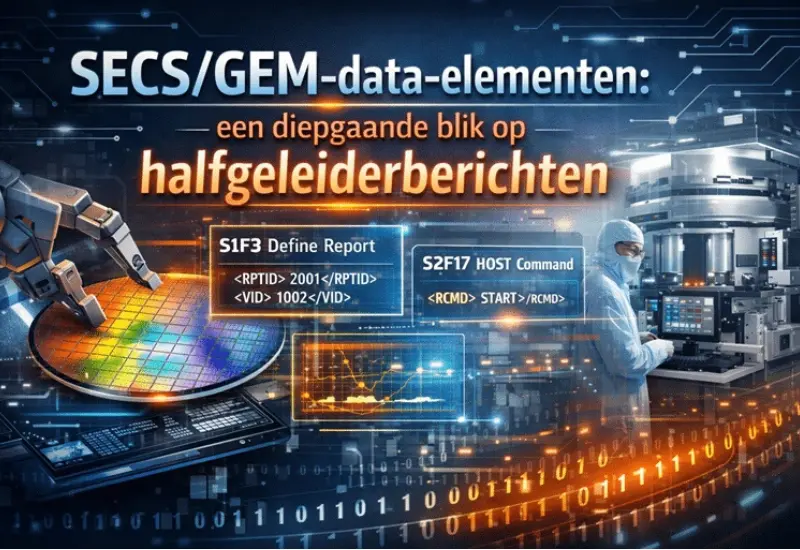
SECS/GEM-data-elementen: een diepgaande blik op halfgeleider­berichten

Samenvatting

  • SECS/GEM fungeert als de universele taal voor communicatie van halfgeleiderproductieapparatuur en fabrieksautomatisering.
  • SECS/GEM-data-elementen bepalen hoe informatie zoals temperatuur, druk en status wordt geformatteerd en verzonden.
  • Het protocol volgt een duidelijke hiërarchie: SECS-I/HSMS voor transport, SECS-II voor berichtstructuur en GEM voor gedragsstandaarden.
  • Kerncomponenten zijn Statusvariabelen (SV), Datawaarden (DV) en Equipment-constanten (EC).
  • Inzicht in het SML-formaat en berichttypen is essentieel voor naadloze MES-integratie en snelle dataverzameling.

Introductie

Volgens een SEMI-rapport uit 2024 bereikte de wereldwijde markt voor halfgeleiderapparatuur $106,3 miljard aan facturering, wat de sterke focus op geavanceerde nodes en slimme fabrieksintegratie weerspiegelt (SEMI, 2024). Naarmate fabs autonomer worden, is gestandaardiseerde communicatie geen luxe meer maar een vereiste om te overleven. Hier komen SECS/GEM-data-elementen in beeld: de bouwstenen die een miljoenen kostende lithografiemachine laten praten met het “brein” van de fabriek zonder digitale chaos.
Implementatie draait niet alleen om het aansluiten van een kabel; het gaat erom dat het Equipment Model (GEM) fysieke hardware-acties correct vertaalt naar digitale handtekeningen. Wanneer een engineer op een scherm de positie van een wafer ziet, kijkt hij naar een ontcijferde byte-reeks die exact volgens SEMI-standaarden is opgebouwd. Zonder deze data-elementen zou de fabvloer een chaotische Toren van Babel zijn.
Deze gids verkent de anatomie van de SECS-berichtstructuur, de nuances van variabelen en hoe ontwikkelaars het SECS SML-formaat gebruiken om robuuste interfaces te bouwen. Of je nu een automatiseringsveteraan bent of een software-engineer nieuw in de cleanroom: begrip van deze datastructuren is de eerste stap naar echte fabriekssynchronisatie.

SECS GEM data elementen

Inzicht in de SECS/GEM-protocolstack

De SECS/GEM-standaard is een verzameling protocollen die samen werken. Om data-elementen te begrijpen, moet je eerst de container kennen. De stack begint bij de fysieke laag (HSMS of SECS-I), gaat naar de logische laag (SECS-II) en eindigt bij de gedragslaag (GEM).

SECS-II: de grammatica van communicatie

Als HSMS de telefoonlijn is, dan is SECS-II de taal die erover wordt gesproken. Deze laag definieert de SECS-berichtstructuur door data te organiseren in Streams en Functions. Streams categoriseren berichten (bijv. Stream 1 voor Equipment Status), terwijl Functions de specifieke actie bepalen (bijv. Function 3 is een Selected Status Request).

De rol van GEM in datastandaardisatie

GEM (Generic Model for Communication and Control of Manufacturing Equipment) ligt bovenop SECS-II en definieert welke SECS/GEM-berichttypen verplicht zijn. Waar SECS-II het “woordenboek” levert, geeft GEM de “sociale etiquette”: hoe een machine zich moet gedragen bij een remote start of wanneer een alarm afgaat.

Diepgaande blik op SECS/GEM-data-elementen

In het hart van elk bericht zitten de data-elementen: specifieke informatie zoals een integer voor temperatuur of een boolean voor een sensorstatus. Deze elementen zijn getypeerd en genest in lijsten om complexe datastructuren te vormen.

Variabelentypen: SV, DV en EC

Binnen equipment-dataverzameling worden SECS-variabelen ingedeeld op basis van hun gedrag en eigenaarschap:

  • Statusvariabelen (SV): de actuele “live” status van de apparatuur, zoals de huidige receptnaam of gasflow.
  • Datawaarden (DV): tijdelijk van aard; gekoppeld aan een collection event (CEID) en alleen geldig op het moment van het event
  • Equipment-constanten (EC): configuratie-instellingen die het hostsysteem meestal kan aanpassen om het gedrag van de machine te wijzigen.

Data-items en formaatcodes

Elk data-element draagt een formaatcode. Zo kan code 32 een 4-byte integer betekenen, terwijl code 20 een ASCII-string aanduidt. Deze strikte typering voorkomt dat het MES een “Machine-ID” verwart met een “Drukmeting”. Het is de ultieme “twee keer meten, één keer snijden”-aanpak voor dataintegriteit.

Het SECS SML-formaat ontcijferen

SECS Message Language (SML) is de mens-leesbare notatie voor SECS-II-berichten. Machines wisselen binaire headers en byte-arrays uit, maar engineers gebruiken SML om interfaces te documenteren en te debuggen.

Anatomie van een SML-bericht

Een SML-bericht toont duidelijk Stream, Function en richting (Host → Equipment of omgekeerd).

S1F3: een statusaanvraag

<L [2]>: een lijst met twee items

<U4 101>: een ongetekende 4-byte integer met waarde 101

Waarom lijsten? Omdat halfgeleiderdata zelden enkelvoudig is. Eén event kan tegelijk Wafer-ID, Slotnummer en Tijdstempel bevatten. De SECS-berichtstructuur gebruikt geneste lijsten om dit overzichtelijk te houden.

Het belang van Collection Events (CEID)

Collection events zijn de “triggers” binnen GEM. Wanneer een robotarm beweegt of een proces eindigt, stuurt de apparatuur een bericht met een CEID. De host moet zich eerst abonneren op deze events. Zo wordt het netwerk niet overspoeld met irrelevante data en blijft de bandbreedte gericht op yield-kritische informatie.

Equipment-dataverzameling en SECS-berichttypen

Efficiënte equipment-dataverzameling met SECS vereist het juiste berichttype voor de juiste taak.

Polling vs. event-gedreven rapportage

Er zijn twee hoofdmethoden:

  • Polling (S1F3): de host vraagt periodiek om data. Eenvoudig maar inefficiënt.
  • Event-gedreven (S6F11): de tool stuurt data zodra er iets gebeurt. Dit is de gouden standaard voor moderne automatisering.

Remote control en receptbeheer

GEM ondersteunt ook besturing. Stream 2 verzendt commando’s (Remote Control) en Stream 7 beheert het uploaden en downloaden van procesrecepten. Zo wordt altijd het juiste recept op de juiste wafer toegepast.
Technische noot: Receptbeheer via SECS/GEM vermindert menselijke fouten; volgens Gartner (2023) zijn die verantwoordelijk voor tot 80% van downtime in complexe industriële omgevingen.

Implementatie-uitdagingen voor engineers

Een SECS/GEM-interface bouwen is zelden “plug-and-play”. Omdat leveranciers SEMI-standaarden net anders interpreteren, ontstaat vaak de bekende mapping-hoofdpijn.
Is een 16-bit integer voldoende of loopt hij over? Verwacht de host een 12- of 16-byte tijdstempel? Deze kleine verschillen zorgen voor de meeste vertragingen. Niet voor niets grappen engineers dat SECS staat voor “Standard? Every Company’s Secret.”

De toekomst van SECS/GEM in Industry 4.0

Met de opkomst van lights-out manufacturing evolueert de rol van SECS/GEM-data-elementen. EDA (Equipment Data Acquisition / Interface A) werkt naast SECS/GEM en levert hogere datasnelheden via SOAP/XML over HTTP.

Toch blijft SECS/GEM de basis. De efficiëntie bij lage bandbreedte en decennia aan betrouwbaarheid zorgen ervoor dat het protocol blijft. Volgens McKinsey (2023) leidt de integratie van legacy-protocollen met AI-analytics tot 15–20% hogere fab-productiviteit. Wie vandaag de data-elementen beheerst, bereidt zich voor op de AI-geïntegreerde fab van morgen.

Conclusie

Werken met SECS/GEM-data-elementen vraagt om software-expertise én diep inzicht in hardwaregedrag. Van de SECS-berichtstructuur tot efficiënte GEM-variabelen en events: elke laag draagt bij aan perfecte fabriekssynchronisatie. Naarmate de industrie groeit, blijft effectieve equipment-dataverzameling met SECS het kenmerk van een eersteklas automatiseringsstrategie.

Contact Us Today

Krijg deskundige begeleiding bij het ontcijferen van halfgeleiderberichten