SECS/GEM: The Backbone of Semiconductor Manufacturing Automation

[vc_row][vc_column][vc_column_text]

How Does SECS/GEM Work?

In the world of semiconductor manufacturing, automation is key to maintaining efficiency, consistency, and accuracy in production. One of the core technologies driving this automation is SECS/GEM (SEMI Equipment Communication Standard / Generic Equipment Model). This communication protocol helps ensure that equipment on the factory floor can interact seamlessly with centralized control systems, enabling real-time data exchange, monitoring, and process control. In this post, we’ll take a deep dive into how SECS/GEM works and why it’s essential for modern manufacturing environments.

What is SECS/GEM?

Before we explore how SECS/GEM works, let’s break down what it is.

SECS (SEMI Equipment Communication Standard): This refers to the communication protocol that defines how semiconductor equipment communicates with a host system. It covers the physical layer (the hardware components) and data link layer (how the information is transmitted).

GEM (Generic Equipment Model): GEM standardizes how equipment behaves within a factory automation system. It’s a set of rules that defines how equipment communicates, how processes are controlled, and how data is exchanged.

Together, SECS/GEM facilitates smooth, automated communication between machines and host systems, such as factory control software, ensuring that processes run efficiently and reliably.

How Does SECS/GEM Work?

1. Communication Between Equipment and Host System

At its core, SECS/GEM enables two-way communication between equipment (like wafer processing machines or inspection tools) and the host system (such as factory control software). When the equipment is connected to the host system, SECS/GEM defines the messages exchanged between the two.

These messages can be:

Status Reports: The equipment can send status updates to the host system, such as whether it’s idle, processing, or in an error state.
Process Data: Equipment shares data from the production process, including parameters, measurements, or results.
Alarms and Alerts: If the equipment encounters any problems, it will trigger an alarm and send details to the host system, allowing for immediate action.

The communication uses a protocol called SECS-I for serial communication or SECS-II for network communication. These protocols ensure that the data is transmitted reliably and efficiently between the equipment and the host system.

2. Real-Time Monitoring and Control

One of the main benefits of SECS/GEM is the ability to monitor and control equipment in real time. Through GEM, the host system can send control commands to the equipment, such as starting or stopping a process, adjusting process parameters, or modifying settings.

For example, in a semiconductor wafer fab, the host system can use SECS/GEM to:

Start or pause a particular process.

Change the process recipe (parameters) used by the equipment.
Collect data in real time about production yield or equipment performance.

This ability to control and adjust equipment remotely is crucial for maintaining optimal production efficiency and reducing human error in the factory.

3. Data Collection for Process Optimization

SECS/GEM also facilitates the collection of large amounts of process data from equipment. This data is vital for process optimization, quality assurance, and predictive maintenance. For example:

Process History: Data about each step of the manufacturing process (temperature, pressure, time) can be logged and analyzed to identify patterns and trends.

Equipment Performance: Metrics such as uptime, downtime, and failure rates can be tracked to improve equipment maintenance schedules and reliability.

Yield Analysis: By collecting data on defects, the system can identify areas for improvement in the manufacturing process to increase yield rates.
With this wealth of data, factories can optimize their production processes, reducing waste, improving product quality, and enhancing overall productivity.

Key Components of SECS/GEM

For SECS/GEM to work effectively, it relies on several key components:

SECS/GEM Server: The central software system that communicates with both the host system and the equipment. It’s responsible for managing the communication protocol, sending messages to equipment, and processing responses.

SECS/GEM Client: The equipment or machine that communicates with the SECS/GEM Server. It’s responsible for sending status, process data, and alerts back to the server.

SECS Message: These are the messages that the equipment and host system exchange, containing commands, responses, and data. Messages include specific formats defined by the SECS/GEM standard.

Equipment Model: GEM provides a set of rules (the Generic Equipment Model) that defines how equipment behaves in the system, including its states, commands, and data types.

Benefits of SECS/GEM in Manufacturing

Improved Automation: SECS/GEM reduces the need for manual intervention by automating data collection and process control. This leads to more consistent operations, fewer errors, and less downtime.

Real-Time Data and Control: The ability to receive real-time data from equipment allows factory operators to respond quickly to issues, improving efficiency and product quality.

Scalability: Since SECS/GEM is a standardized protocol, it can be implemented across different types of equipment, making it easier to scale operations and integrate new machines into existing systems.

Predictive Maintenance: By monitoring equipment performance and collecting data over time, SECS/GEM helps identify potential issues before they lead to equipment failure, reducing unexpected downtime and repair costs.

SECS/GEM is the backbone of modern factory automation, enabling seamless communication between equipment and host systems in the semiconductor industry. By automating processes, collecting real-time data, and facilitating remote control of machines, SECS/GEM ensures that production runs smoothly and efficiently. As manufacturing systems become more complex and interconnected, SECS/GEM will continue to play a pivotal role in driving innovation and productivity in industries around the world.

[/vc_column_text][/vc_column][/vc_row][vc_row][vc_column][vc_single_image image=”37745″ img_size=”full” alignment=”center” css=””][/vc_column][/vc_row]

Exciting Announcement – eInnoSys Partners with Intertec Sales Corp as Japan Sales & Support Representative

Fremont, CA  Monday, 3 February 2025 – eInnoSys, a leading provider of automation solutions for the semiconductor and electronics industries, is thrilled to announce its partnership with Intertec Sales Corp. as its official Sales and Support Representative for Japan.

About eInnoSys

eInnoSys is a pioneering automation company specializing in semiconductor and related industries such as PV (solar), MEMS, Flat Panel Display (FPD), LED, and other electronics sectors. The company focuses on delivering high-quality automation products and custom solutions tailored to Equipment Manufacturers (OEMs) and factory operations, including Fabs and ATMs (Assembly Test Manufacturing). eInnoSys is recognized for its customer-centric, solution-oriented approach, offering reliable products and tailored solutions for OEMs and factories alike.

About Intertec Sales Corp.

Intertec Sales Corp. is a trusted distributor of both new and used semiconductor equipment, providing solutions to meet diverse customer needs. As an authorized distributor, Intertec handles new equipment and parts from global manufacturers, as well as offering refurbished equipment. The company’s services also extend to post-warranty maintenance, on-site periodic maintenance, and troubleshooting assistance. With branches and subsidiaries in China, Malaysia, and Taiwan, and a multilingual staff, Intertec ensures that customers receive reliable support, including on-site inspections, logistics, and comprehensive assistance.

Intertec Sales Corp. brings extensive technical expertise, a wealth of industry experience, and the ability to manage all aspects of equipment handling—from decontamination to dismantling and logistics. Their team is committed to offering unmatched support and solutions to meet customers’ unique requirements.

Partnership Highlights

Through this partnership, eInnoSys is excited to expand its footprint in the Japanese market and enhance its customer support in the region. Intertec Sales Corp. will serve as the key sales and support representative, providing localized support to eInnoSys customers and ensuring seamless communication between the two companies.

Quote from eInnoSys

“We are excited to partner with Intertec Sales Corp. in Japan,” said Nirav Thakkar, CEO at eInnoSys. “Their extensive technical capabilities and customer-centric approach make them the ideal partner to represent eInnoSys in Japan. Together, we are well-positioned to offer top-tier automation solutions and support to our customers in the region.”

Quote from Intertec Sales Corp.

“We are thrilled to be partnering with eInnoSys and representing them in Japan,” said Ryuji Imai, Sales Representative at Intertec Sales Corp. “This collaboration will enable us to deliver exceptional products and services to our customers, backed by eInnoSys’ cutting-edge automation solutions and our deep local knowledge.”

Contact Information

For more information or inquiries, please contact:
Intertec Sales Corp.
Ryuji Imai
Email: sales.jp@einnosys.com
Phone: +81(3)6423-0130

AI in Semiconductor Manufacturing: Revolutionizing Efficiency with Einnosys

The semiconductor industry has always been at the forefront of technological advancements, powering everything from smartphones to electric vehicles. As the demand for faster, smaller, and more efficient chips continues to grow, semiconductor manufacturers are turning to innovative technologies to stay competitive. One of the most transformative technologies driving this change is Artificial Intelligence (AI).

At Einnosys, we are committed to pushing the boundaries of semiconductor manufacturing, and AI is playing a pivotal role in this journey. In this blog post, we’ll explore how AI is revolutionizing the semiconductor industry and how Einnosys is leveraging these advancements to improve processes, enhance efficiency, and drive the next generation of chip manufacturing.

The Role of AI in Semiconductor Manufacturing

AI is a broad field that includes machine learning (ML), deep learning (DL), and other technologies that enable systems to analyze data, recognize patterns, and make decisions with minimal human intervention. In semiconductor manufacturing, AI is used in several key areas to optimize processes, reduce costs, and improve product quality.

1. Predictive Maintenance and Equipment Monitoring

One of the most significant challenges in semiconductor manufacturing is maintaining high equipment uptime. Semiconductor fabrication plants (fabs) rely on complex machinery; even minor equipment failures can lead to costly downtime and delays. AI-powered predictive maintenance solutions are helping to solve this problem.

By collecting and analyzing data from various sensors embedded in equipment, AI algorithms can predict when a machine will likely fail or require maintenance. This allows manufacturers to perform maintenance proactively, preventing unplanned downtime and improving equipment reliability. At Einnosys, we implement these AI-based solutions to monitor our production lines and ensure that everything runs smoothly without unexpected interruptions.

2. Quality Control and Defect Detection

In semiconductor manufacturing, quality control is critical. Even the smallest defect can render a chip unusable. Traditionally, quality control was a manual process involving inspectors examining wafers under microscopes. While effective, this approach is time-consuming and prone to errors.

AI is transforming quality control through automated defect detection. Using computer vision and deep learning algorithms, AI systems can inspect wafers and chips more quickly and accurately than human inspectors. These systems can identify microscopic defects, cracks, and irregularities that may otherwise go unnoticed. By implementing AI-driven quality control solutions, Einnosys can ensure that only the highest-quality chips make it to the market.

3. Process Optimization and Yield Improvement

Yield is a key metric in semiconductor manufacturing, representing the percentage of usable chips from a batch of wafers. Higher yields lead to lower costs and greater profitability. AI is helping semiconductor manufacturers improve yields by optimizing various processes in the manufacturing workflow.

Through machine learning, AI systems can analyze historical production data to identify patterns and correlations that affect yield rates. By continuously learning from new data, AI can recommend adjustments to parameters such as temperature, pressure, and chemical composition to optimize production processes. At Einnosys, we use AI to enhance our production workflows, ensuring that we maximize yields and reduce waste.

4. Supply Chain Management

Efficient supply chain management is essential in semiconductor manufacturing, where raw materials, components, and finished products must be coordinated across multiple stages and locations. AI is increasingly being used to optimize inventory management, forecast demand, and streamline logistics.

AI-powered systems can analyze historical sales data, market trends, and supply chain variables to predict future demand for chips and components. By optimizing inventory and production schedules, semiconductor manufacturers can reduce the risk of overproduction or shortages. Einnosys leverages AI to improve supply chain efficiency, ensuring that we meet customer demand while minimizing costs.

5. Design and Simulation

Designing semiconductor chips is a complex and time-consuming process that involves simulating how the chip will perform under various conditions. AI is helping to accelerate the design and simulation phases by automating the analysis of chip designs.

Machine learning algorithms can be used to evaluate design choices, predict performance, and optimize layouts before physical prototypes are made. AI systems can also simulate how chips will behave in different environments, reducing the need for expensive and time-consuming testing. With the help of AI, Einnosys can develop innovative chip designs more efficiently, shortening time-to-market and improving product performance.

Einnosys: Pioneering AI Integration in Semiconductor Manufacturing

At Einnosys, we recognize the immense potential of AI in semiconductor manufacturing and have integrated these technologies into every aspect of our production processes. From predictive maintenance and quality control to yield improvement and supply chain optimization, AI is helping us stay ahead in a highly competitive market.

We are also committed to staying at the forefront of AI research and development, continually improving our manufacturing capabilities. Our AI-driven approach allows us to produce cutting-edge chips that meet the demands of the fast-evolving technology landscape, all while maintaining the highest standards of quality and efficiency.

The Future of AI in Semiconductor Manufacturing

As AI continues to evolve, its role in semiconductor manufacturing will only become more significant. Future advancements in machine learning, deep learning, and other AI technologies will enable even greater levels of automation, efficiency, and precision. For companies like Einnosys, embracing AI is not just about improving today’s processes—it’s about shaping the future of semiconductor manufacturing.

The integration of AI into semiconductor production represents a paradigm shift, offering unprecedented opportunities to enhance performance, reduce costs, and drive innovation. As AI becomes more sophisticated, it will continue to unlock new possibilities for the semiconductor industry, ultimately driving technological progress in every sector.

AI is transforming semiconductor manufacturing in powerful ways. By optimizing processes, improving quality control, enhancing predictive maintenance, and revolutionizing supply chain management, AI is helping companies like Einnosys stay ahead of the curve. The future of semiconductor manufacturing is inextricably linked to AI, and we at Einnosys are excited to continue exploring the vast potential of these technologies to drive innovation and excellence in the industry.

AI in Semiconductor Equipment Automation: The Future of Fabs

Introduction

According to a report by McKinsey & Company (2022), artificial intelligence and machine learning could generate between $35 billion and $90 billion in annual value for the semiconductor industry. This massive financial potential stems from the way AI in semiconductor equipment automation addresses the extreme complexity of modern chipmaking. As transistors shrink to the size of a few atoms, the margin for error effectively vanishes, leaving human operators and static software unable to keep up.

The shift toward smart semiconductor manufacturing marks a departure from the “if-this-then-that” logic of the previous decade. Modern facilities produce terabytes of data every hour, yet much of that information previously sat idle in databases. Today, sophisticated algorithms digest these data streams to make split-second decisions that preserve wafer integrity and optimize throughput.

Equipment must now possess a level of “awareness” to handle the volatility of global supply chains and the precision required for sub-5nm nodes. By integrating AI-driven fab automation, manufacturers are discovering that they can push their hardware further than ever before. This evolution is less about replacing the equipment and more about giving the machinery a significantly better brain.

The Evolution of Autonomy in the Fab

Historically, semiconductor automation relied on rigid recipes. An engineer would program a tool to perform a specific action, and the tool would repeat that action until told otherwise. If a variable changed—such as a slight fluctuation in gas pressure or a rise in ambient temperature—the system often failed to adapt, resulting in scrapped wafers.

Breaking the Shackle of Static Recipes

The introduction of AI-driven fab automation changes this dynamic by allowing systems to learn from variance. Instead of following a hard-coded path, the equipment uses machine learning models to understand how different variables interact. If the software detects a slight drift in plasma density, it can automatically adjust the RF power in real-time to maintain the etch rate.

This level of flexibility is vital because modern chips are essentially 3D skyscrapers built on a microscopic scale. A single mistake on layer ten can ruin the entire structure by layer sixty. By moving toward smart semiconductor manufacturing, companies ensure that their tools are proactive rather than reactive.

Maximizing Uptime via Predictive Maintenance AI

Unscheduled downtime is the primary villain in any fab manager’s story. When a multi-million-dollar lithography tool goes offline unexpectedly, the cost can reach tens of thousands of dollars per hour. According to a study by Deloitte (2023), AI-based predictive maintenance can increase equipment uptime by up to 20% while reducing maintenance costs by 10%.

Listening to the Machines

Predictive maintenance AI works by analyzing vibration, thermal, and acoustic signatures from tool components. Every pump, motor, and robotic arm has a “healthy” frequency. When a bearing begins to fail, it emits a subtle change in vibration that a human would never notice.

The AI identifies these anomalies weeks before a catastrophic failure occurs. This allows the maintenance team to swap the part during a scheduled break. Have you ever wished your car could tell you exactly when the alternator was going to quit before you ended up stranded on the highway? In the semiconductor world, that wish is a functional reality.

Sensor Fusion and Data Correlation

The true power of predictive maintenance AI lies in sensor fusion. This involves correlating data from hundreds of different sensors to find hidden patterns. For example, a slight increase in power consumption combined with a minor decrease in cooling fluid flow might indicate a clogged filter. By identifying these correlations, equipment automation software prevents small issues from snowballing into factory-wide shutdowns.

AI-Driven Fab Automation and the War on Defects

Yield is the metric that keeps CEOs awake at night. In an industry where a 1% increase in yield can translate to millions in profit, the precision offered by AI in semiconductor equipment automation is indispensable. Automated Defect Classification (ADC) has undergone a radical transformation thanks to deep learning.

Beyond Human Sight

Traditional vision systems used simple pattern matching to find defects. However, as features become smaller, the “noise” in the images increases. AI-driven fab automation utilizes convolutional neural networks (CNNs) to distinguish between a harmless surface particle and a “killer defect” that will short-circuit the chip.

Ever see a grown engineer cry over a wafer scratch? It’s a sad sight, like a dropped ice cream cone, but worth fifty thousand dollars. AI reduces these tragedies by catching errors at the “point of inception,” stopping the production line before more wafers are tainted.

Real-Time Process Control (APC)

Advanced Process Control (APC) is the heart of smart semiconductor manufacturing. It uses AI to create a feedback loop between metrology tools and processing tools. If a measurement tool sees that a layer is slightly too thick, it immediately sends a command to the next tool in the sequence to adjust its timing. This “run-to-run” control ensures that the final product stays within the required specifications even if individual steps have slight variances.

The Core of Connectivity: Equipment Automation Software

No amount of artificial intelligence matters if it cannot talk to the hardware. This is where equipment automation software becomes the unsung hero of the fab. It acts as the translator between the high-level AI models and the low-level machine controllers.

Bridging the Protocol Gap

Most fabs run a mix of brand-new machinery and “vintage” tools that have been in service for decades. These older tools often speak older protocols like SECS/GEM. Modern equipment automation software provides a layer of connectivity that allows AI to extract data from these legacy systems.

Without this bridge, the fab would have “data islands” where information is trapped inside specific tools. By unifying the data stream, manufacturers can apply AI-driven fab automation across the entire production line, regardless of the age of the equipment.

Improving the User Interface

Automation software also simplifies the lives of engineers. Instead of staring at green-on-black terminal screens, they now interact with intuitive dashboards. These displays use AI to highlight the most critical information, ensuring that humans spend their time solving problems rather than hunting for data.

Smart Semiconductor Manufacturing as a Competitive Edge

The global semiconductor market is expected to reach $1 trillion by 2030, according to Statista (2024). In such a massive market, the winners will be those who can produce the highest volume with the lowest waste. Smart semiconductor manufacturing is no longer a luxury; it is a requirement for survival.

Companies that fail to adopt AI in semiconductor equipment automation will struggle with higher overhead and lower yields. The speed of innovation is simply too high for manual processes to remain viable. When your competitor is using AI to optimize their energy consumption and chemical usage, their cost per wafer will naturally be lower than yours.

Overcoming Implementation Hurdles

While the benefits are clear, moving to AI-driven fab automation is rarely a “plug-and-play” experience. It requires a fundamental shift in how data is managed. Many companies find that their data is messy, inconsistent, or stored in silos that the AI cannot access.

The first step is often a “data cleanup” phase. This involves standardizing how measurements are recorded and ensuring that every tool is properly calibrated. Once the foundation is solid, the equipment automation software can begin to feed the AI models the high-quality data they need to function.

Another challenge is the “black box” problem. Some engineers are hesitant to trust an algorithm if they cannot see how it reached a certain conclusion. To solve this, many developers are focusing on “Explainable AI” (XAI), which provides a rationale for the decisions the software makes. This helps build trust between the human operators and their digital partners.

Conclusion

The integration of AI in semiconductor equipment automation represents the most significant shift in chip manufacturing since the introduction of robotics. By embracing predictive maintenance AI and smart semiconductor manufacturing, fabs can achieve levels of efficiency and precision that were previously thought impossible. As the industry marches toward the trillion-dollar mark, the “brainpower” provided by equipment automation software and AI-driven fab automation will be the deciding factor in who leads the market.

Contact Us Today

Get Step-by-Step Guidance to Implement AI in Fab Automation


AI/ML Predictive Maintenance: xPump for Vacuum Booster COBRA

In the fast-paced world of semiconductor manufacturing, equipment reliability is paramount. Unplanned downtime can lead to significant production losses and increased costs. Today, we’re exploring a cutting-edge solution that’s revolutionizing how we approach equipment maintenance: the implementation of xPump, an AI/ML-based pump monitoring and predictive maintenance system, on the Vacuum Booster COBRA DS 0700.

Understanding the Challenge

Before diving into the solution, let’s first understand the critical role of vacuum pumps in semiconductor manufacturing and their challenges.

The Importance of Vacuum Pumps

Vacuum pumps, like the COBRA DS 0700, are essential in various semiconductor manufacturing processes, including:

  • Chemical Vapor Deposition (CVD)
  • Physical Vapor Deposition (PVD)
  • Etching
  • Ion Implantation

These processes require precise control over pressure and gas flow, making the reliability of vacuum pumps crucial for maintaining product quality and production efficiency.

Common Challenges with Vacuum Pumps

Despite their importance, vacuum pumps often face several challenges:

  1. Wear and tear due to continuous operation
  2. Contamination from process gases and byproducts
  3. Overheating issues
  4. Lubricant degradation
  5. Seal failures

These issues can lead to unexpected breakdowns, resulting in costly production halts and potential damage to in-process wafers.

Introducing xPump: A Game-Changing Solution

xPump represents a paradigm shift in how we approach pump maintenance. By leveraging the power of Artificial Intelligence (AI) and Machine Learning (ML), xPump offers a proactive approach to pump monitoring and maintenance.

Key Features of xPump
  1. Real-time Monitoring: Continuous data collection on pump performance parameters.
  2. Predictive Analytics: AI/ML algorithms that predict potential failures before they occur.
  3. Customizable Alerts: Set thresholds for various parameters and receive notifications when they’re exceeded.
  4. Performance Optimization: Suggestions for optimal operating conditions based on historical data.
  5. Maintenance Scheduling: AI-driven recommendations for when to perform maintenance tasks.
Implementing xPump on the Vacuum Booster COBRA DS 0700

Now, let’s explore how xPump can be implemented on the Vacuum Booster COBRA DS 0700, and the benefits this integration can bring.

Step 1: Hardware Installation

The first step in implementing xPump is the installation of necessary sensors on the COBRA DS 0700. These may include:

  • Vibration sensors
  • Temperature sensors
  • Pressure sensors
  • Current sensors

Step 2: Data Integration

Once the sensors are installed, they need to be connected to the xPump system. This typically involves:

  • Setting up a secure network connection
  • Configuring data transmission protocols
  • Ensuring proper data formatting for xPump’s AI/ML algorithms

Step 3: System Training

With the hardware in place and data flowing, the next step is to train xPump’s AI/ML models. This involves:

  1. Collecting baseline data on normal pump operation
  2. Inputting historical maintenance records
  3. Defining key performance indicators (KPIs) for the COBRA DS 0700

The more data provided during this phase, the more accurate xPump’s predictions will be.

Step 4: Alert Configuration

With the system trained, it’s time to set up alerts. This includes:

  1. Defining thresholds for various parameters
  2. Setting up notification channels (email, SMS, integration with existing systems)
  3. Configuring escalation procedures for critical alerts

Step 5: Integration with Maintenance Workflows

To maximize the benefits of xPump, it should be integrated with existing maintenance workflows. This might involve:

  1. Connecting xPump to computerized maintenance management systems (CMMS)
  2. Training maintenance staff on how to interpret and act on xPump’s recommendations
  3. Establishing procedures for scheduled maintenance based on xPump’s predictive analytics
Benefits of xPump Implementation on COBRA DS 0700

The implementation of xPump on the Vacuum Booster COBRA DS 0700 can bring numerous benefits:

1. Reduced Unplanned Downtime

By predicting potential failures before they occur, xPump allows maintenance to be scheduled during planned downtime, significantly reducing unexpected production halts.

2. Extended Equipment Lifespan

Proactive maintenance based on actual equipment condition, rather than fixed schedules, can extend the life of the COBRA DS 0700.

3. Optimized Performance

xPump’s continuous monitoring and AI-driven insights can help optimize the pump’s operation, potentially improving its efficiency and reducing energy consumption.

4. Cost Savings

While there’s an initial investment in implementing xPump, the long-term savings from reduced downtime, extended equipment life, and optimized performance can be substantial.

5. Improved Product Quality

By ensuring the COBRA DS 0700 is always operating at peak performance, xPump helps maintain the precise vacuum conditions required for high-quality semiconductor production.

6. Enhanced Safety

Early detection of potential issues can prevent catastrophic failures, enhancing workplace safety.

Case Study: xPump in Action

To illustrate the real-world impact of xPump, let’s consider a hypothetical case study:

Semiconductor Fab X implemented xPump on their fleet of COBRA DS 0700 vacuum pumps. Within the first six months, they saw:

A 40% reduction in unplanned downtime related to vacuum pump issues
A 25% decrease in energy consumption by the pumps due to optimized operation
A 30% reduction in maintenance costs due to more efficient, targeted maintenance activities

Moreover, the maintenance team reported feeling more confident in their ability to manage the pumps proactively, rather than constantly reacting to unexpected issues.

Challenges and Considerations

While the benefits of implementing xPump are clear, there are some challenges to consider:

  1. Initial Investment: The upfront cost of sensors, software, and integration can be significant.
  2. Data Security: Ensuring the security of the data collected and transmitted by xPump is crucial.
  3. Training: Staff will need training to effectively use and interpret xPump’s insights.
  4. Integration: Seamlessly integrating xPump with existing systems and workflows can be complex.

Future-Proofing Your Fab

Implementing xPump on the Vacuum Booster COBRA DS 0700 is more than just an upgrade to your maintenance procedures—it’s a step towards the future of semiconductor manufacturing. As we move further into the era of Industry 4.0, solutions like xPump will become increasingly crucial for maintaining competitiveness.

By adopting this technology now, you’re not just solving current maintenance challenges; you’re preparing your fab for the future. xPump’s AI/ML capabilities mean it will continue to learn and improve over time, providing increasingly accurate predictions and valuable insights.

Conclusion: Embracing the Future of Maintenance

The implementation of xPump on the Vacuum Booster COBRA DS 0700 represents a significant leap forward in equipment maintenance and reliability. By harnessing the power of AI and ML, xPump transforms how we approach pump maintenance, moving from reactive to proactive strategies.

The benefits—reduced downtime, extended equipment life, optimized performance, and cost savings—make a compelling case for implementation. While there are challenges to overcome, the long-term advantages far outweigh the initial hurdles.

As the semiconductor industry continues to push the boundaries of what’s possible, solutions like xPump will play a crucial role in maintaining the reliability and efficiency necessary for innovation. By implementing xPump on your COBRA DS 0700 pumps, you’re not just improving your current operations—you’re future-proofing your fab for the challenges and opportunities that lie ahead.

Is your fab ready to take the next step in equipment reliability and predictive maintenance? Don’t let unexpected pump failures hold you back from achieving peak efficiency and product quality.

sales@einnosys.com | einnosys.com/xpump

EIGEMbox Boosting Semiconductor Fab Efficiency & Reducing Costs

Summary

  • Financial Growth: The semiconductor market remains on a trajectory to reach $1 trillion by 2030, necessitating extreme operational precision (McKinsey — 2022).
  • Automation Hurdles: Legacy equipment often lacks modern communication protocols, creating data silos that hinder semiconductor fab efficiency.
  • The Solution: EIGEMbox provides a “plug-and-play” SECS/GEM solution that bridges the gap between older hardware and modern MES environments.
  • Cost Impact: By automating data collection, fabs achieve significant semiconductor cost reduction through minimized downtime and improved yields.
  • Scalability: This compact hardware-software hybrid simplifies the deployment of a fab automation system across diverse equipment types.

Introduction

According to McKinsey (2022), the global semiconductor industry is projected to become a trillion-dollar market by the end of this decade. While the revenue potential remains massive, the internal pressure to maintain margins is equally intense. Modern chip manufacturing requires a level of precision where a single deviation in temperature or pressure leads to millions in lost wafers.

Achieving consistent output depends heavily on how well a facility manages its data flow. Most facilities struggle with a mix of cutting-edge machinery and legacy tools that speak different languages. This communication gap is precisely where EIGEMbox enters the frame. It serves as a universal translator, ensuring that every piece of hardware on the floor contributes to a cohesive, data-driven environment.

Why does a billion-dollar facility often struggle with data from a single sensor? The answer usually lies in fragmented protocols. Without a unified SECS/GEM solution, engineers spend more time manually logging data than optimizing the process. By implementing a dedicated fab automation system, manufacturers can reclaim those lost hours and redirect them toward innovation.

Navigating the Obstacles to Semiconductor Fab Efficiency

The pursuit of semiconductor fab efficiency is rarely a straight line. Facilities face a constant battle against equipment aging and software incompatibility. Older tools, while still mechanically sound, frequently lack the built-in connectivity required for Industry 4.0 standards.

The High Cost of Manual Data Entry

When equipment lacks automation, operators must record parameters by hand. This practice is prone to human error. Even a minor typo in a logbook can mask a trending mechanical failure. Gartner (2023) reports that smart manufacturing initiatives can reduce operational expenses by up to 20% by eliminating these manual bottlenecks.

Integration Complexity for OEMs

Original Equipment Manufacturers (OEMs) face their own set of challenges. Developing a custom SECS/GEM interface for every tool is expensive and time-consuming. It requires specialized knowledge of SEMI standards (E4, E5, E30, and E37). By adopting a standardized hardware solution like EIGEMbox, OEMs can skip the grueling software development lifecycle and provide ready-to-integrate tools to their clients.

EIGEMbox: The Architecture of Connectivity

At its core, EIGEMbox is a hardware-plus-software bridge designed to make SECS/GEM implementation painless. It acts as an intermediary between the equipment’s native interface (such as PLC, sensors, or PC-based controllers) and the factory’s Manufacturing Execution System (MES).

Plug-and-Play SECS/GEM Solution

The beauty of this system lies in its simplicity. Instead of rewriting the entire control logic of a machine, engineers connect the box to the existing hardware. The software layer then handles the heavy lifting of protocol conversion. This approach ensures that the equipment becomes “GEM-compliant” in a matter of days rather than months.

Supported Communication Protocols

A robust fab automation system must be versatile. This solution supports various inputs, including:

  • TCP/IP and RS-232 serial connections.
  • Direct PLC integration (Mitsubishi, Omron, Siemens).
  • Digital and Analog I/O for older, “dumb” machines.
  • High-speed HSMS (E37) for modern network environments.

Strategies for Semiconductor Cost Reduction

Financial sustainability in chipmaking is a game of pennies that adds up to millions. Semiconductor cost reduction is achieved when a facility maximizes its “uptime” and minimizes “scrap.”

Reducing Equipment Downtime

According to a report by SEMI (2024), the cost of downtime in a leading-edge fab can exceed $30,000 per hour. When machines are connected via EIGEMbox, they provide real-time status updates. Predictive maintenance becomes possible because the MES receives constant streams of health data. Instead of waiting for a machine to fail, maintenance teams intervene when they see a slight drift in performance.

Yield Optimization through Traceability

Traceability is the backbone of quality control. If a batch of wafers fails inspection, engineers must find the root cause. Without automated data, this is like finding a needle in a haystack. With a full SECS/GEM solution, every wafer has a digital twin of its journey through the fab. If a specific etcher starts behaving erratically, the system flags it immediately, preventing further loss of material.

The Role of EIGEMbox in Industry 4.0

The move toward “Lights-Out” manufacturing is no longer a futuristic dream. It is a competitive necessity. For a fab automation system to function without human intervention, every machine must be a “smart” machine.

Trying to talk to an old etcher without SECS/GEM is like trying to order a latte via a telegraph machine. It might eventually get the job done, but the lag is painful for everyone involved. EIGEMbox ensures that even the oldest veterans on the factory floor can participate in the high-speed conversation of a modern smart factory.

Seamless MES Integration

Modern MES platforms require high-fidelity data to make autonomous decisions. Whether you are using a proprietary system or a commercial solution from vendors like Applied Materials or IBM, the data input remains the bottleneck. By standardizing the data stream at the source, this solution allows the MES to perform at its peak, facilitating better scheduling and resource allocation.

Enhancing Remote Monitoring

With the rise of global manufacturing footprints, experts are seldom in the same building as the equipment. A remote engineer in Oregon might need to troubleshoot a tool in Singapore. Having a reliable SECS/GEM solution means that the data viewed by the remote expert is identical to the local machine state, allowing for faster resolution of complex issues.

Future-Proofing the Fab Automation System

The semiconductor landscape changes every eighteen months, following the spirit of Moore’s Law. Investing in a rigid automation framework is a recipe for obsolescence.

Flexibility for Diverse Equipment

Fabs are often a graveyard of different equipment generations. You might have a brand-new lithography tool sitting next to a twenty-year-old metrology station. EIGEMbox provides a uniform interface for all of them. This flexibility allows managers to upgrade their facility incrementally, avoiding the massive capital expenditure of a “rip-and-replace” strategy.

Compliance with Evolving Standards

SEMI standards are updated to reflect new technological realities. Keeping internal software compliant is a never-ending task. Because EIGEMbox is a dedicated product, compliance updates are handled by the vendor. This ensures that the fab automation system remains current without taxing the internal IT department.

Conclusion

The path to a more profitable and efficient manufacturing environment is paved with data. As we have seen, the ability to bridge legacy hardware with modern software is a primary driver of semiconductor fab efficiency. By utilizing EIGEMbox, facilities can achieve rapid semiconductor cost reduction, improve their yield, and future-proof their operations against an increasingly complex market.

Contact Us Today

Get a Customized Plan to Modernize Legacy Tools Using EIGEMbox


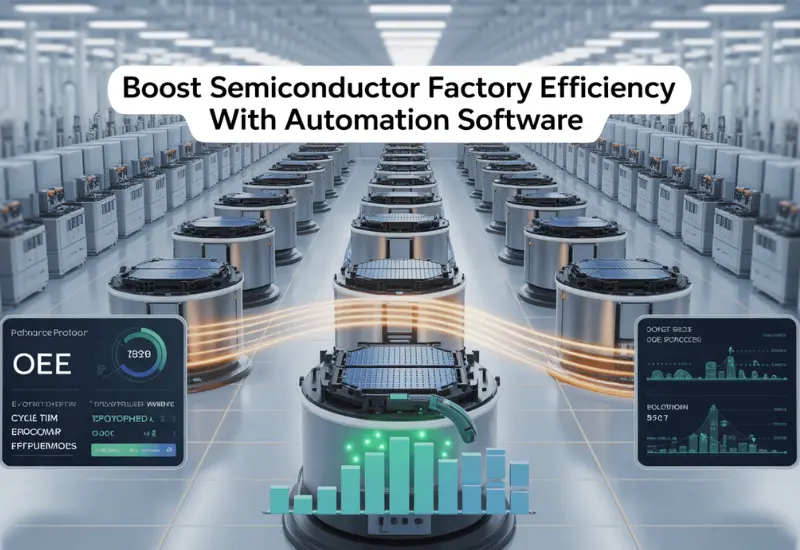
Boost Semiconductor Factory Efficiency with Automation Software

Summary

  • Modern semiconductor manufacturing demands extreme precision that manual processes fail to provide.
  • Implementing semiconductor factory automation software can reduce operational costs by up to 20% while increasing throughput (McKinsey, 2023).
  • Key technologies include SECS/GEM protocols, advanced MES integration, and AI-driven predictive maintenance.
  • Automation minimizes human error in cleanroom environments, protecting delicate silicon wafers from contamination.
  • The transition toward “Lights Out” manufacturing is a competitive necessity for 300mm fabs.

Introduction

According to McKinsey & Company (2023), AI and advanced analytics integrated into semiconductor factory automation software can reduce manufacturing costs by 15% to 20% for established fabs. This shift is essential as global demand for chips fluctuates, forcing facilities to find every possible margin for improvement. Efficiency is no longer a goal; it is a requirement for survival in a market where a single speck of dust or a millisecond of lag can ruin a million-dollar batch.

High-volume manufacturing requires a delicate balance of chemical precision, mechanical speed, and digital oversight. The introduction of robust fab automation solutions allows managers to oversee these complexities without constant manual intervention. By digitizing the workflow, companies ensure that every tool in the facility operates at its theoretical limit.

The current landscape of chip production is becoming more crowded and expensive. New facilities often cost upwards of $20 billion, making the software that runs them as valuable as the hardware itself. Adopting semiconductor factory automation software provides the backbone for these massive investments, ensuring that the return on investment remains high even as nodes shrink toward the sub-2nm frontier.

Why Software Defines the Modern Fab

Modern semiconductor manufacturing is less about the physical act of etching silicon and more about the data governing those etches. Human operators are remarkably talented, yet they are also walking biological contamination factories. A single skin cell can terminate a wafer’s journey. Automation software moves the human element away from the delicate front-end processes, placing them in control rooms where they can make strategic decisions rather than manual adjustments.

Eliminating the Human Variable

Does anyone actually miss the days of tracking wafer lots with physical clipboards and pens? Moving to a fully digital environment removes the risk of “fat-finger” errors where a technician might accidentally input the wrong recipe for a photolithography step. Software systems enforce strict compliance, ensuring that a tool will refuse to start unless the parameters match the pre-approved recipe perfectly.

Maximizing Equipment Effectiveness

High-end tools like EUV lithography machines are too expensive to sit idle. Industrial automation software tracks Equipment Health Rating (EHR) and Overall Equipment Effectiveness (OEE) in real-time. If a tool begins to drift from its baseline, the software triggers an alert before the tool fails. This proactive approach changes maintenance from a reactive headache into a scheduled, predictable task.

Core Components of Semiconductor Factory Automation Software

A comprehensive software suite acts as the nervous system for a production facility. It connects the “brains” (the planning systems) to the “muscles” (the robotic arms and process tools). Without a unified layer of semiconductor factory automation software, a fab is simply a collection of expensive machines that speak different languages.

MES Software for Semiconductors

The Manufacturing Execution System (MES) serves as the central hub for all production activities. It tracks every wafer from the moment it enters the fab as a blank slate until it leaves as a finished die. MES software for semiconductors manages lot genealogy, ensuring that if a defect is found later, the team can trace it back to a specific tool or chemical batch.

Inventory and Material Handling

The movement of Front Opening Unified Pods (FOUPs) is a logistical puzzle. Automated Material Handling Systems (AMHS) rely on software to prioritize specific lots. If a high-priority customer order needs to jump the queue, the software reroutes the FOUPs across the ceiling-mounted tracks without causing a traffic jam in the cleanroom.

SECS/GEM and Connectivity

Communication protocols like SECS/GEM allow the software to talk to tools from different vendors. This standardization is what makes fab automation solutions viable. It creates a universal translator so that a South Korean etch tool and a Dutch lithography machine can both report their status to a centralized server in the United States.

Achieving Semiconductor Process Optimization

Efficiency is a game of inches or in this case, nanometers. Semiconductor process optimization involves analyzing thousands of data points per second to find bottlenecks. When software identifies that a specific chemical mechanical planarization (CMP) tool is taking 5% longer than its peers, engineers can intervene before that delay ripples through the entire line.

Real-Time Data Visualization

Data is useless if it stays buried in a database. Modern software provides dashboards that allow fab managers to see the status of the entire floor at a glance. Visualizing these workflows makes it obvious where wafers are stacking up. Often, a simple software tweak to the scheduling algorithm can clear a bottleneck that appeared to be a hardware limitation.

Digital Twins and Simulation

Some automation suites now offer “Digital Twin” capabilities. This allows engineers to test a new process recipe in a virtual environment before applying it to physical silicon. Testing in a sandbox environment prevents costly mistakes and speeds up the time-to-market for new chip designs.

The Role of AI in Industrial Automation Software

Artificial Intelligence is moving past the “hype” phase and into the practical phase. In the context of industrial automation software, AI acts as a 24/7 supervisor that never sleeps or needs a coffee break. It looks for patterns that are too subtle for a human eye to detect, such as a microscopic vibration in a robotic arm that precedes a total failure by three days.

Predictive vs. Preventive Maintenance

Preventive maintenance is like changing your car’s oil every 5,000 miles, regardless of how you drive. Predictive maintenance is like the car telling you exactly when the oil is dirty. By using semiconductor factory automation software with AI, fabs avoid replacing perfectly good parts, which saves money and reduces tool downtime.

Yield Enhancement via Machine Learning

Machine learning models analyze yield maps to find the “signature” of specific faults. If a cluster of dead chips appears on the edge of every wafer, the AI can correlate that pattern with a specific cooling vent in a furnace. This level of insight would take a human engineer weeks to find; the software does it in minutes.

Navigating the Challenges of Implementation

Switching to a new software architecture is a bit like performing heart surgery while the patient is running a marathon. Fabs cannot simply stop production for a month to install new code. The process must be incremental.

  • Legacy Tool Support: Older tools might lack the sensors required for modern data collection.
  • Data Silos: Different departments often use different software, making it hard to get a “single source of truth.”
  • Cybersecurity: As fabs become more connected, they become bigger targets for industrial espionage.
  • Skill Gaps: Automation requires a workforce that is as comfortable with Python as they are with physics.

Despite these hurdles, the cost of staying manual is far higher than the cost of upgrading. A fab that fails to automate will eventually find itself unable to compete with the yields and pricing of “Lights Out” facilities.

Future Trends in Semiconductor Automation

The industry is currently looking toward “Autonomous Labs” and edge computing. As we move closer to the physical limits of silicon, the software must become more autonomous. We are seeing a move toward decentralized control, where individual tools make localized decisions to optimize their own performance without waiting for a command from the central MES.

Visualizing a fab where the machines “negotiate” with each other for priority might sound like science fiction, but it is the logical conclusion of current trends. If an etch tool knows it has a filter change coming up, it can signal the lithography tool to slow down slightly to prevent a pile-up. This level of harmony is the ultimate goal of semiconductor factory automation software.

Conclusion

The complexity of modern chipmaking has surpassed the capacity of manual oversight. Facilities that embrace semiconductor factory automation software gain a massive advantage in yield, speed, and cost-efficiency. By integrating MES, AI, and standardized communication protocols, manufacturers can turn their facilities into highly tuned, data-driven engines of production. If you want to keep your fab competitive in an era of shrinking nodes and rising costs, the software is your most important tool.

Contact Us Today

Get Professional Support to Optimize Production and Reduce Downtime


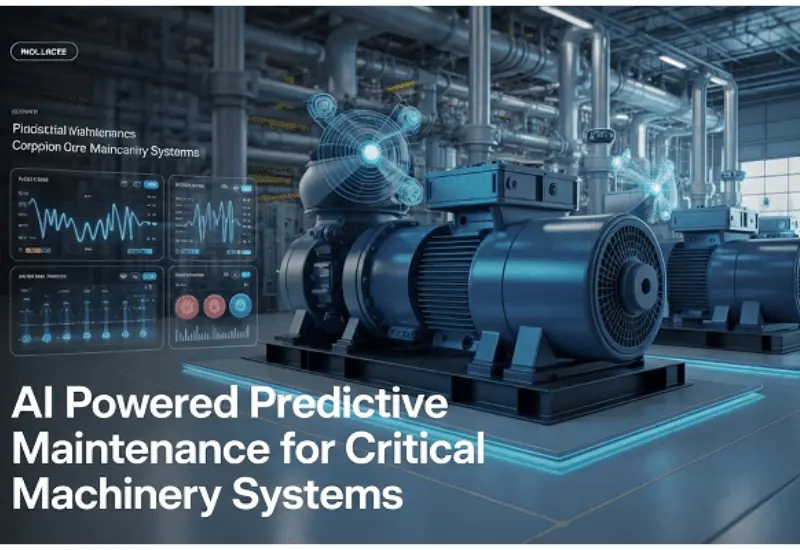
AI Powered Predictive Maintenance for Critical Machinery Systems

Summary

  • Cost Reduction: AI-driven systems reduce maintenance expenses by 10% to 40% (McKinsey — 2023).
  • Enhanced Reliability: Machine learning algorithms identify failure patterns before they occur, extending asset life.
  • Operational Efficiency: Real-time data processing eliminates the guesswork associated with “calendar-based” maintenance.
  • Scalability: Modern software integrates seamlessly with existing SCADA and ERP systems within smart factories.
  • Competitive Edge: Early adopters minimize unplanned downtime, which currently costs global manufacturers approximately $50 billion annually (Deloitte — 2022).

Introduction

According to a report by Deloitte (2022), unplanned downtime costs industrial manufacturers an estimated $50 billion every year, with equipment failure causing 42% of this total loss. For a plant manager, that silence on the factory floor is the most expensive sound in the world. It signals missed deadlines, idle labor, and frantic phone calls to parts suppliers who seem to sense your desperation and price their components accordingly.

The shift toward AI predictive maintenance offers a way to break this cycle of crisis management. Rather than fixing machines when they fail or performing maintenance on a rigid schedule that ignores the actual condition of the hardware, facilities now use data to see into the future. It is the difference between changing your car’s oil because the light came on and changing it because an algorithm analyzed your driving habits and predicted a viscosity breakdown three days from now.

Adopting these technologies is no longer a luxury reserved for tech giants. As the smart factory maintenance ecosystem matures, companies of all sizes are finding that the cost of entry is significantly lower than the cost of a catastrophic bearing failure on a Monday morning.

Why Traditional Maintenance Strategies Fall Short

For decades, the industry relied on two main pillars: reactive and preventative maintenance. Reactive maintenance is the “if it ain’t broke, don’t fix it” philosophy. While it saves money on the front end, the eventual repair costs and production losses are often staggering. Preventive maintenance, while better, is essentially a guessing game based on averages.

The Waste in Preventive Schedules

Preventative maintenance often leads to “over-maintenance.” Technicians replace perfectly functional parts because the manual says to do so every 2,000 hours. This approach wastes usable life and introduces the risk of human error during unnecessary teardowns. Research from ARC Advisory Group indicates that 82% of industrial assets have a random failure pattern that does not correlate with age, making time-based schedules largely ineffective.

The Blind Spots of Reactive Fixes

When a critical pump fails unexpectedly, the fallout spreads through the entire supply chain. You are forced into “firefighting mode,” where safety protocols might be rushed and premium shipping costs for parts eat your quarterly margins. This chaos makes industrial machinery reliability impossible to maintain at a consistent level.

The Mechanics of AI Predictive Maintenance

At its core, AI predictive maintenance functions by creating a digital heartbeat for every machine. By combining IoT sensors with advanced computation, the system builds a baseline of “normal” behavior. When the data drifts from this baseline, the AI flags the anomaly.

Data Acquisition and Sensor Fusion

The process begins with sensors that measure vibration, temperature, acoustic emissions, and power consumption. These sensors act as the nervous system of the facility. High-frequency vibration analysis, for example, can detect microscopic cracks in a race bearing months before the part actually seizes.

Machine Learning in Maintenance Workflows

The “magic” happens in the cloud or at the edge. Machine learning in maintenance involves training models on historical failure data. These models learn to recognize the subtle “signatures” of an impending fault.

  • Supervised Learning: This uses labeled datasets to teach the AI what a specific failure (like a misaligned shaft) looks like in the data.
  • Unsupervised Learning: This identifies outliers that don’t fit the usual pattern, catching “black swan” events that have never happened before.

Does the machine ever feel like it is being watched? Perhaps. But unlike a hovering supervisor, the AI doesn’t mind if the machine takes a break; it simply wants to ensure that the break is scheduled and not a surprise.

Essential Features of Predictive Maintenance Software

Selecting the right predictive maintenance software is a hurdle for many reliability engineers. The market is flooded with options, but the most effective platforms share several non-negotiable characteristics.

Real-Time Visualization and Dashboarding

A pile of raw data is useless to a floor technician. The software must translate complex algorithmic outputs into actionable insights. This usually takes the form of a “health score” or a “remaining useful life” (RUL) estimate. If a motor has a 15% health rating, the maintenance team knows exactly where to focus their efforts during the next planned stoppage.

Seamless Integration with CMMS and ERP

The AI should talk to your existing systems. When a potential failure is detected, the software can automatically trigger a work order in the Computerized Maintenance Management System (CMMS) and check the ERP for spare parts availability. This automation removes the administrative friction that often slows down repairs.

Improving Industrial Machinery Reliability Through AI

Reliability is a measure of trust. Can you trust your equipment to finish a high-priority run? AI in industrial equipment turns that trust from a “gut feeling” into a statistical certainty.

Extending Asset Longevity

When machines operate within their optimal parameters, they last longer. AI monitors for conditions like cavitation in pumps or overheating in VFDs that cause premature wear. By correcting these minor issues early, you extend the total lifecycle of the asset, deferring expensive capital expenditures.

Enhancing Safety and Compliance

A catastrophic equipment failure is rarely just a financial problem; it is a safety hazard. Exploding pressurized lines or snapping belts put workers at risk. Implementing AI predictive maintenance creates a safer environment by preventing these violent failures. Furthermore, the detailed data logs provide an audit trail for regulatory compliance in industries like oil and gas or pharmaceuticals.

Implementation Challenges in the Smart Factory

Transitioning to smart factory maintenance is not as simple as flipping a switch. It requires a cultural and technical shift that can be daunting for legacy organizations.

The Data Silo Problem

Many factories have “islands of automation” where different machines use proprietary protocols that don’t talk to each other. Overcoming this requires a unified data architecture. You cannot predict a failure if the AI can’t access the temperature readings from the 1990s-era CNC machine sitting next to the brand-new robotic arm.

The Skills Gap

Your maintenance team might be world-class with a wrench, but are they ready for data science? Training is essential. The goal is not to turn mechanics into programmers but to teach them how to interpret AI-driven recommendations. It is a partnership between human intuition and algorithmic precision.

The Financial Case: ROI and Beyond

According to McKinsey (2023), AI-based maintenance can improve equipment availability by up to 20%. When you calculate the value of that extra 20% of production time, the ROI usually becomes clear within the first 12 to 18 months.

Reduced Spare Parts Inventory

Because you know exactly what will break and when, you no longer need to keep a massive warehouse full of “just in case” parts. This frees up working capital that can be used for other areas of the business.

Labor Optimization

Maintenance teams spend less time on “walk-around” inspections and more time on high-value repairs. Instead of checking 50 machines that are fine, they spend the day fixing the two that actually need attention.

Future Trends in AI and Reliability

As we look toward the future, the technology is moving toward “prescriptive” maintenance. This doesn’t tell you that a part will fail; it tells you how to change the operating conditions to prevent the failure from happening at all. For example, the AI might suggest lowering the RPM of a fan by 5% to stop a vibration from worsening until a replacement part arrives.

We are also seeing the rise of Digital Twins. This involves creating a virtual replica of a physical asset that runs simulations in real-time. By testing “what-if” scenarios on the twin, engineers can find the absolute limits of their machinery without risking the actual hardware.

Is the robot going to take the maintenance worker’s job? Not quite. Someone still needs to turn the bolts and replace the seals. The AI is simply giving that person a very powerful pair of X-ray glasses.

Conclusion

Moving toward AI predictive maintenance is a strategic necessity for any organization aiming to remain competitive. By shifting from reactive fixes to data-driven foresight, manufacturers can protect their margins, their equipment, and their people. The transition requires an investment in both technology and culture, but the alternative, waiting for the next expensive breakdown,n is a path toward obsolescence. Reliability is no longer a matter of luck; it is a matter of logic.

Contact Us Today

Get AI-Driven Insights for Your Critical Equipment Health


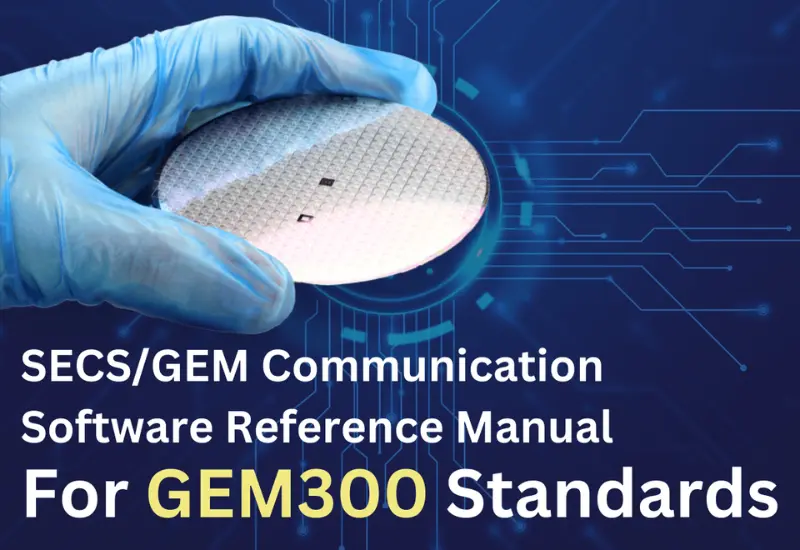
SECS/GEM Communication Software Reference Manual for GEM300.

Summary

  • Connectivity Standards: Highlighting the transition from legacy SECS-I to high-speed HSMS (SEMI E37) for modern 300mm fabs.
  • GEM Compliance: Detailed overview of SEMI E30 requirements, including state models, event reporting, and remote control capabilities.
  • GEM300 Protocols: Technical breakdown of E87 (Carrier Management), E90 (Substrate Tracking), E94 (Control Job), and E40 (Process Job).
  • Implementation Efficiency: Guidance for OEMs to reduce development time while meeting strict fab validation requirements.
  • Future Readiness: Integrating SECS/GEM data with MES for advanced AI-driven yield optimization and predictive maintenance.

Introduction

According to SEMI (2024), global 300mm fab equipment spending is projected to reach a record $137 billion by 2027. This massive investment underscores the necessity for flawless integration between multi-million dollar tools and the factory’s central brain. High-performance SECS/GEM communication software serves as the vital digital handshake that allows disparate machines to function as a unified, automated organism.

Modern semiconductor manufacturing leaves zero room for error. A single communication breakdown during a 300mm wafer transfer can lead to catastrophic material loss and hours of expensive downtime. To mitigate these risks, the industry relies on a rigid set of protocols that govern every interaction, from basic status updates to complex robotic handoffs.

Developing a robust interface requires more than a simple understanding of code. It demands a deep familiarity with the SECS/GEM standards that have defined cleanroom automation for decades. This manual serves as a technical roadmap for engineers and architects tasked with building or maintaining the software layers that keep the world’s most advanced factories running.

Understanding the SECS/GEM Communication Software Stack

The architecture of semiconductor communication is built in layers, each adding a new level of intelligence to the equipment. At its core, the software must handle the physical transport of data, the structure of the message, and the logic of the equipment’s behavior.

The Transport Layer: From SECS-I to HSMS

Historically, equipment relied on SECS-I (SEMI E4) for serial communication. In the modern 300mm era, this has been replaced by High-Speed SECS Message Services, or HSMS (SEMI E37). HSMS utilizes TCP/IP over Ethernet, providing the bandwidth necessary for the high-volume data streams required by modern metrology and lithography tools.

Connectivity State Machine

The HSMS protocol manages the connection state between the equipment and the host. The software must transition through various states, such as “NOT CONNECTED,” “CONNECTED,” and “SELECTED.” A failure to manage these transitions correctly results in a “dead” tool that the factory host cannot see.

The Message Structure: SECS-II (SEMI E5)

If HSMS is the phone line, SECS-II is the language spoken over that line. SECS-II defines the format of every message, known as Streams and Functions. For example, Stream 1, Function 1 (S1F1) is the standard way a host asks, “Are you there?” and the equipment responds with its identity.

Data Item Definitions

Each message contains specific data items like integers, floats, and strings. The SECS/GEM communication software must strictly adhere to these types to prevent parsing errors at the host level. Even a minor discrepancy in data format can halt an entire production line.

Implementing the Generic Equipment Model (GEM)

GEM, defined by the SEMI E30 standard, provides the behavioral logic for the equipment. It ensures that a tool from Vendor A behaves exactly like a tool from Vendor B when the factory host sends a command.

Control States and Host Authority

The GEM control state determines who has authority over the tool. Is a technician at the tool’s keyboard making changes, or is the factory MES in charge?

  • Offline: The tool has no communication with the host.
  • Online/Local: The host can monitor data but cannot initiate movements or start processes.
  • Online/Remote: The host has full control, allowing for “lights-out” manufacturing.

Variable and Event Management

According to a study by Gartner (2024), data-driven decision-making in manufacturing can improve operational efficiency by up to 25%. In the SECS/GEM world, this data is managed through Status Variables (SVs) and Collection Events (CEs).

Dynamic Event Reporting

A primary strength of GEM is that the host can dynamically define which events it wants to hear about. Instead of a tool constantly broadcasting every tiny movement, the host can request a notification only when a process starts, stops, or fails. This flexibility keeps the network from becoming saturated with irrelevant noise.

The Complexity of GEM300 Standards

While basic GEM is sufficient for older 200mm fabs, 300mm facilities require a much more sophisticated suite of protocols. This collection, known as GEM300, manages the logistics of Automated Material Handling Systems (AMHS).

Carrier Management Services (SEMI E87)

In a 300mm fab, wafers are moved in Front Opening Unified Pods (FOUPs). SEMI E87 defines how the tool handles these carriers. When a robot drops a FOUP on a load port, the SECS/GEM communication software must verify the carrier ID, check its content, and ensure the tool is ready to receive it.

Job Management: SEMI E40 and E94

The orchestration of work is divided into Process Jobs and Control Jobs. This distinction allows for high levels of flexibility in how wafers are processed.

  • SEMI E40 (Process Job): Defines what happens to the wafers—the recipe, the specific slots to be processed, and the destination.
  • SEMI E94 (Control Job): Acts as the supervisor, managing a sequence of one or more Process Jobs. It handles the queuing and prioritization of work on the tool.

Substrate Tracking (SEMI E90)

Every single wafer (substrate) must be tracked as it moves through the internal chambers of the tool. SEMI E90 provides the host with real-time visibility into the exact location of every wafer, which is essential for yield analysis if a tool malfunction occurs mid-cycle.

Developing and Validating the Software

For an Original Equipment Manufacturer (OEM), the decision to build or buy a SECS/GEM stack is a critical business choice. Writing a compliant stack from scratch is a monumental task that often takes years of refinement.

Why Pre-Validated Stacks Win

Most successful OEMs utilize a commercial SDK. This approach allows the software team to focus on the equipment’s core functionality rather than the nuances of protocol handshakes. Is it worth risking a launch delay to build a custom transport layer when proven solutions exist? Most industry leaders say no.

Passing the Fab Acceptance Test (FAT)

Before a tool is allowed on the fab floor, it must pass a rigorous validation process. Fabs often have their own internal “GEM Manual” that adds specific requirements to the SEMI standards. Validation software simulates the host and subjects the tool to hundreds of “what-if” scenarios, such as network drops, power flickers, and invalid commands.

SECS/GEM in the Age of Industry 4.0

The cleanroom is a place of absolute precision, where even a microscopic dust particle is treated like a home intruder. In this environment, the data generated by SECS/GEM communication software is more valuable than ever.

High-Bandwidth Data with EDA (Interface A)

While SECS/GEM is excellent for control and status reporting, it was never designed for high-frequency sensor data. This has led to the rise of Equipment Data Acquisition (EDA), also known as Interface A. Modern tools often run SECS/GEM for control and EDA for massive data harvesting, which feeds AI models for predictive maintenance.

Integrating with the MES

The data doesn’t stop at the tool. It flows into the Manufacturing Execution System (MES), which acts as the fab’s central nervous system. This integration allows for a “digital twin” of the production process. If a batch of chips fails final testing, engineers can rewind the SECS/GEM logs to see exactly what happened during the chemical vapor deposition process three weeks earlier.

Best Practices for System Integrators

Integrating a new tool into an existing fab network is a delicate operation. Small mistakes in the SECS/GEM communication software configuration can lead to “ghost” errors that are notoriously difficult to debug.

Documentation and the SEDD File

The SEMI E172 standard introduced the SEMI Equipment Communication Standard (SECS) Equipment Data Documentation (SEDD). This is an XML file that describes the tool’s SECS/GEM interface in a machine-readable format. Providing a clean, accurate SEDD file to the fab’s automation team can reduce integration time by weeks.

Error Handling and Recovery

A robust software implementation must be pessimistic. It should assume the network will fail, the host will send garbage data, and the robot will get stuck. How the software recovers from these states determines its reliability. Does it crash and require a hard reboot, or does it gracefully transition to a safe state and notify the host?

Conclusion

The path to a fully automated, high-yield fab is paved with reliable code. Mastering SECS/GEM communication software is no longer an optional skill for equipment OEMs; it is a fundamental requirement for survival in the 300mm era. By adhering to the GEM300 standards and implementing a robust, pre-validated communication stack, manufacturers can ensure their tools are ready for the intelligence-driven future of semiconductor fabrication.

Contact Us Today

Get Help to Integrate GEM300 SECS/GEM with Your Equipment

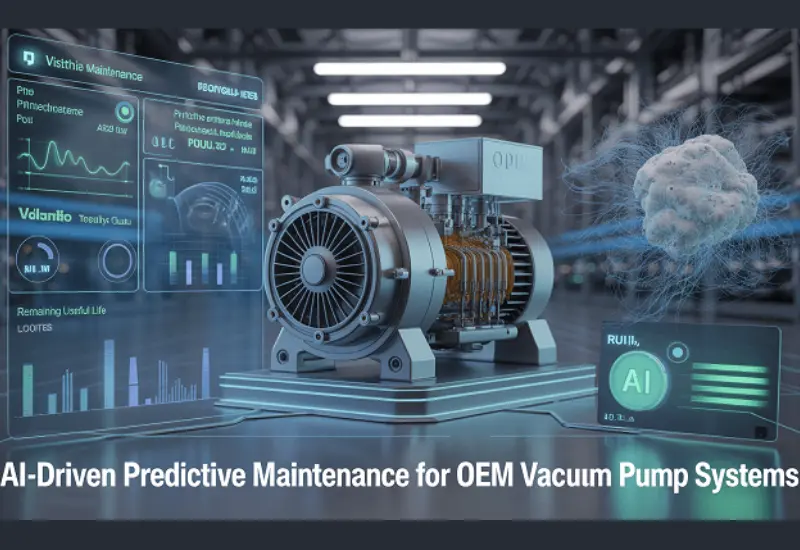
AI-Driven Predictive Maintenance for OEM Vacuum Pump Systems.

Summary

  • Semiconductor fabs face extreme costs from unplanned downtime, often exceeding $25,000 per hour.
  • Predictive maintenance for vacuum pumps uses AI to detect failures before they happen, moving beyond reactive and scheduled models.
  • Key technologies include vibration analysis, thermal monitoring, and machine learning maintenance algorithms like Random Forest and LSTM.
  • Successful implementation requires high-fidelity data acquisition and seamless integration with existing Manufacturing Execution Systems (MES) via SECS/GEM or OPC-UA protocols.
  • The transition to AI predictive maintenance significantly boosts Overall Equipment Effectiveness (OEE) and extends the lifecycle of expensive sub-fab assets.

Introduction

According to Statista (2024), the global semiconductor market value has surged past $600 billion, yet the industry remains plagued by a classic manufacturing bottleneck: equipment reliability. In the sterile, high-stakes environment of a 300mm fab, a single equipment failure ripples through the production line with devastating financial consequences. Research by McKinsey & Company (2023) suggests that unplanned downtime can cost semiconductor manufacturers upwards of $25,000 per hour, depending on the specific process node and wafer value.

At the heart of these critical processes lies the vacuum system, the unsung hero that maintains the pristine, low-pressure environments necessary for etching and deposition. Historically, these systems were maintained on a fixed schedule or fixed after they broke. However, the introduction of predictive maintenance for vacuum pumps has changed the math for reliability engineers. By analyzing real-time data, facilities can now identify the subtle “death rattles” of a failing bearing or a clogged foreline weeks before a total system shutdown occurs.

This shift toward equipment health monitoring is no longer a luxury for forward-thinking fabs; it is a fundamental requirement for staying competitive. As wafers become more complex and tolerances shrink, the margin for error in vacuum stability has virtually disappeared. Understanding how AI integrates with these mechanical workhorses is the first step toward a more resilient sub-fab.

The Fragile Ecosystem of the Sub-Fab

The sub-fab is a chaotic ballet of pumps, chillers, and gas scrubbers. Among these, vacuum pumps are perhaps the most prone to wear because they handle harsh process gases and particulates. When a pump fails during a critical chemical vapor deposition (CVD) cycle, the entire batch of wafers often becomes scrap.

Why Traditional Maintenance Fails

Conventional maintenance follows two paths: reactive or preventative. Reactive maintenance is the “run-to-fail” strategy, which is essentially playing Russian roulette with a multi-million dollar production schedule. Preventative maintenance, while safer, involves replacing parts based on a calendar. This often leads to “over-maintenance,” where perfectly functional components are discarded, or “under-maintenance,” where a pump fails early due to an unforeseen process anomaly.

The Need for Equipment Health Monitoring

Modern semiconductor equipment maintenance requires a more granular approach. By focusing on the actual condition of the pump rather than its age, engineers can optimize service intervals. This data-centric view provides a clear window into the internal mechanics of the pump without requiring a physical teardown.

Mechanics of Predictive Maintenance for Vacuum Pumps

Implementing a robust predictive system requires more than just a few sensors and a dashboard. It involves a sophisticated pipeline that transforms raw physical signals into actionable intelligence. This process relies on high-frequency data and specialized algorithms.

Critical Sensor Inputs

To build an accurate model, the system must ingest various data points that reflect the pump’s internal state.

  • Vibration Analysis: Using piezoelectric accelerometers to detect changes in harmonic frequencies that signal bearing wear or rotor imbalance.
  • Acoustic Emissions: High-frequency sound sensors can pick up the onset of cavitation or friction long before humans can hear them.
  • Thermal Monitoring: Thermocouples track the temperature of the motor and pump housing, as overheating is a primary indicator of mechanical resistance.
  • Motor Current and Torque: Fluctuations in power consumption often indicate that the pump is working harder to overcome internal buildup or friction.

The Role of Machine Learning Maintenance

Once the data is collected, it is processed through machine learning maintenance models. These algorithms are trained on historical failure data to recognize patterns. For instance, a Random Forest algorithm might determine that a 5% increase in motor current combined with a specific vibration frequency peak has an 80% correlation with a seal failure within the next 72 hours.

Implementing AI Predictive Maintenance in the Fab

Moving from a pilot project to a full-scale deployment involves significant integration work. Factory automation architects must ensure that the new AI tools play nicely with existing infrastructure.

Connectivity and Protocols

Semiconductor tools speak specific languages. Most AI-driven systems must interface with the Tool Host or the MES using SECS/GEM (SEMI Equipment Communications Standard/Generic Equipment Model). This allows the predictive system to correlate pump performance with specific process steps. If a pump shows signs of stress specifically during a high-pressure etch step, the AI can flag the process recipe itself as a potential culprit.

Edge vs. Cloud Processing

Should the data be processed at the pump (Edge) or sent to a central server (Cloud)? In a high-volume fab, the sheer volume of vibration data can overwhelm a network. Many modern solutions use “Edge AI” to filter out the noise and only send relevant anomalies to the cloud for deeper analysis. This reduces latency and ensures that a “Stop” command can be issued to the tool in milliseconds if a catastrophic failure is imminent.

Economic Benefits and ROI

Is the investment in AI predictive maintenance worth the high upfront cost of sensors and software? The answer lies in the math of yield and uptime.

Reducing the Mean Time to Repair (MTTR)

When a pump fails unexpectedly, the technician first has to diagnose the problem. This can take hours. With a predictive system, the technician arrives at the tool already knowing exactly which part failed and what tools are required. According to a 2022 report from Gartner, predictive analytics can reduce maintenance costs by up to 20% while increasing equipment uptime by 15%.

Extending Asset Lifecycle

Vacuum pumps are expensive. Regularly running them to the point of failure causes secondary damage to the motor and housing. By intervening early, maintenance teams can perform minor refurbishments rather than full replacements, extending the life of a $50,000 pump by several years.

Overcoming Implementation Challenges

Despite the benefits, the road to a fully autonomous sub-fab is not without its speed bumps. Data silos remain the biggest hurdle. Often, the facilities team (which owns the pumps) and the production team (which owns the process data) do not share information effectively.

Successful semiconductor equipment maintenance requires a cultural shift toward transparency. Furthermore, the “black box” nature of some AI models can be a deterrent. Engineers are naturally skeptical of a software program telling them to shut down a productive tool without a clear explanation. This is where “Explainable AI” becomes vital, providing a rationale—such as “Increased vibration in the 2kHz band indicates Stage 2 bearing wear”—rather than a simple “Fail” light.

Does every pump need a dedicated AI model? Not necessarily. Grouping similar pumps into “fleets” allows the AI to learn from the collective experience of hundreds of machines, accelerating the training process for the machine learning models.

Future Trends in Vacuum Technology

As we look toward the future, the integration of digital twins will likely be the next milestone. A digital twin is a virtual replica of the physical pump that runs in parallel with the real machine. By simulating different process conditions on the digital twin, engineers can predict how a new process gas might affect the pump’s lifespan before the gas even enters the chamber.

Additionally, the rise of Industry 4.0 is pushing for “self-healing” systems. While a pump cannot physically repair a broken rotor, the AI could theoretically adjust the cooling water flow or motor speed to limp through the end of a critical wafer lot, preventing a total loss of work-in-progress (WIP).

Conclusion

The transition to predictive maintenance for vacuum pumps represents a fundamental shift in how semiconductor manufacturing operates. By moving away from reactive “firefighting” and embracing the data-driven insights of AI predictive maintenance, fabs can protect their bottom line and improve wafer yield. As the industry moves toward even smaller nodes and more sensitive chemistry, the ability to listen to what your equipment is saying will be the difference between a profitable quarter and a costly cleanup.

Contact Us Today

Get a Custom Predictive Maintenance Plan for Your Pump Systems