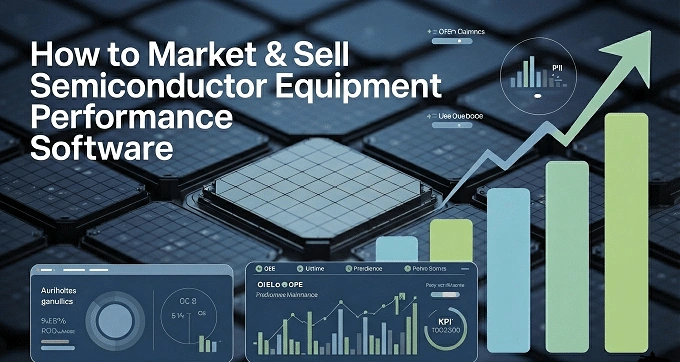
How to Market & Sell Semiconductor Equipment Performance Software

Summary

  • Lead with data-backed ROI by highlighting specific gains in yield, throughput, and uptime rather than using vague efficiency claims.
  • Prioritize SECS/GEM connectivity to ensure your software integrates seamlessly with existing factory automation protocols.
  • Navigate long sales cycles of 6 to 18 months by building trust through multi-layered stakeholder engagement and technical proofs of concept.
  • Address risk aversion directly by demonstrating cybersecurity compliance and the ability to work with both legacy and modern equipment.
  • Use technical marketing assets like white papers and API guides to build authority with the engineering teams who influence buying decisions.

Introduction

According to a 2024 report by SEMI, global semiconductor equipment sales are projected to reach a record $124 billion by 2025 (SEMI — 2024). This massive capital expenditure highlights a critical need for performance improvement software for semiconductor equipment as manufacturers strive to maximize the output of their multi-million dollar assets. Selling into this space requires a blend of deep technical fluency and an understanding of the immense pressure found on the cleanroom floor.The right software directly improves yield and throughput, turning operational data into measurable production gains.

Success in this niche requires more than a standard pitch deck; it demands a proof-of-value that resonates with both the C-suite and the floor engineers. In an environment where a single hour of downtime costs a leading fab upwards of $30,000, software is no longer a peripheral concern (McKinsey — 2023). It is the primary driver of competitive advantage.

Building a robust pipeline for semiconductor software sales means speaking the language of throughput, uptime, and yield. Whether you are marketing to Original Equipment Manufacturers (OEMs) or directly to the fabs, your strategy must reflect the precision of the hardware your software controls.

Understanding the Unique Sales Cycle of Fab Equipment

Marketing to the semiconductor industry is a marathon, a sprint, and an obstacle course combined. The buying process often involves multiple layers of stakeholders, from procurement officers to automation specialists who treat their equipment like a prized collection of high-tech sports cars.

Selling to OEMs vs. Fabs

OEMs look for OEM software solutions that make their machines more attractive to end-users. They want reliability and ease of integration. If your software makes their hardware look better, you have a deal. Conversely, fabs focus on fab equipment optimization tools that can be retrofitted or integrated into existing workflows to squeeze out an extra 1% of efficiency.

The Role of Long-Term Proof of Concept (PoC)

Technical teams rarely take a salesperson’s word for it. A PoC is the standard “prove it” phase. During this time, the software must demonstrate its ability to handle high-volume data without crashing the host system. Highlighting how your manufacturing efficiency software handles real-world variability is essential for moving past the trial phase.

Positioning Performance Improvement Software for Semiconductor Equipment

To market your product effectively, you must define what “performance” actually means for a fab. Is it faster wafer handling? More precise chemical delivery? Or perhaps it is the reduction of “ghost” alarms that stop production for no reason.

Marketing SECS/GEM Software Connectivity

Modern fabs run on data, and that data flows through SECS/GEM protocols. When engaging in SECS/GEM software marketing, focus on the seamless nature of your integration. If an engineer thinks they have to spend six months coding a bridge to your software, they will walk away. Emphasize “plug-and-play” capabilities, even if the reality involves a bit more configuration.

Solving the Data Silo Problem

Many fabs suffer from “islands of automation” where machines do not talk to each other. Your marketing should highlight how your performance improvement software for semiconductor equipment breaks down these barriers. Connectivity is the foundation of any optimization effort.

Data-Driven Strategies for Manufacturing Efficiency Software

Gartner (2023) reports that 60% of manufacturing organizations will utilize digital twins or advanced simulation to optimize production by 2026. This trend provides a perfect opening for software vendors.

Quantifying the ROI of Optimization

Numbers talk louder than adjectives in this industry. Instead of saying your software is “fast,” state that it reduces wafer cycle time by 4.2 seconds. This level of specificity builds immediate credibility. Use case studies to show how fab equipment optimization tools directly impact the bottom line.

Addressing Technical Debt and Legacy Systems

Many fabs still run on hardware that belongs in a museum, yet it produces millions of dollars in chips. Selling performance software often involves convincing a manager that your modern code can coexist with a 20-year-old PLC. Marketing materials should address compatibility directly to alleviate the fear of broken workflows.

Overcoming Resistance in Semiconductor Software Sales

The semiconductor world is notoriously risk-averse. If a machine is working, no one wants to touch it. This “if it ain’t broke, don’t fix it” mentality is the biggest hurdle for semiconductor software sales.

The Security Objection

With intellectual property worth billions, fabs are paranoid about cybersecurity. Ensure your sales team can discuss “air-gapped” environments and data encryption with ease. If your software requires a constant cloud connection, be prepared for a very short meeting.

The Ease of Use Factor

Engineers are busy. If your software requires a 200-page manual to operate, it will become shelfware. Marketing should highlight intuitive dashboards and automated reporting features. Think of it like a “check engine” light, but for a $50 million lithography machine—simple, clear, and actionable.

Advanced Marketing Channels for OEM Software Solutions

Traditional ads rarely work in the semiconductor space. You are not selling soap; you are selling a complex logic system.

  • White Papers: Deep dives into specific technical challenges (e.g., thermal management or vacuum stability).
  • Webinars with Industry Experts: Partnering with a known consultant can lend your brand instant authority.
  • Trade Shows: Events like SEMICON are where the real networking happens.

Content Strategy for Automation Specialists

Automation specialists value technical documentation over flashy brochures. Provide them with API references, integration guides, and performance benchmarks early in the sales process. This transparency fosters trust and shortens the evaluation period.

Crafting the Final Pitch

When the time comes to close the deal, the focus should return to the human element. The fab manager is not buying code; they are buying a better night’s sleep. They want to know that when they go home, the machines will keep humming along.

A successful pitch for performance improvement software for semiconductor equipment connects the technical specs to the emotional relief of a stable production line. Use testimonials from other engineers to provide social proof. In a small industry like this, reputation is everything. One successful installation at a major fab can lead to a dozen more through word-of-mouth.

Conclusion

Marketing and selling performance improvement software for semiconductor equipment requires a deep respect for the complexity of the manufacturing environment. By focusing on data-driven ROI, seamless connectivity, and robust security, your sales team can overcome the industry’s natural resistance to change. As the demand for smaller, faster chips grows, the software that optimizes their production will become the most valuable tool in the cleanroom.

Contact Us Today

Get Expert Guidance to Sell Performance Software to Semiconductor Fabs

Predictive Maintenance Guide: Strategies, Types & ROI

Summary

  • Predictive maintenance uses data-driven insights to forecast equipment failures before they occur, drastically reducing downtime.
  • Market data shows the sector expanding from $5.5 billion in 2021 toward a projected $21 billion by 2028 (Statista — 2021).
  • Transitioning from reactive or preventive models to predictive ones can lower maintenance costs by 10% to 40% (McKinsey, 2023).
  • Effective equipment maintenance planning requires integrating IoT sensors, data analytics, and robust maintenance management systems.
  • Choosing between predictive and preventive maintenance depends on asset criticality, cost of sensors, and operational complexity.

Introduction

According to Statista (2021), the global market for predictive maintenance reached approximately $5.5 billion in 2021 and is expected to climb to $21 billion by 2028. This rapid growth stems from a collective realization among plant managers that fixing machines after they explode is a poor financial strategy. Modern industrial environments require more than a “wait and see” approach to keep production lines moving.

Implementing predictive maintenance allows organizations to transition from firefighting mode to a state of calm, data-backed oversight. Instead of relying on a calendar or a gut feeling, engineers use real-time data to determine exactly when a component will fail. This shift saves money while also extending the lifespan of expensive capital assets.

Reliability is the heartbeat of any manufacturing facility. When that heartbeat falters, the resulting downtime ripples through the entire supply chain, causing missed deadlines and frustrated customers. By adopting advanced industrial maintenance strategies, companies ensure their hardware remains as resilient as their business goals.

Understanding Predictive Maintenance and Its Mechanics

At its core, this strategy involves monitoring the condition of equipment during normal operation to reduce the likelihood of failures. It relies on the Internet of Things (IoT) to gather information from various points on a machine. These sensors track variables like temperature, vibration, and pressure, feeding the information into a central system for analysis.

The process begins with data acquisition, where sensors act as the nervous system of the factory. These devices capture minute changes that a human ear or eye would miss. For instance, a slight increase in the vibration frequency of a motor might signal a bearing failure weeks before the part actually seizes.

Once gathered, the data moves to maintenance management systems for processing. Advanced algorithms compare current readings against historical performance benchmarks to identify anomalies. This allows the system to issue a warning well in advance of a potential breakdown, giving teams ample time to schedule repairs during planned downtime.

The Maintenance Spectrum: 4 Key Strategies

Organizations rarely stick to a single method for every piece of equipment. Most facilities employ a mix of industrial maintenance strategies based on how critical a specific machine is to the overall process. Understanding where each fits helps in creating a balanced equipment maintenance planning document.

Reactive Maintenance (Run-to-Failure)

Reactive maintenance is the “if it broke, fix it” philosophy. It involves zero intervention until a machine stops working entirely. While this avoids upfront costs for sensors or inspections, the eventual repair bill often includes expedited shipping for parts and lost labor hours during the outage.

Preventive Maintenance (Calendar-Based)

This approach involves performing tasks at pre-set intervals, much like changing the oil in a car every 5,000 miles. Preventive maintenance helps avoid many failures but often results in “over-maintenance.” Teams may end up replacing perfectly good parts simply because the calendar said it was time.

Condition-Based Maintenance (CBM)

Condition-based maintenance is a precursor to predictive models. It relies on real-time data but operates on fixed thresholds. If a temperature sensor hits 180°F, an alarm sounds. It is more efficient than calendar-based methods but lacks the “forecasting” element that defines truly predictive systems.

Predictive Maintenance (PdM)

The most advanced tier is predictive maintenance. It uses the same sensors as CBM but adds a layer of predictive modeling. Instead of waiting for a threshold to be breached, it analyzes trends to say, “Based on current wear patterns, this pump will fail in 14 days.” This precision allows for the ultimate optimization of labor and parts.

Predictive vs Preventive Maintenance: Finding the Sweet Spot

The debate of predictive vs preventive maintenance often comes down to a cost-benefit analysis. Preventive measures are relatively easy to set up and require no expensive software. However, Deloitte (2022) notes that predictive models can increase equipment uptime by 10% to 20% compared to traditional preventive schedules.

Is it worth installing $5,000 worth of sensors on a $500 exhaust fan? Probably not. However, for a million-dollar turbine, the investment is a rounding error compared to the cost of a catastrophic failure. Managers must audit their assets to decide which machines deserve the “gold standard” of predictive monitoring and which can survive on a simpler schedule.

Think of preventive maintenance as a strict diet you follow regardless of how you feel. Predictive maintenance is more like having a doctor monitor your vitals 24/7 and telling you exactly when you need a salad. One is a broad rule; the other is personalized care. Who wouldn’t prefer a machine that tells you exactly what it needs?

Core Technologies Powering Predictive Models

To make these predictions, engineers utilize several specialized diagnostic tools. These technologies provide the “vision” required to see inside a machine without tearing it apart.

Vibration Analysis

This remains the most popular tool for rotating equipment. By measuring the frequency and amplitude of vibrations, software can pinpoint issues like misalignment, imbalance, or worn gears. A slight wobble today becomes a broken shaft tomorrow.

Infrared Thermography

Heat is often the first sign of friction or electrical resistance. Thermal cameras allow maintenance teams to scan electrical panels, motors, and bearings to find “hot spots” that indicate impending failure. It is a non-contact method that keeps technicians safe from high-voltage components.

Oil and Fluid Analysis

Analyzing the particulates in a machine’s lubricant is like a blood test for a human. If metal shavings appear in the oil, something is grinding away inside. This method is essential for heavy machinery and engines where internal access is difficult.

Strategic Equipment Maintenance Planning

Successful equipment maintenance planning requires a roadmap that extends beyond simply buying software. It involves a cultural shift within the organization. Workers must trust the data even when a machine appears to be running perfectly.

First, identify the “bad actors” in your facility, the machines that break down most often or cost the most to repair. Focus your initial predictive efforts there to see the fastest return on investment. Once you prove the value on a small scale, you can expand the program across the entire plant.

Second, ensure your maintenance management systems are capable of handling large volumes of data. If your software crashes every time a sensor sends an update, the strategy will fail. Look for platforms that offer clear visualizations and actionable alerts rather than just raw spreadsheets of numbers.

The Role of AI and Machine Learning

Artificial Intelligence (AI) is the “brain” behind the most modern industrial maintenance strategies. While human engineers are great, they struggle to process thousands of data points from hundreds of machines simultaneously. AI excels at this, identifying patterns that are invisible to the naked eye.

According to a McKinsey (2023) report, AI-driven maintenance can reduce breakdown incidents by up to 70%. These systems learn over time, becoming more accurate as they consume more data. If a specific vibration pattern preceded a failure six months ago, the AI remembers and flags it immediately the next time it appears.

Does this mean robots are replacing engineers? Far from it. The AI identifies the problem, but a skilled technician still needs to turn the wrench. The technology simply ensures that the technician is turning the right wrench at the right time.

Benefits of Adopting Predictive Strategies

The advantages of predictive maintenance go far beyond merely avoiding a “bang.” It changes the entire financial profile of a manufacturing operation.

  • Reduced Labor Costs: Technicians spend less time on unnecessary inspections and more time on actual repairs.
  • Inventory Optimization: You only need to stock spare parts when the system predicts a need, freeing up capital tied up in a warehouse.
  • Enhanced Safety: Machines that fail unexpectedly are dangerous. Predicting a failure allows for a controlled shutdown, protecting the workforce.
  • Energy Efficiency: A well-maintained machine runs more smoothly and consumes less power than a struggling, friction-heavy one.

Common Challenges in Implementation

Transitioning to this model is not without its hurdles. The primary obstacle is often the initial cost of sensors and infrastructure. Many legacy machines were never designed to be “smart,” requiring retrofitting that can be tedious and expensive.

Data silos also present a problem. If the maintenance data cannot talk to the production data, the insights remain limited. Integration is key. You need a unified view of the factory floor to understand how production speed affects machine wear and tear.

Finally, there is the “skill gap.” Modern maintenance requires a blend of mechanical knowledge and data literacy. Finding professionals who understand both a hydraulic press and a data dashboard can be a challenge for many HR departments.

The Future of Industrial Maintenance

As sensor costs continue to drop and AI becomes more accessible, the barrier to entry for predictive maintenance will vanish. We are moving toward a future where “unplanned downtime” is a phrase found only in history books. In this future, machines will be self-diagnostic, perhaps even ordering their own replacement parts via an automated supply chain.

Digital twins, virtual replicas of physical assets, will become standard. These models allow engineers to run “what if” scenarios in a safe environment. Want to see what happens if you increase the line speed by 20%? The digital twin will show you the exact impact on machine longevity before you ever touch a physical dial.

Conclusion

The evolution of industrial maintenance strategies has moved us from the era of “fix it when it breaks” to the era of “know before it breaks.” By leveraging predictive maintenance, businesses can safeguard their productivity and bottom line against the high costs of unplanned outages. Whether you are weighing predictive vs preventive maintenance or building a complex equipment maintenance planning framework, the data is clear: those who listen to their machines will always outpace those who wait for them to fail.

Contact Us Today

Get Expert Guidance to Maximize ROI with Predictive Maintenance

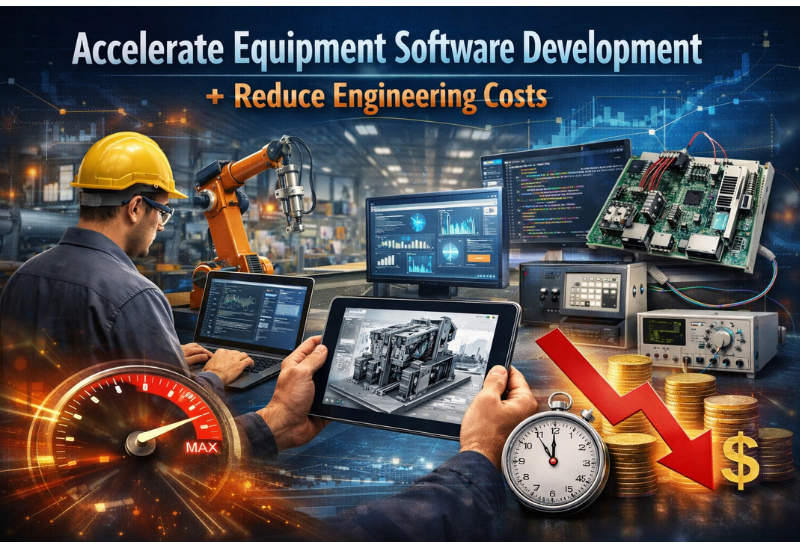
加速設備軟體開發,降低工程成本

摘要

  • 軟體價值核心化: 軟體目前佔工業設備價值的 40%,使開發效率成為研發成功的關鍵驅動因素。
  • 模組化架構: 採用硬體抽象層(HAL)可實現程式碼重複使用,並在不重寫整個系統的情況下更換元件。
  • 虛擬調試 : 透過數位分身測試程式碼,可將實體設備調試時間縮短 30%,並避免部署時造成昂貴的硬體損壞。
  • 通訊標準化: 採用 SECS/GEMOPC UA 等標準,可消除昂貴的客製化通訊橋接,並確保與工廠系統的相容性。
  • 工程自動化: 自動化測試與低程式碼 HMI 工具可減少人工工作量,讓資深工程師專注於高價值邏輯設計。

介紹

根據 McKinsey & Company(2024)的報告,軟體目前約佔高科技工業設備總價值的 40%。這代表製造業正經歷重大轉變——過去以機械工程為核心,如今則逐步轉向以數位邏輯為主導。隨著設備日益複雜,軟體開發效率成為產品是否能準時上市的關鍵因素。

根據 Statista(2024)資料,全球工業自動化市場預計在 2025 年達到約 2,150 億美元。這樣的成長迫使 OEM 廠商重新思考其軟體架構策略。依賴傳統、單體式架構會形成創新瓶頸,阻礙產品快速上市。要保持競爭力,企業必須在確保 24/7 穩定運作的前提下,採用更快速且具彈性的開發模式。

在管理這些數位資產時,效能與成本之間必須取得平衡。接下來的章節將說明如何優化工業軟體開發流程,同時有效降低製造軟體成本。無論是半導體設備還是重型工業機械,模組化與標準化始終是最重要的關鍵。

軟體複雜度帶來的財務影響

維護客製化程式碼的成本往往遠高於初期開發投入。Gartner(2023)指出,約 60% 的軟體工程預算用於維護與技術債,而非新功能開發。在工業控制軟體領域,由於設備生命週期極長,這種負擔更加明顯。

工業控制軟體中的瓶頸

為什麼更新一台設備如此耗時?原因通常是「義大利麵式程式碼」——所有功能彼此緊密耦合。一個感測器校正的微小變更,可能意外影響安全邏輯。這種缺乏隔離的架構迫使工程師在每次修改後進行大量回歸測試。

工具鏈碎片化的隱藏成本

當 PLC 程式、HMI 設計與資料紀錄分別使用不同工具時,整合階段將變成噩夢。資料必須手動對應與轉換,這是造成工廠軟體開發延誤的主要原因之一。解決方式在於建立統一的資料與通訊架構。

快速設備軟體開發的關鍵支柱

速度來自良好的設計。如果每個專案都從零開始,就等於在燒錢。真正的加速來自於建立經過驗證、可重複使用的元件庫。

模組化架構與硬體抽象層

成功的 OEM 會使用硬體抽象層(HAL),將高階邏輯與底層硬體驅動分離。當零組件停產或供應商更換時,只需替換驅動程式,而不必重寫整套邏輯。這種抽象化對於敏捷設備自動化至關重要。

虛擬調試:在鋼鐵成形前完成開發

等到實體設備完成才開始測試程式,是高風險做法。虛擬調試可讓工程師在數位分身中測試控制邏輯。根據 Deloitte(2023),採用數位分身的企業可將實體調試時間縮短約 30%。

製造軟體成本降低策略

降低成本並非僱用更便宜的人,而是減少完成系統所需的工時。透過自動化重複性工作,高價值工程師便能專注於邏輯與優化。

使用 SECS/GEM 與 OPC UA 進行通訊標準化

在半導體與電子產業中,SECS/GEM 是不可妥協的標準。使用成熟的通訊框架可避免自行開發介面,大幅減少工程工時,並確保設備能即插即用地整合至工廠系統。

工業環境中的自動化回歸測試

手動測試緩慢、容易出錯,也讓工程師感到疲乏。透過自動化測試平台模擬各種設備狀態,可在早期發現錯誤,避免昂貴的現場問題,是降低軟體成本的關鍵手段。

彌補工業軟體開發的人才落差

同時懂 C# 又懂 PID 控制的工程師非常稀缺,這推高了人力成本。

採用低程式碼與無程式碼平台

為了減輕資深工程師負擔,部分企業開始使用低程式碼工具處理 HMI 與簡單邏輯,讓機械工程師也能參與系統建構,將高階工程資源保留給關鍵架構設計。

外包 vs 內部團隊

對許多 OEM 而言,維持完整的軟體團隊成本過高。與專業設備軟體公司合作,可在不增加固定人事成本的情況下獲得高階技術支援,並靈活因應產品開發週期。

打造未來導向的工廠軟體

「設定後就不管」的時代已結束。現代設備必須支援 OTA 更新、資料回傳與 ERP 整合。

邊緣運算的崛起

將資料在設備端即時處理,而非全部上傳雲端,已成趨勢。這要求設備軟體具備即時分析能力,確保在資料驅動製造環境中保持競爭力。

資安成為核心需求

連網設備即代表風險。將資安設計納入開發初期,比事後補救成本低得多,包括安全開機、加密通訊與使用者驗證。

結論

現代設備的複雜性,要求我們徹底改變軟體開發方式。透過模組化、標準化與虛擬測試,製造商能顯著縮短上市時間並降低成本。這些策略讓研發團隊能專注於下一代創新,而不是陷在維護泥沼中。沒有現代化框架的程式開發,就像戴著厚手套組裝樂高——理論上可行,但非常痛苦。

Contact Us Today

獲取專家指導,有效降低工程成本

EINNOSYS AT SEMICON Europa 2021


EINNOSYS AT SEMICON West 2021 B1106

EinnoSys is Exhibiting at SEMICON Europa 2021 at Booth No B1106.

SEMICON Europa Trade Show is organized every year by Semiconductor Equipment and Materials International.

SEMICON Europa provides a platform to the Semiconductor Industry to showcase their products related to Industry, Manufacturing, Packaging, Photovoltaic, Led Systems, and Assembly Systems.

EinnoSys will be right there at Booth No B1106

Do visit our Booth to get a quick walk-through of our Products & Services.

EINNOSYS AT SEMICON West 2021

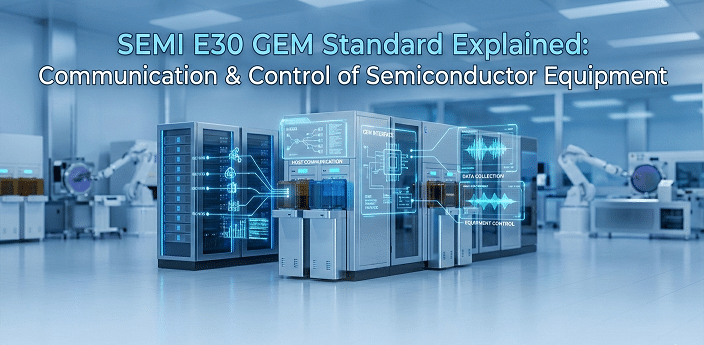
SEMI E30 GEM Standard Explained: Communication & Control of Semiconductor Equipment

Summary

  • The SEMI E30 GEM standard provides the foundational framework for communication between semiconductor manufacturing equipment and factory host systems.
  • It utilizes the SECS/GEM communication protocol to enable standardized data collection, alarm management, and remote command execution.
  • Implementing the GEM specification reduces integration costs for both OEMs and fabs by providing a universal “language” for equipment behavior.
  • Standardized state models ensure that tools from different vendors operate predictably within a highly automated environment.
  • Compliance is essential for modern fab operations, supporting high-volume production and the transition to Industry 4.0.

Introduction

According to reports from SEMI (2024), global semiconductor manufacturing equipment sales reached a record high of $106.3 billion recently. This massive investment highlights the critical need for precision and interoperability within the modern wafer fab. Central to this orchestrated dance of machinery is the SEMI E30 GEM standard, a protocol that ensures tools from different vendors can talk to a central factory system without a translator.

Without a unified framework, a semiconductor facility would resemble a chaotic bazaar where every merchant speaks a unique dialect. The SEMI E30 GEM standard prevents this linguistic breakdown by defining exactly how equipment should behave and communicate. By standardizing these interactions, facilities achieve higher yields and faster deployment times for new technology nodes.

Effective manufacturing equipment integration relies on these rules to manage everything from simple status updates to complex recipe management. While the technical documentation for the SEMI E30 GEM standard can feel as dense as a lead brick, its purpose remains simple: creating a predictable environment for high-stakes manufacturing. Why does a protocol established decades ago still dominate the most advanced factories on the planet? The answer lies in its elegant balance of flexibility and strict behavioral definitions.

Understanding the SEMI E30 GEM Standard

The SEMI E30 GEM standard, formally known as the Generic Model for Communications and Control of Manufacturing Equipment, serves as the primary bridge between the factory Manufacturing Execution System (MES) and the physical hardware on the floor. It defines which SECS-II messages are required, the context in which they are sent, and the resulting behavior expected from the tool.

The Philosophy of the GEM Specification

The GEM specification acts as a behavioral layer. It dictates how a machine responds when it receives a command. For instance, if the host sends a “Start” command, the standard ensures the tool transitions from an “Idle” state to a “Processing” state predictably. This consistency allows fab automation specialists to write software that controls hundreds of different tools using a single logic set.

It is a bit like a group chat where everyone actually agrees on the rules, a true miracle in the tech world. Without these rules, the MES might send a command that the tool isn’t ready to handle, leading to expensive downtime or, worse, damaged wafers.

Connectivity vs. Behavior

Distinguishing between connectivity and behavior is vital. While SECS-I or HSMS handles the “pipes” that carry data, GEM handles the “meaning” of that data. It moves beyond mere connectivity to define the soul of the machine’s operational logic. Every movement of a robotic arm or change in gas flow is governed by these definitions.

The Technical Foundation: SECS/GEM Communication Protocol

When engineers discuss the SECS/GEM communication protocol, they refer to a stack of standards working in unison. At the bottom sits the transport layer, typically SEMI E37 (HSMS), which uses TCP/IP for high-speed Ethernet communication. Above that resides SEMI E5 (SECS-II), which defines the structure of the messages.

Message Structure and Data Types

The SECS/GEM communication protocol uses a hierarchical tree structure for data. Messages are organized into “Streams” (categories) and “Functions” (specific actions). For example, Stream 1, Function 1 (S1F1) is a simple “Are you there?” request. This structured approach allows for extremely efficient parsing, which is essential when a tool generates thousands of data points every second.

The Significance of HSMS

Before Ethernet became the industry norm, tools relied on RS-232 serial connections. The transition to High-Speed SECS Message Services (HSMS) allowed the SEMI E30 GEM standard to handle the massive data volumes required by modern metrology and lithography tools. Today, the speed of light is essentially the only limit to how fast a fab can respond to tool deviations.

Core Capabilities of the GEM Specification

The GEM specification is categorized into fundamental requirements and additional capabilities. Every GEM-compliant tool must support the fundamental requirements, such as establishing a connection and handling basic state models. Beyond the basics, tools can implement advanced features like recipe management and sophisticated event reporting.

State Models and Control

One of the most powerful features of the SEMI E30 GEM standard is its use of state machines. These models track whether a tool is:

  • In “Local” or “Remote” control mode.
  • Currently processing a wafer or sitting idle.
  • Experiencing a fault or alarm condition.

By monitoring these states, the factory host knows exactly what a tool is doing at any given microsecond. If an operator tries to manually override a tool that the MES is currently controlling, the GEM state model prevents conflicting commands from causing a catastrophic wafer scrap event. It works like a very polite butler who won’t do anything unless you ask in the exact right way, but once he does, he gives you a 40-page report on how it went.

Data Collection and Event Reporting

Modern manufacturing thrives on data. The GEM specification allows the host to “subscribe” to specific events. Instead of the host constantly asking the tool for its temperature, the tool can be programmed to send an update every time the temperature changes by a specific increment. This “event-driven” architecture reduces network traffic and ensures that the most important information reaches the MES immediately.

Implementation for Manufacturing Equipment Integration

For Equipment OEMs, implementing the SEMI E30 GEM standard can be a daunting task. It requires a deep understanding of both the hardware’s physical capabilities and the software’s communication logic. However, the long-term benefits of compliance outweigh the initial development hurdles.

Benefits for Equipment Manufacturers (OEMs)

A tool that adheres to fab automation standards is much easier to sell. Fabs prefer “plug-and-play” equipment. If an OEM provides a robust GEM interface, the integration time for the customer drops from months to weeks. This speed-to-market is a significant competitive advantage in an industry where being late by a single quarter can cost millions in lost revenue.

Challenges in Integration

The primary challenge often involves mapping internal hardware variables to the standard GEM variables. A single etch chamber might have hundreds of sensors. Deciding which of these sensors should be exposed via the SECS/GEM communication protocol requires careful planning to avoid overwhelming the factory network with unnecessary noise.

Why Fab Automation Standards Matter

The move toward Industry 4.0 and “Lights Out” manufacturing makes semiconductor equipment control more critical than ever. According to Gartner (2023), automation in manufacturing environments can lead to a 15% increase in throughput when properly implemented.

Reducing Human Error

Human intervention remains one of the largest sources of contamination and error in a cleanroom. By utilizing the SEMI E30 GEM standard, the factory host can automate recipe downloads and substrate tracking. The tool knows exactly which process to run because the MES told it so, leaving no room for a technician to accidentally select the wrong settings on a touchscreen.

Future-Proofing the Fab

As technology progresses toward 2nm nodes and beyond, the complexity of the data will only increase. The SEMI E30 GEM standard provides a stable foundation that can evolve. While newer standards like SEMI EDA (Equipment Data Acquisition) provide even more data bandwidth, GEM remains the “control” backbone that keeps the factory running.

Advanced GEM Features: Alarms and Limits

Beyond simple status updates, the GEM specification provides robust mechanisms for error handling and process safety. This ensures that the equipment does not operate outside of its safe parameters, protecting both the hardware and the delicate silicon wafers inside.

Alarm Management

In the context of the SEMI E30 GEM standard, an alarm is more than just a flashing light. It is a structured message that tells the host exactly what went wrong and how severe the issue is. GEM requires tools to maintain a list of all possible alarms and their current states. This allows the factory host to disable certain routes or pause production lines automatically when a critical tool reports a fault.

Variable Limits and Monitoring

Modern tools use “Limits Monitoring” to track process variables. If a vacuum level or gas flow rate drifts outside of a pre-defined range, the SECS/GEM communication protocol triggers an event. This proactive approach allows maintenance teams to fix a tool before it produces a defective wafer, shifting the fab from reactive to predictive maintenance.

Conclusion

The SEMI E30 GEM standard continues to be the bedrock of semiconductor manufacturing, providing a reliable framework for semiconductor equipment control and manufacturing equipment integration. By adhering to these fab automation standards, manufacturers ensure that their tools remain productive, their data stays accurate, and their factories remain competitive in an increasingly automated world. Mastering the SEMI E30 GEM standard is the first step toward a truly intelligent fab.

Contact Us Today

Get Expert Guidance for GEM-Based Equipment Communication


Source From: SEMI

Taking the next leap forward in semiconductor yield improvement

Summary

Economic Context: With semiconductor revenue projected to hit $629.8 billion (Gartner, 2024), yield optimization remains the most significant driver of fab profitability.

Strategic Shift: Modern facilities are moving from reactive firefighting to proactive, data-driven yield improvement via real-time analytics.

Key Pillars: Successful yield enhancement relies on advanced metrology, machine learning for wafer map analysis, and rigorous process optimization in semiconductor manufacturing.

Future Readiness: Integrating AI and automated fab yield analytics allows engineers to identify root causes of defects before they compromise entire production lots.

Introduction

According to Gartner (2024), worldwide semiconductor revenue is projected to grow 18.8% to reach $629.8 billion. This massive expansion puts immense pressure on production facilities to minimize waste while accelerating output. Effective semiconductor yield improvement serves as the primary lever for maintaining profitability while meeting this skyrocketing demand.

As chips become more complex, the margin for error shrinks. A single airborne particle or a microscopic misalignment during lithography results in millions of dollars in lost revenue. Consequently, the industry is seeing a shift toward more sophisticated, automated solutions to manage these complexities.

Facilities that fail to adapt their yield management protocols face mounting losses. High-volume manufacturing requires a delicate balance of speed and precision that manual oversight can no longer provide. By embracing modern yield improvement strategies, fabs can secure their position in an increasingly competitive global market.

The Financial Reality of the Modern Fab

In the world of microchip fabrication, yield is the ultimate metric of health. It represents the percentage of functional devices produced compared to the maximum possible number on a wafer. When manufacturing costs for a single 300mm wafer can reach several thousand dollars, every percentage point of yield translates directly to the bottom line. According to SEMI (2024), global 300mm fab equipment spending is expected to reach $137 billion by 2027, highlighting the massive capital at stake.

Why 99% is the New Failure

In legacy nodes, a 90% yield might have been acceptable. However, for leading-edge nodes (5nm and below), the complexity of multi-patterning and 3D structures like Gate-All-Around (GAA) transistors makes achieving high yield significantly harder. A yield rate that lingers below targets for too long can bankrupt a product line before it even reaches the consumer market.

The Cost of Yield Excursions

A yield excursion, a sudden, unexpected drop in productivity, is the nightmare of every fab manager. These events often stem from equipment drift, contaminated chemicals, or software glitches in the automation layer. Rapid identification through fab yield analytics is essential to prevent these excursions from turning into month-long shutdowns.

Strategic Pillars for Semiconductor Yield Improvement

Improving output requires a multi-layered approach that addresses both the physical environment and the digital data stream. Engineers must look beyond the immediate defect and analyze the systemic issues within the production line.

Data-Driven Yield Improvement

Modern fabs are essentially giant data factories. Every tool on the floor generates a constant stream of telemetry. Data-driven yield improvement involves aggregating this information into a centralized “single source of truth.” By correlating sensor data with electrical test results, engineers find hidden patterns that human observation would miss.

Machine Learning and Wafer Map Analysis

Machine learning algorithms excel at recognizing defect patterns. If a specific cluster of “killer defects” appears in the same spot on every fifth wafer, the AI can trace this back to a specific robot arm or a cooling vent. This level of semiconductor manufacturing yield analysis moves the needle from “what happened” to “why did it happen.”

Yield Optimization in Fabs Through Metrology

Metrology, the science of measurement, is the backbone of quality control. Advanced optical and electron-beam inspection tools allow for real-time monitoring of wafer health. Implementing high-speed inspection at critical steps ensures that a flawed wafer is pulled from the line early, saving the costs of subsequent processing steps.

Process Optimization in Semiconductor Manufacturing

Refining the actual chemical and physical steps of production is where the hardest work occurs. This involves a constant feedback loop between the R&D team and the floor engineers.

Reducing Defect Density

Defect density is the number of defects per unit area. As die sizes grow for high-performance computing (HPC) chips, the probability of a defect landing on a functional area increases. Process optimization in semiconductor manufacturing focuses on “cleaning up” the process by stabilizing plasma etching, refining chemical mechanical polishing (CMP), and ensuring ultra-pure water systems remain pristine.

Advanced Process Control (APC)

APC systems automatically adjust tool parameters in real-time. If a sensor detects a slight rise in temperature during a deposition step, the APC system compensates by adjusting the gas flow or pressure. This prevents the process from drifting outside of the specified tolerances, maintaining a steady semiconductor manufacturing yield.

Overcoming Human and Environmental Factors

Engineers in bunny suits often resemble confused astronauts, yet their focus on particulates is deadly serious. Human error remains a significant contributor to yield loss, whether through improper tool handling or simple data entry mistakes.

The Role of Fab Automation

Automation reduces the number of human-wafer interactions. Automated Material Handling Systems (AMHS) transport wafers in sealed FOUPs (Front Opening Unified Pods), drastically lowering the risk of contamination. When the human element is minimized, the consistency of the process increases. Is it possible to reach “lights-out” manufacturing? While a fully autonomous fab is still a future goal, the industry is closer than ever.

Implementing Advanced Fab Yield Analytics

To take the next leap, fabs must transition from descriptive analytics (what happened) to prescriptive analytics (what should we do). This requires a robust software infrastructure capable of handling massive datasets without latency.

Identifying Spatial Signatures

Often, yield loss is not random. It follows a spatial signature like a ring around the edge of the wafer or a streak across the middle. Fab yield analytics tools can automatically classify these signatures. For instance, a “donut” pattern might indicate an issue with the gas distribution plate in a CVD (Chemical Vapor Deposition) chamber.

Shortening the Learning Cycle

The time it takes to find a problem, fix it, and verify the fix is known as the learning cycle. In a traditional setup, this might take weeks. With integrated yield improvement strategies, this cycle is compressed into days or even hours. This speed is vital when ramping up a new process node.

The Future of Yield Management

The next decade will see even tighter integration between design and manufacturing. Feedback loops will extend back to the chip designers, who will receive real-time data on which structures are failing most frequently. This “closed-loop” system will make semiconductor yield improvement a collaborative effort across the entire supply chain.

According to a McKinsey (2022) report, the semiconductor industry is on track to become a trillion-dollar industry by 2030. Reaching that milestone requires a relentless focus on efficiency. Facilities that prioritize data-driven yield improvement will be the ones that capture the lion’s share of that growth.

Do we really expect machines to manage themselves? In many ways, they already do. The shift toward “smart” factories means that the role of the yield engineer is changing from a data gatherer to a high-level strategist who oversees complex AI ecosystems.

Conclusion

Mastering semiconductor yield improvement is a journey of constant refinement rather than a final destination. By integrating advanced fab yield analytics and rigorous process optimization in semiconductor manufacturing, facilities can navigate the complexities of modern chip production. The combination of human expertise and machine intelligence ensures that every wafer produces the maximum number of functional dies, securing both profitability and technological progress.

Contact Us Today

Get Step-by-Step Help to Improve Semiconductor Yield


What is EiGEMSim, How to Use EiGEMSim, Features

[vc_row][vc_column][vc_column_text]Einnosys EiGEMSim implements GEM (SECS/GEM). EIGEMSim is a software that is used for testing SECS/GEM compliance of your equipment software. It simulates Factory Host with most SECS messages that are used for testing pre-bundled.

Why EIGEMSIM?

If you’re a factory you need the EIGEMSIM.
If you’re an Equipment Manufacturer you need the EIGEMSIM.
If you’re an Automation Developer you need the EIGEMSIM.
All industrial automation compatibility is capable with different in-built test scenarios![/vc_column_text][/vc_column][/vc_row][vc_row][vc_column width=”1/3″][vc_btn title=”Factories” color=”info” align=”center”][/vc_column][vc_column width=”1/3″][vc_btn title=”Equipment Makers” color=”info” align=”center”][/vc_column][vc_column width=”1/3″][vc_btn title=”Development Professionals” color=”info” align=”center”][/vc_column][/vc_row][vc_row][vc_column][vc_column_text]If you’re a factory

Machine and the Factory Systems will have to communicate for the purpose of automation! When a new machine comes into a factory suppose you have 1000 machines at a time in a factory!

and you, when you are developing an application you first time, and need something that you know, is already working! that you can use to test the communication with the machine!

Just to make sure that the communication with the machine is working! Proven Protocols

For that purpose after you verify the communication and the output to input accuracy, Now you develop your application and develop those commands. basically But before you actually do the whole development and deployment you need a SECS/GEM Tester & Simulator or a tool to test the communication!

and the protocols installed in the machine or factory MES! Here EIGEMSIM Comes in Advanced Requirements!
Protocol which is the communication language of machines and the factory systems can be a prototype and tested!
and for those purposes, you use a simulator or a testing tool! which is what EIGEM SIM is, Here you can use it both ways!

So if you have a machine and you want to use your factory system as a simulator then you configure the SIM in the factory host or the factory MES Simulator. and you connect it to the machine ant test all the protocols and responses.

For Equipment manufacturers!

Like wise if you’re a machine manufacturer!

And if you have already implemented the capability to communicate it with a factory host MES or other Machinery!

and you want to test communication and make sure that when the machine is installed in the factory the machine behaves in the Programmed Manner!

then you want to simulate a factory host also by having a complete SECS/GEM implementation solution.

and Hence EIGEM SIM can be used as your Simulated factory host to test the equipment’s in Production!

not only to check the Machine Environment but also to verify SECS/GEM Host Communications.

For Development Expert

If you’re a developer you will not always be going to the machine/Equipment for SECS/GEM Testing all the time to do testing so the simulator comes in role acting as a machine when you are doing the development for the designed equipment, and when the Prototype is ready you can go to the machine and do the final SECS Test.

Simulator or test tool EIGEMSIM! acts as a factory system and Machine in Every Factory will need this these variety of scenarios

EIGEM SIM at a Glance

What is EIGEM SIM!

EIGEMSIM is a software product developed by Einnosys Technologies USA

that can be used for testing SECS/GEM Reliability of your factory Systems/ MES / Equipment SECS/GEM simulation software it simulates and deploys developers environment for factory Host with most SECS message and protocols that are used for testing Pr-Verified

Benefits of Simulation in a factory or an Equipment Production Facility!

Eigem Sim is tested and causes no change in the functioning capability of the current asset/machinery due to simulation!

Eigem Sim Enables Better Prototyping and Pte-testing analysis

Eigem Sim has applied customization according to the Machine / Factory needs Configurable to simulate factory host or equipment accordingly!

[/vc_column_text][/vc_column][/vc_row]

周期时间 (计算机断层扫描) 改进

在改进周期时间方面,没有“一刀切”。不仅仅是每个制造工厂,甚至工厂内的不同生产区域都可能面临不同的周期时间挑战。

在晶圆厂和组装/测试/包装工厂车间工作多年后,Einnosys 自动化员工对如何改善工厂的周期时间获得了宝贵的见解。我们的自动化人员与工业工程师携手合作,寻找改善周期时间的机会,与您的运营人员讨论并实施。

EINNOSYS 如何提供帮助

Einnosys 员工 – 自动化和/或工业工程师访问您的工厂并了解您的流程。
在确定周期时间改进的领域后,我们会提供一份书面提案,其中包含我们员工的建议,以改进周期时间并帮助您评估此类项目的投资回报率
获得批准后,我们高素质的技术团队将开发和安装适合您环境的应用程序
实施后,我们的自动化和/或工业工程师确保达到预期的结果

周期时间改进项目示例

热电阻(实时调度)系统
周期时间报告系统按设备、技术、生产区域、步骤将周期时间分解为排队时间、运行时间和保持时间,以便更好地分析
各种反馈和前馈系统
关键批次和持有批次的警报系统
许多批次、在制品 和移动跟踪系统

Peningkatan Hasil dalam Pembuatan Semikonduktor: Panduan 2026

Ringkasan

  • Impak Kewangan: Fab berisipadu tinggi melihat peningkatan keuntungan sebanyak USD 150M–250M daripada peningkatan hasil sebanyak 1% (McKinsey, 2022).
  • Pemacu Hasil: Kejayaan bergantung pada keseimbangan antara pengurangan kecacatan sistematik dan pengurusan kecacatan rawak.
  • Peralihan Teknologi: Pengoptimuman hasil pembuatan moden memerlukan analitik dipacu AI dan data sensor masa nyata.
  • Integrasi Perisian: Sistem pengurusan hasil (YMS) menyediakan keterlihatan yang diperlukan untuk analisis punca akar yang pantas.
  • Matlamat Strategik: Peningkatan hasil berterusan memastikan daya saing pasaran dan meminimumkan pembaziran silikon.

Pengenalan

Menurut McKinsey & Company (2022), peningkatan satu mata peratusan dalam hasil boleh diterjemahkan kepada tambahan keuntungan tahunan sebanyak USD 150 juta hingga USD 250 juta bagi sebuah fab semikonduktor berisipadu tinggi. Angka yang mengagumkan ini menekankan mengapa peningkatan hasil kekal sebagai obsesi utama setiap pengurus fab dari Arizona hingga Taiwan. Dalam dunia di mana habuk mikroskopik boleh menjadikan cip bernilai USD 500 tidak berguna, margin kesilapan hampir tidak wujud.

Kerumitan nod moden yang bergerak ke arah 2nm dan seterusnya mewujudkan persekitaran di mana penjejakan manual tradisional gagal. Apabila ketumpatan transistor meningkat secara mendadak, bilangan titik kegagalan berpotensi berkembang secara eksponen. Jurutera kini ditugaskan untuk mencari jarum dalam timbunan jerami yang sendiri diperbuat daripada jarum-jarum kecil yang tidak kelihatan.

Mengekalkan kelebihan daya saing memerlukan peralihan daripada penyelesaian masalah reaktif kepada strategi proaktif berasaskan data. Panduan ini meneroka alat dan metodologi yang diperlukan untuk mencapai pengoptimuman hasil pembuatan dalam landskap yang semakin mencabar.

Realiti Ekonomi Pembuatan Cip

Dalam dunia semikonduktor, hasil ialah penentu utama kejayaan. Ia adalah nisbah dadu berfungsi pada wafer berbanding potensi maksimum dadu. Apabila hasil menurun, kos bagi setiap dadu yang baik melonjak dengan pantas, menghakis margin lebih cepat daripada seorang pelatih lapar di makan tengah hari pizza percuma.

Kecacatan Sistematik vs. Rawak

Memahami sifat kehilangan hasil adalah langkah pertama untuk memperbaikinya. Secara umum, kehilangan hasil dikategorikan kepada dua kumpulan.

Kecacatan sistematik berpunca daripada reka bentuk atau langkah proses tertentu. Jika topeng litografi sedikit tersasar, setiap wafer akan membawa kecacatan yang sama.

Sebaliknya, kecacatan rawak ialah faktor “kekacauan”. Ini termasuk zarah di udara, kekotoran kimia, atau lonjakan suhu yang tidak dijangka. Walaupun entropi tidak boleh dihapuskan sepenuhnya, ia boleh diatasi dengan analisis hasil fab yang lebih baik.

Kos Tersembunyi Hasil Rendah

Hasil rendah mencetuskan kesan berantai di seluruh rantaian bekalan. Selain pembaziran bahan mentah, ia memaksa fab memproses lebih banyak wafer untuk memenuhi obligasi kontrak. Pengeluaran berlebihan ini menggunakan lebih banyak tenaga, memanfaatkan jam mesin yang sepatutnya boleh dijual kepada pelanggan lain, dan melambatkan masa ke pasaran. Menurut Gartner (2023), ketidaktentuan rantaian bekalan menjadikan kelewatan ini lebih mahal berbanding dekad sebelumnya.

Strategi Teras untuk Pengoptimuman Hasil Pembuatan

Meningkatkan output memerlukan pendekatan berlapis yang bermula sebelum wafer pertama memasuki bilik bersih. Ia memerlukan gabungan reka bentuk, kejuruteraan proses, dan sains data yang ketat.

Reka Bentuk untuk Pembuatan (DFM)

Mengapa kita bercakap tentang reka bentuk dalam artikel pembuatan? Kerana hasil sering ditentukan di stesen kerja pereka. DFM melibatkan penciptaan susun atur yang kurang sensitif terhadap variasi proses. Dengan melebarkan jejak logam di mana boleh atau menambah via redundan, pereka memberi fab sedikit “ruang bernafas”.

Metrologi dan Pemeriksaan Lanjutan

Anda tidak boleh membaiki apa yang anda tidak nampak. Peningkatan hasil proses moden bergantung pada alat pemeriksaan beresolusi tinggi. Sistem pemeriksaan optik dan e-beam mengimbas wafer pada pelbagai peringkat barisan pembuatan.

  • Pemeriksaan dalam talian: Mengesan ralat semasa proses 1,000+ langkah, bukannya di penghujung.
  • Pengelasan Kecacatan: Menggunakan pembelajaran mesin untuk melabel kecacatan secara automatik (contoh: “calar”, “zarah”, “jambatan”).
  • Stesen Semakan: Alat pembesaran tinggi yang membolehkan jurutera melakukan “post-mortem” pada dadu yang rosak.

Adakah realistik untuk mengharapkan manusia mengklasifikasikan berjuta-juta anomali mikroskopik secara manual? Jawapannya jelas “tidak”, dan di sinilah perisian khusus memainkan peranan.

Peranan Perisian Peningkatan Hasil

Jumlah data yang dijana oleh fab moden sangat besar. Satu wafer sahaja menghasilkan gigabait data ketika melalui pelbagai peralatan. Perisian peningkatan hasil, sering dirujuk sebagai Sistem Pengurusan Hasil (YMS), bertindak sebagai sistem saraf pusat bagi data ini.

Integrasi Data dan Penghapusan Silo

Fab sering mengalami masalah “silo data”. Pasukan metrologi mempunyai data mereka, pasukan etsa mempunyai data sendiri, dan pasukan ujian elektrik menyimpan gunung keputusan akhir. YMS mengintegrasikan semua sumber ini. Ia membolehkan jurutera mengaitkan kegagalan pada ujian elektrik akhir dengan turun naik suhu tertentu yang berlaku dalam relau tiga minggu sebelumnya.

Pembelajaran Mesin dan Analitik Ramalan

Adakah mungkin untuk meramalkan kejatuhan hasil sebelum ia berlaku? Dengan perisian peningkatan hasil berasaskan AI, jawapannya semakin kerap “ya”. Sistem ini memantau “drift sensor”. Apabila lengan robot atau injap aliran gas mula berkelakuan sedikit berbeza, walaupun masih dalam tolerans rasmi, perisian akan menandainya sebagai risiko berpotensi.

Melaksanakan Analisis Hasil Fab yang Berkesan

Analisis ialah jambatan antara mengenal pasti masalah dan menyelesaikannya. Pendekatan berstruktur memastikan masa jurutera digunakan pada isu yang memberikan ROI tertinggi.

Analisis Spatial dan Pemetaan Wafer

Peta wafer memberikan petunjuk visual tentang “di mana” dan “mengapa” kegagalan berlaku.

  • Corak Cincin: Selalunya menunjukkan masalah pengedaran kimia atau penyingkiran edge-bead.
  • Corak Starburst: Kerap menunjukkan isu semasa proses pemutaran atau pengeringan.
  • Corak Calar: Biasanya menandakan salah pengendalian mekanikal oleh robot pengasing.

Dekonvolusi Punca Akar

Kadangkala, kehilangan hasil adalah gabungan tiga isu kecil yang membentuk satu bencana besar. Dekonvolusi melibatkan penyingkiran hingar untuk mengenal pasti pemacu utama. Ini memerlukan statistik “Design of Experiments” (DOE), di mana pembolehubah diubah secara terkawal untuk memerhati kesannya terhadap output akhir.

Berapa banyak wafer perlu “dikorbankan kepada dewa sains” sebelum proses stabil? Walaupun lebih sedikit adalah lebih baik, pandangan yang diperoleh biasanya berbaloi dengan kos ujian.

Elemen Manusia dalam Peningkatan Hasil

Walaupun AI semakin berkembang, “manusia dalam gelung” kekal penting. Jurutera proses membawa intuisi dan konteks yang tidak dimiliki perisian. Alat perisian mungkin melihat korelasi antara kelembapan dan kadar kecacatan, tetapi jurutera berpengalaman mengingati bahawa sistem HVAC diservis Selasa lalu.

Latihan dan Budaya

Budaya pemikiran “hasil diutamakan” mesti meresap ke seluruh organisasi. Ini bermakna memberi ganjaran kepada kualiti berbanding throughput mentah. Jika pengendali melihat sesuatu yang mencurigakan pada peralatan, mereka harus berasa diberi kuasa untuk menghentikan talian. Dalam jangka panjang, menghentikan satu kelompok adalah lebih murah daripada menyiapkan seribu “bata” yang tidak akan menghidupkan telefon pintar.

Trend Masa Depan dalam Peningkatan Hasil Semikonduktor

Industri sedang bergerak ke arah “Pembuatan Pintar” atau Industri 4.0. Ini melibatkan tahap automasi di mana peralatan berkomunikasi antara satu sama lain secara langsung.

  • Kembar Digital: Mewujudkan replika maya fab untuk mensimulasikan perubahan proses sebelum dilaksanakan pada silikon sebenar.
  • Pengkomputeran Tepi: Memproses data sensor terus pada peralatan pembuatan untuk pelarasan sepantas milisaat.
  • Pengendalian Bahan Automatik: Mengurangkan sentuhan manusia (dan sel kulit/rambut yang menyertainya) kepada sifar.

Menurut SEMI (2024), pelaburan dalam perisian automasi fab dijangka berkembang dua digit apabila pengeluar berlumba-lumba mengurangkan risiko nod terbaharu mereka.

Kesimpulan

Mencapai peningkatan hasil yang konsisten adalah maraton, bukan pecutan. Ia memerlukan fokus berterusan pada data, perisian peningkatan hasil yang tepat, dan kesediaan untuk menyesuaikan diri dengan cabaran mikroskopik generasi cip seterusnya. Apabila industri bergerak ke arah 2nm dan seni bina 3D, alat dan strategi yang dibincangkan di sini akan menjadi perbezaan antara fab yang menguntungkan dan koleksi bulatan kaca berkilat yang mahal.

Contact Us Today

Dapatkan Bantuan Langkah demi Langkah untuk Meningkatkan Hasil Pembuatan Semikonduktor

Kilang Pintar Industri 4.0: Masa Depan Pembuatan Moden

Ketahui bagaimana teknologi kilang pintar Industri 4.0 sedang membentuk semula pengeluaran melalui IIoT, automasi, dan transformasi digital untuk pengeluar.

Ringkasan

  • Industri 4.0 mengubah pembuatan daripada sistem terpencil kepada ekosistem bersepadu yang dipacu data.
  • Kilang pintar menggunakan IIoT, AI, dan analitik masa nyata untuk meningkatkan hasil dan mengurangkan kos operasi.
  • Penyelenggaraan ramalan mengurangkan masa henti tidak dirancang dengan mengenal pasti kegagalan peralatan sebelum ia berlaku.
  • Transformasi digital memerlukan perubahan dalam teknologi serta budaya organisasi untuk berjaya.
  • Peralatan legasi selalunya boleh diintegrasikan ke dalam sistem moden melalui penderia pintar dan peranti gerbang.

Pengenalan

Menurut laporan Deloitte (2024), 86% eksekutif pembuatan percaya bahawa inisiatif kilang pintar Industri 4.0 akan menjadi pemacu utama persaingan dalam tempoh lima tahun akan datang. Peralihan ini mewakili perubahan asas dalam cara barangan dihasilkan, beralih daripada proses manual yang tegar kepada sistem yang lincah dan autonomi. Ketika rantaian bekalan global menghadapi tekanan yang semakin meningkat, keupayaan untuk menyesuaikan diri secara masa nyata bukan lagi satu kemewahan untuk segelintir pihak.

Konsep ini berasaskan integrasi lancar antara mesin fizikal dan kecerdasan digital. Apabila sesebuah fasiliti mengguna pakai kemajuan ini, ia memperoleh keupayaan untuk “berfikir” dan “berkomunikasi” merentas jabatan. Kesalinghubungan ini memastikan setiap pihak berkepentingan, daripada lantai pengeluaran hingga ke peringkat eksekutif, mempunyai akses kepada cerapan yang boleh diambil tindakan.

Persekitaran pengeluaran moden berkembang pesat untuk memenuhi permintaan berteknologi tinggi ini. Sama ada anda menguruskan fab semikonduktor berkapasiti tinggi atau kilang peralatan khusus, memahami mekanisme evolusi ini adalah amat penting. Mari kita terokai lapisan teknikal dan manfaat strategik yang mentakrifkan era kemajuan industri semasa.

Mendefinisikan Kilang Pintar Industri 4.0

Pada terasnya, kilang pintar ialah persekitaran yang sangat didigitalkan dan berhubung di mana mesin dan peralatan menambah baik proses melalui automasi dan pengoptimuman kendiri. Ia melangkaui robotik asas dengan menggabungkan pembuatan keputusan teragih. Daripada menunggu operator manusia mengesan penyimpangan, sistem mengenal pasti anomali dan mencadangkan atau melaksanakan pembetulan serta-merta.

Mengapa ini penting sekarang? Menurut McKinsey & Company (2023), syarikat yang berjaya menskalakan sistem pembuatan pintar boleh melihat pengurangan masa henti mesin sebanyak 30% hingga 50%. Keuntungan ini berpunca daripada keupayaan memproses sejumlah besar data di “edge”, iaitu pemprosesan berlaku terus di tempat data dijana.

Ekosistem yang Saling Berhubung

Kilang tradisional beroperasi secara terasing. Pasukan penyelenggaraan menggunakan satu perisian, pasukan pengeluaran menggunakan perisian lain, dan pasukan rantaian bekalan bergantung pada hamparan. Dalam persekitaran pintar, silo ini lenyap. Sistem ERP (Enterprise Resource Planning) berkomunikasi secara langsung dengan PLC (Programmable Logic Controller) di lantai pengeluaran.

Keterlihatan dan Kawalan Masa Nyata

Keterlihatan ialah tulang belakang kilang pintar Industri 4.0. Tanpa pandangan jelas tentang laporan setiap penderia, pengurus pada asasnya beroperasi tanpa panduan. Papan pemuka masa nyata menyediakan “kembar digital” fasiliti, membolehkan simulasi dan ujian tekanan tanpa mempertaruhkan perkakasan sebenar.

Teknologi Teras yang Menggerakkan Perubahan

Peralihan kepada loji berhubung bergantung pada beberapa alat asas. Ini bukan sekadar gajet; ia merupakan sistem saraf sebenar fasiliti.

IoT Industri dalam Pembuatan

Kebangkitan IoT industri dalam pembuatan telah mengubah landskap pengumpulan data. Dengan memasang penderia kos rendah berketepatan tinggi pada mesin lama, syarikat boleh memantau getaran, suhu, dan penggunaan kuasa. Pendekatan “retrofit” ini membolehkan loji lama menyertai era digital tanpa memerlukan strategi “rip and replace” bernilai jutaan dolar.

  • Penderia Getaran: Mengesan kehausan galas dalam motor.
  • Pengimejan Terma: Mengenal pasti titik panas dalam panel elektrik.
  • Penderia Akustik: Mengesan kebocoran dalam talian udara termampat.

Automasi dalam Industri 4.0

Walaupun robot telah wujud selama beberapa dekad, automasi dalam Industri 4.0 adalah berbeza. Kita menyaksikan kebangkitan Cobot (robot kolaboratif) yang bekerja bersama manusia dengan selamat. Selain itu, Robot Mudah Alih Autonomi (AMR) kini mengendalikan pengangkutan bahan, menavigasi pelan lantai yang kompleks tanpa memerlukan jalur magnet atau trek tetap.
Pernahkah anda terfikir sama ada robot pernah letih mengalihkan palet yang sama berulang kali? Mungkin tidak, tetapi mereka pasti menghargai ketiadaan kesesakan yang disediakan oleh perisian perancangan laluan pintar.

Data Besar dan Analitik AI

Data ialah minyak baharu, tetapi data mentah tidak berguna tanpa penapisan. Algoritma AI menapis terabait maklumat untuk mencari corak yang mungkin terlepas pandang oleh manusia. Sebagai contoh, dalam pembuatan semikonduktor, AI boleh mengenal pasti saat tepat apabila proses pemendapan wap kimia mula menyimpang daripada spesifikasi, menjimatkan ribuan dolar akibat pembaziran wafer.

Peranan Transformasi Digital dalam Kilang

Transformasi digital yang berjaya di kilang jarang berlaku secara lurus. Ia melibatkan pendekatan “merangkak, berjalan, berlari”. Kebanyakan organisasi bermula dengan mendigitalkan rekod manual mereka, beralih daripada papan klip kertas kepada tablet.

Daripada Reaktif kepada Ramalan

Kebanyakan loji legasi beroperasi dengan jadual penyelenggaraan reaktif. Sesuatu rosak, kemudian seseorang membaikinya. Mod “pemadaman kebakaran” ini mahal. Melalui teknologi kilang pintar, loji beralih kepada penyelenggaraan ramalan dan juga preskriptif.

Menurut Gartner (2024), penyelenggaraan ramalan boleh mengurangkan kos penyelenggaraan sehingga 20%. Dengan mengetahui dengan tepat bila sesuatu komponen akan gagal, alat ganti boleh dipesan secara “just-in-time”, dan pembaikan dilakukan semasa penutupan berjadual, bukannya ketika pengeluaran puncak.

Pengkomputeran Awan vs. Edge

Satu perdebatan utama dalam kalangan kilang melibatkan lokasi penyimpanan data. Pengkomputeran awan menawarkan storan besar dan kuasa pemprosesan tinggi. Namun, pengkomputeran edge adalah lebih pantas. Untuk keputusan kritikal keselamatan, seperti menghentikan mesin sebelum perlanggaran, “edge” sentiasa menang kerana ia menghapuskan kependaman penghantaran data ke pelayan jauh.

Manfaat Strategik untuk Pengeluar

Peralihan ke arah kilang pintar Industri 4.0 memberikan kelebihan daya saing yang sukar diabaikan. Selain peningkatan kelajuan yang ketara, terdapat penambahbaikan kualitatif dalam kecemerlangan produk.

Kawalan Kualiti yang Dipertingkatkan

Sistem penglihatan komputer boleh memeriksa produk pada kelajuan dan ketepatan yang jauh melebihi keupayaan manusia. Dalam talian pembotolan berkelajuan tinggi atau pemasangan papan litar, sistem ini mengesan kecacatan mikroskopik secara masa nyata. Ini mengurangkan kadar “scrap” dan memastikan pelanggan menerima produk tanpa cela.

Fleksibiliti dan Penyesuaian

Pengguna moden menuntut kepelbagaian. Talian pemasangan tradisional sukar untuk dikonfigurasi semula. Sistem pintar membolehkan pengeluaran “Lot Saiz 1”, di mana mesin melaraskan tetapan secara automatik untuk setiap item di atas talian. Fleksibiliti ini membolehkan pengeluar menyesuaikan diri dengan pantas apabila trend pasaran berubah.

Mengatasi Halangan Pelaksanaan Biasa

Pelaksanaan teknologi kilang pintar sering kelihatan mencabar. Halangan terbesar biasanya ialah “zon kelabu” sistem legasi. Banyak loji mempunyai mesin berusia tiga puluh tahun yang masih berfungsi dengan baik, tetapi tidak mempunyai satu pun output digital.

Integrasi Peralatan Legasi

Menjambatani jurang antara mesin pelarik tahun 1995 dan platform analitik 2025 ialah cabaran biasa. Penyepadu sistem menyelesaikan isu ini dengan menggunakan gerbang yang menterjemahkan protokol bersiri lama kepada bahasa moden seperti MQTT atau OPC-UA. Ini memastikan setiap perkakasan mempunyai “suara” dalam koir digital baharu.

Keselamatan Siber di Kilang

Sebaik sahaja kilang disambungkan ke internet, ia menjadi sasaran. Melindungi bahagian “OT” (Operational Technology) sama pentingnya dengan melindungi bahagian “IT”. Kilang pintar mesti merangkumi tembok api yang kukuh, penghantaran data tersulit, dan kawalan akses yang ketat untuk mengelakkan gangguan tidak dibenarkan terhadap parameter pengeluaran.

Masa Depan Sistem Pembuatan Pintar

Apakah yang menanti di hadapan? Kita sudah mula melihat kemunculan “Industri 5.0”, yang menumpukan kepada kembalinya sentuhan manusia dalam proses berteknologi tinggi. Ini melibatkan antara muka manusia-mesin (HMI) yang lebih baik dan penekanan terhadap kelestarian.

Kecekapan Tenaga dan Kelestarian

Kilang pintar secara semula jadi lebih hijau. Dengan mengoptimumkan penggunaan tenaga, seperti meredupkan lampu di kawasan “lights-out” atau mengitar peralatan berkuasa tinggi pada waktu luar puncak, loji dapat mengurangkan jejak karbon. Menurut World Economic Forum (2023), teknologi digital berpotensi membantu mengurangkan pelepasan karbon global sehingga 15%.

Kesimpulan

Peralihan kepada kilang pintar Industri 4.0 bukan lagi konsep masa depan; ia kini menjadi standard semasa bagi kecemerlangan pembuatan global. Dengan mengintegrasikan IoT industri dalam pembuatan dan menerima transformasi digital menyeluruh di kilang, pemimpin industri boleh membuka tahap kecekapan dan ketangkasan yang sebelum ini sukar dicapai. Walaupun perjalanan ini melibatkan cabaran teknikal dan perubahan budaya, ganjaran daripada persekitaran pengeluaran yang berhubung dan pintar adalah tidak dapat dinafikan. Bersediakah anda untuk mengambil langkah pertama ke arah masa depan digital anda?

Contact Us Today

Dapatkan Bantuan Langkah demi Langkah untuk Membina Kilang Pintar Industri 4.0 Anda