Hire SECS/GEM Developers to Streamline Semiconductor Operations

Summary

  • Strategic Growth: Global semiconductor equipment sales reached $100 billion in 2024, necessitating advanced automation.
  • Operational Efficiency: Implementing SECS/GEM protocols reduces manual errors and improves tool-to-host communication.
  • Expert Integration: Professional developers handle complex GEM300 standards and HSMS configurations.
  • Scalability: Custom integration services ensure manufacturing execution systems (MES) communicate flawlessly with diverse hardware.
  • Reduced Downtime: Specialist consultants identify bottlenecks in data transmission before they cause production stalls.

Introduction

According to SEMI (2024), global semiconductor manufacturing equipment sales reached $100 billion, reflecting a massive push for expanded production capacity worldwide. As fabs scale, the complexity of equipment communication scales with them. To manage this growth, many industry leaders choose to hire SECS/GEM developers who possess the technical depth to bridge the gap between physical machinery and digital control systems. This specialized expertise ensures that every wafer processed is tracked, every alarm is logged, and every recipe is managed with absolute precision.

Effective semiconductor manufacturing relies on more than sharp lasers and clean rooms. It requires a robust communication backbone. The Semiconductor Equipment Communication Standard (SECS) and Generic Equipment Model (GEM) provide the language for this dialogue. Without a team of semiconductor automation engineers, a fab risks becoming a collection of “dark” machines that fail to share critical performance data.

Integrating these protocols is a task that demands a high level of specialization. Modern manufacturing environments require a seamless flow of information to maintain high yield rates. By bringing in dedicated talent, companies can avoid the pitfalls of generic software development and focus on industry-specific standards that govern the world of microchip production.

The Vital Role of Communication Protocols in Modern Fabs

The semiconductor industry runs on data. Every second, sensors report temperatures, pressures, and gas flow rates. SECS/GEM acts as the universal translator. It allows a Manufacturing Execution System (MES) to tell a tool what to do and allows the tool to report back its status. If the translation fails, production grinds to a halt. This is where SECS/GEM integration services become indispensable. They provide the connective tissue for the entire smart factory ecosystem.

Understanding SECS-II and HSMS

SECS-II (E5) defines the structure of the messages exchanged between the equipment and the host. It organizes data into streams and functions. However, the physical way these messages travel has evolved. High-Speed SECS Message Services (HSMS/E37) has largely replaced the older serial-based SECS-I. Expert developers ensure that these high-speed connections remain stable even under the heavy data loads of a high-volume manufacturing facility.

The GEM Layer: Beyond Basic Messages

While SECS-II provides the vocabulary, GEM (E30) provides the grammar. It defines how the equipment should behave. A tool must follow a specific state machine moving from “Idle” to “Executing” to “Completed.” When you hire SECS/GEM developers, they program these state models so the host always knows exactly what a tool is doing. This transparency is vital for calculating Overall Equipment Effectiveness (OEE).

Why You Need GEM300 Experts for Advanced Manufacturing

As the industry moved to 300mm wafers, the complexity of automation exploded. This shift introduced a suite of standards known as GEM300. These include E39 (Object Services), E40 (Process Management), and E87 (Carrier Management). Handling 300mm FOUPs (Front Opening Unified Pods) requires a level of precision that manual operations cannot match.

Managing Carrier Handoffs with E87

The E87 standard governs how carriers move in and out of a tool. It ensures the right material arrives at the right time. Mistakes here lead to broken wafers or, worse, cross-contamination of batches. GEM300 experts specialize in these specific handoffs, ensuring that the software correctly identifies every carrier ID and slot map before a single robotic arm moves.

Process and Slot Management

Standards like E40 and E94 manage the actual processing jobs. They define which recipe to use and which wafers within a carrier need processing. Have you ever considered how a machine knows to skip a dummy wafer while processing a prime wafer? That logic is baked into the GEM300 implementation. Specialists in this field ensure that these complex instructions are executed without a hitch.

The Business Case for Factory Automation Developers

Investing in factory automation developers is a move toward long-term cost reduction. While the initial setup of a fully automated line is significant, the reduction in human error pays dividends. Automated systems never get tired, they never misread a recipe, and they never forget to log a maintenance alarm.

Data Collection and Analytics

Modern fabs are essentially giant data centers that happen to make chips. According to McKinsey (2023), AI-driven analytics in semiconductor manufacturing can improve yields by up to 10%. However, AI needs clean, structured data. SECS/GEM provides that structure. By hiring specialists, you ensure that the data flowing into your “Big Data” lake is accurate and timestamped correctly.

Reducing Time-to-Market for OEMs

For Original Equipment Manufacturers (OEMs), getting a new tool into a fab requires meeting strict compliance standards. If a tool speaks a broken version of SECS/GEM, the fab will refuse to buy it. Specialized SECS/GEM consulting services help OEMs build compliant interfaces from the ground up, shortening the validation phase and getting the equipment onto the production floor faster.

Technical Challenges in SECS/GEM Implementation

Why is this so difficult? Unlike standard web development, SECS/GEM involves real-time constraints and hardware interfacing. If a message is delayed by a few milliseconds, it might trigger a safety interlock that shuts down the entire machine.

Message Congestion and Latency

In a busy fab, thousands of messages fly across the network every second. If the equipment software is poorly written, it might struggle to keep up. This leads to “timeouts,” where the host thinks the machine is dead because it didn’t respond fast enough. Experienced developers optimize the message-handling loops to ensure the software remains responsive under heavy load.

Handling Legacy Hardware

Many fabs still run equipment that is twenty years old. These machines might use SECS-I (RS-232 serial) rather than Ethernet. Integrating these “vintage” tools into a modern, cloud-based MES is a significant hurdle. Consultants often use SECS/GEM gateways or custom middleware to bridge this generational gap.

Key Skills to Look for When Hiring

If you are looking to build a team, what should you look for? It is a unique blend of software engineering and industrial automation knowledge.

Proficiency in C#, C++, or Java

Most SECS/GEM drivers are written in these languages. A candidate needs to understand memory management and multi-threading. Since the communication software often runs as a background service, it must be incredibly stable.

Deep Knowledge of SEMI Standards

A developer who knows “some” SECS/GEM is dangerous. You need someone who has read the SEMI manuals cover-to-cover. They should be familiar with:

  • E5: SECS-II Message Content
  • E30: Generic Model for Equipment Communication (GEM)
  • E37: High-Speed SECS Message Services (HSMS)
  • E10: Equipment Reliability, Availability, and Maintainability (RAM)

The Future: EDA and Interface A

While SECS/GEM remains the gold standard, a newer companion has emerged: Equipment Data Acquisition (EDA), also known as Interface A. According to Gartner (2023), the demand for high-frequency data collection is pushing fabs toward hybrid models.

EDA runs parallel to SECS/GEM. While GEM is for control (telling the machine to start), EDA is for massive data collection (sampling a sensor every 10 milliseconds). Hiring developers who understand both protocols allows a fab to maintain control while also feeding advanced machine learning models.

Common Pitfalls in SECS/GEM Projects

One major mistake is treating SECS/GEM integration as a “one-off” task. In reality, it is an ongoing process of refinement. As recipes change and new sensors are added, the GEM interface must evolve.

Inadequate Testing

Testing a SECS/GEM interface requires specialized “host simulators.” A developer might think their code works, but they haven’t tested how it reacts when the network drops or when the host sends a malformed message. Experts use robust simulation suites to “stress test” the interface before it ever touches a real wafer.

Ignoring Documentation

In the world of factory automation, documentation is as important as the code. If the “GEM Manual” for a tool is poorly written, the MES team will struggle to integrate it. Top-tier SECS/GEM integration services include the creation of clear, SEMI-compliant documentation as part of their package.

Choosing SECS/GEM Consulting Services

When selecting a partner, look at their track record with different equipment types. A developer who only knows metrology tools might struggle with a complex lithography track or a multi-chamber CVD system.

The “Full Stack” Automation Approach

The best consultants understand the entire stack, from the PLC (Programmable Logic Controller) level up to the ERP (Enterprise Resource Planning) level. They can see how a change in an SECS message might affect a production report three levels up.

Is it worth the investment? Considering that a single hour of downtime in a leading-edge fab can cost upwards of $1 million (Source: Industry average estimate, 2024), the answer is a resounding yes. Precision in communication is the only way to safeguard those margins.

Conclusion

The path to a fully automated, high-yield fab is paved with reliable data. To stay competitive in an era of unprecedented demand, you must hire SECS/GEM developers who can turn complex hardware into a cohesive, communicative system. By investing in professional SECS/GEM integration services, you protect your equipment investments and ensure that your production line is ready for the future of smart manufacturing.
Contact Us Today

Hire Expert SECS/GEM Developers for Your Automation Projects

SECS/GEM을 GEM이 아닌 장비에 통합: 실용적인 엔지니어 가이드

요약

  • 과제: 레거시 또는 비표준 장비를 현대 반도체 및 첨단 제조 공장의 자동화 시스템에 연결하는 것은 가장 어려운 과제 중 하나입니다. 
  • 표준: SECS/GEM(SEMI Equipment Communications Standard/Generic Equipment Model)은 현대 팹에서 호스트-장비 통신을 위해 필수적으로 요구되는 표준 프로토콜입니다. 
  • 목표: 이 가이드는 공장 자동화 엔지니어 및 OEM 장비 제작자가 원래 SECS/GEM 기능이 없는 장비에 SECS/GEM 통합을 구현할 수 있도록 실질적인 절차를 제공합니다.
  • 해결책: 해결책은 보통 “GEM Wrapper” 또는 “Gateway”라고 불리는 소프트웨어 계층을 생성하여 장비의 고유 제어 신호를 표준화된 SECS/GEM 메시지로 변환하는 것입니다.
  •  주요 단계: 제어 포인트 식별, 이벤트 및 알람 매핑, 새로운 Host Communication Interface(HCI)가 안정성과 SECS/GEM 규격을 준수하는지 철저히 테스트하는 단계가 포함됩니다.

소개

반도체 및 첨단 제조 산업은 정밀성과 표준화된 통신 위에서 운영됩니다. 이 통합의 핵심에는 SECS/GEM(SEMI Equipment Communications Standard/Generic Equipment Model)이 있으며, 이는 중앙 호스트 컴퓨터(MES 등)가 생산 장비를 관리하고 모니터링할 수 있게 해주는 사실상의 국제 표준 프로토콜입니다.

그러나 모든 장비가 이 언어를 유창하게 구사하는 것은 아닙니다. 현대 표준 이전에 제작된 레거시 장비, 독자적 인터페이스를 가진 커스텀 장비, 소규모 OEM 장비 등은 기본적으로 SECS/GEM을 지원하지 않습니다. 이러한 “non-GEM” 장비를 자동화된 최신 팹 환경에 통합하는 것은 공장 자동화 엔지니어가 반드시 해결해야 하는 과제입니다.

McKinsey & Company(2023)의 반도체 제조 보고서에 따르면 레거시 장비를 자동화하면 처리량과 가동시간 측면에서 20% 이상의 효율 향상이 가능하다고 합니다. 이는 통합의 경제적 가치가 매우 크다는 뜻입니다.

문제는 다음과 같습니다:
어떻게 이 통신 격차를 실제로 메울 것인가?

이 가이드는 내부 API, 시리얼 포트, TCP/IP 소켓, PLC I/O 등 어떤 고유 인터페이스를 사용하는 장비라도 SECS/GEM 통합을 구현할 수 있도록 단계별 실무 절차를 제공합니다. 목표는 기존에 연결되지 않았던 장비를 완전한 자동화 환경에 통합된, SECS/GEM 준수 장비로 변화시키는 것입니다.

Non-GEM 문제: 통합이 필수적인 이유

반도체처럼 고속·고자본 산업에서 장비가 자신의 상태를 통신하지 못한다는 것은 곧 비용이 발생한다는 의미입니다.

Non-GEM 장비는 보통 다음과 같은 문제를 일으킵니다:

  • 수동 데이터 수집
  • 오류 보고 지연
  • MES가 중요한 공정 명령을 전송할 수 없음

따라서 표준화된 Host Communication Interface(HCI)는 필수입니다.

연결 끊김 인식: 일반적인 Non-GEM 인터페이스

솔루션으로 들어가기 전에 장비가 현재 “어떤 언어를 사용하는지” 이해하는 것이 중요합니다. 통합 계층(Wrapper)은 이 언어를 “듣고” SECS/GEM으로 번역해야 합니다.

독점 API/SDK:

 대형 OEM 장비는 TCP/IP 기반의 고유 라이브러리(API 또는 SDK)를 제공하기도 합니다. 구조화되어 있으나 복잡도가 높습니다.

산업용 프로토콜:

 Modbus, EtherNet/IP, Profibus 등 PLC 기반 제어용 산업용 프로토콜을 사용할 수 있습니다.

간단한 I/O 및 직렬 포트:

 레거시 장비는 디지털/아날로그 I/O, RS-232 시리얼 통신 기반인 경우가 많습니다.
예: “Running,” “Error,” “Ready”

데이터베이스 폴링:

특정 커스텀 장비는 상태/제어 정보를 SQL 기반 DB(MSSQL, MySQL)에 기록하는 방식일 수 있습니다.

핵심 문제는 다음과 같습니다:
이들 인터페이스는 SEMI 표준 메시지 구조(SECS-II 등)를 따르지 않습니다.

연결 구축: SECS/GEM 래퍼 아키텍처

비표준 장비를 GEM 호환 장비로 만드는 가장 현실적이고 일반적인 접근법은 “GEM Wrapper” 또는 “SECS Gateway” 소프트웨어를 구축하는 것입니다.

GEM 래퍼의 핵심 기능

Wrapper는 번역기 역할을 하며 다음 두 가지 방향의 기능을 수행합니다.

호스트-장비(MES 다운스트림):

  • SECS/GEM 메시지 수신 (예: S2F41: Host Command Send)
  • 이를 장비가 이해하는 내부 명령 형식으로 변환
  • 예: 고유 API에 문자열 명령 전송

장비-호스트(MES 업스트림):

  • 장비의 고유 인터페이스 감시
    (예: Modbus 레지스터 polling, 시리얼 포트 listening)
  • 상태 변화 발생 시 이를 SECS/GEM 메시지로 변환
    (예: S6F11: Event Report)

이 계층은 고유 인터페이스의 복잡성을 숨기고 호스트에는 “완전한 SECS/GEM 장비”처럼 보이도록 합니다.

SECS/GEM 통합을 위한 실제 엔지니어링 워크플로우

통합 작업은 구조화된 엔지니어링 프로세스를 따라야 하며 특히 데이터 매핑과 에러 처리 설계가 중요합니다.

1단계: 기본 인터페이스 심층 분석 및 데이터 매핑

첫 단계이자 가장 시간이 많이 드는 작업은 고유 인터페이스 구조를 완전히 분석하고 상세 데이터 맵을 만드는 것입니다.

A. 통제점 식별

호스트가 장비에 보낼 수 있는 명령 정의
예: Start, Stop, Pause, Abort, Recipe Download

B. 장비 변수 매핑(데이터 항목)

호스트가 모니터링해야 하는 주요 값
예:

  • Current Recipe Name
  • Chamber Temperature ($T_{Chamber}$)
  • Wafer Count
  • $O_2$ Flow Rate
  • Status (Idle, Setup, Run, Down)

각 항목에 SECS ID(EVID, CEID, SVID) 부여

C. 이벤트 및 알람 정의

장비 상태 변화(Event), 비정상 상황(Alarm)을 매핑
예:

  • Event: Process Start → Native code 100 → GEM CEID 501
  • Alarm: Over-Temperature → Native error T-99 → GEM ALID 1021

일화:

 레거시 문서는 종종 30년 전 돌에 새겨놓은 듯합니다.
“Wafer Out 신호가 깜빡이는 LED라고?” 같은 순간이 매우 흔합니다.

이 매핑 문서가 해당 비표준 장비의 Generic Equipment Model이 됩니다.

2단계: GEM 래퍼 개발 및 구현

매핑이 완료되면 소프트웨어 개발 단계로 이동합니다.
C#, Java, Python 등 고급 언어 + 상업용 SECS/GEM SDK 사용을 강력히 추천합니다.

메시지 번역 논리

예: S2F49: Equipment Constant Write 처리 절차

  • ECID 확인 (예: ECID 100 = $T_{set}$)
  • SECS 메시지에서 값 추출
  • 장비 인터페이스 명령 형식으로 변환
    (예: Modbus register 40001 write)
  • 장비에 명령 전송
  • 성공/실패 ACK를 S2F50으로 반환

상태 머신 구현

Wrapper는 SECS/GEM Equipment Status Model을 구현해야 합니다.
이는 SEMI E30에서 정의한 유한 상태 기계(FSM)입니다.

예:
$EQP_IDLE → EQP_RUN → EQP_SETUP$

Wrapper는 고유 인터페이스를 모니터링하여 장비 활동을 기반으로 상태를 전환해야 합니다.

3단계: 엄격한 규정 준수 및 신뢰성 테스트

레트로핏 통합에서는 테스트가 개발보다 더 중요합니다.

규정 준수 테스트

  • SECS/GEM 시뮬레이터를 사용해 모든 메시지/쿼리 테스트
  • 이벤트/알람/변수가 정확하고 적시에 보고되는지 확인
  • OEM 수준의 SECS/GEM 호환성 확보

스트레스 테스트

  • MES가 고주파수로 요청을 보내도 안정적으로 동작해야 함
  • 데이터 유실, 크래시 없어야 함

고장 및 복구 테스트

예:

  • 네트워크 끊김
  • 공정 중 장비 전원 다운
  • 통신 타임아웃

Wrapper는 SEMI E30의 link test 및 복구 절차를 구현해야 합니다.

Funny Anecdote:
어떤 팹은 일주일간 버그를 찾다 결국 원인이 “시리얼 케이블 뽑아서 휴대폰 충전한 기술자”였다는 사실을 발견했습니다.
항상 물리 레이어부터 확인하세요!

맞춤화의 역할과 공장 자동화 통합의 미래

Non-GEM 통합 프로젝트는 장비별로 모두 다릅니다.
자동화 프로토콜, MES 요구사항에 따라 상당한 커스터마이징이 필요합니다.

기본 통합 그 이상: 고급 GEM 기능

기본 통신이 구축되면 고급 기능을 구현해 장비의 가치를 최대화할 수 있습니다.

레시피 관리 (S7F1–S7F26)

  • MES가 레시피 업로드/다운로드/관리
  • 수동 입력 제거 → 인간 오류 감소

데이터 튜닝 및 추적 (S6F1, S2F23)

  • SPC용 고주파수 데이터 수집
    예: 100ms마다 chamber pressure

공정 프로그램 선택

  • 제품마다 정확한 레시피 버전 자동 선택

이 기능들은 단순 모니터링을 넘어서
실제 폐루프 제어(Closed-loop Control)
를 가능하게 합니다.

Contact Us Today

비-GEM 장비 개조 및 자동화를 위한 전문가 가이드 받기

결론

GEM Wrapper를 사용한 Non-GEM 장비 통합은 쉽지 않지만 공장의 운영 능력을 근본적으로 향상시키는 필수 작업입니다.
데이터 매핑 → Wrapper 개발 → 규격 준수 테스트까지 방법론적으로 수행하면 레거시/비표준 장비도 최신 자동화 환경에 완벽히 통합할 수 있습니다.

이는 설비의 수명을 연장하고 효율성을 크게 향상시키며 SECS/GEM 통합 비용을 여러 번 상쇄하는 투자입니다.


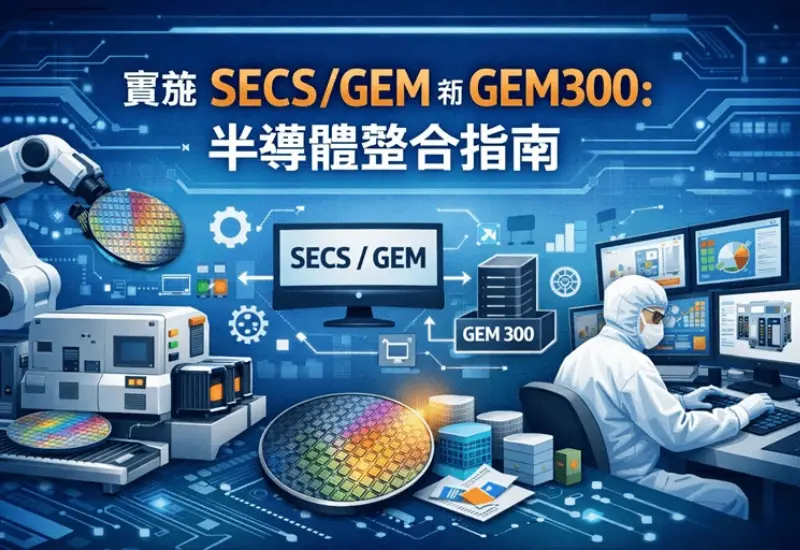
實施 SECS/GEM 和 GEM300: 半導體整合指南

概括

目的:本指南深入探討現代半導體製造中不可或缺的 SECS/GEM 與 GEM300 標準。
主要驅動因素:強調向全自動「無人工廠(Lights Out)」轉型的趨勢,以及標準化通訊的必要性。
技術範圍:涵蓋 SECS/GEM 介面、硬體需求,以及從 200mm 到 300mm 自動化的過渡。
實施策略:為 OEM 與晶圓廠提供部署 eSECS GEM 解決方案的實用建議,以及克服常見整合障礙的方法。
成果:提供一條實現設備與主機無縫連接並提升良率的路線圖。

介紹

全球半導體市場預計在 2030 年達到 1 兆美元,根據 McKinsey & Company(2024)指出,產業必須快速擴大產能以滿足 AI 與汽車市場需求。隨著晶圓廠逼近摩爾定律的極限,設備通訊中的任何誤差空間都已消失。效率不再是目標,而是生存條件。

為了讓這些複雜環境順利運作,產業依賴 SECS/GEM(SEMI 設備通訊標準/通用設備模型)。此框架是晶圓廠的共同語言,使主機系統能與各種設備溝通,從微影設備到量測站皆然。沒有這種標準化,現代智慧晶圓廠將變成混亂的巴別塔。

實施強健的 SECS/GEM 通訊策略,是連接人工操作與「無人工廠」自動化的關鍵。隨著產業進入 SEMI GEM300 標準時代,理解這些協議的細節已成為任何負責設備整合或數位轉型工程師的必修課。

了解 SECS/GEM 框架

SECS/GEM 標準基於 SEMI(國際半導體設備與材料協會)制定的多層協議。在核心層,它定義了資料如何在工廠中封裝、傳送和解析。

協定堆疊:SECS-I、HSMS 和 SECS-II

早期設備使用 SECS-I(E4),依賴 RS-232 序列通訊。然而,現代高速需求已推動產業轉向 HSMS(高速 SECS 訊息服務 – E37)。HSMS 使用 TCP/IP,能在標準乙太網路上提供更快的資料吞吐量和更可靠的連線。

在傳輸層之上是 SECS-II(E5),定義特定訊息結構。它提供設備與主機交換訊息的字典。不論是啟動流程的指令或硬體警報通知,SECS-II 都確保雙方正確理解其意圖。

為什麼 GEM 對設備製造商很重要

SECS 提供字母與詞彙,而 GEM(E30)提供文法。它定義了設備行為的狀態機。OEM 遵循 GEM 模型可確保其設備在亞利桑那或台灣的晶圓廠中都能以可預測的方式運作。

300mm 晶圓廠向 GEM300 的演進

隨著產業從 200mm 過渡到 300mm 晶圓,物料處理的複雜度大幅提升。這促使需要一組更先進的標準,即 GEM300。

GEM300 套件的關鍵組件

GEM300 並非單一標準,而是一套用於自動化晶圓全流程的協議。

  • E40(製程工作管理):管理晶圓加工的「做什麼」與「如何做」。
  • E94(控制工作管理):協調事件順序。
  • E87(載具管理):管理 FOUP(前開式統一匣)放置與移除。
  • E90(基板追蹤):確保每片晶圓在工具中移動過程的完整追蹤。

自動化和減少錯誤

根據 SEMI(2023)報告,300mm 晶圓廠的自動化可將人工錯誤降低多達 40%。在 GEM300 環境中,SECS GEM 的實施讓主機可使用天車系統(OHT)和自動導引車(AGV)進行物料搬運,無須人工介入。此同步程度使半導體設備自動化成為業界標準。

SECS/GEM實施策略

從零開始開發 SECS GEM 介面是一項艱巨任務,可能需要數月工程時間。大多數組織選擇使用專業 SDK 或與整合專家合作以加速上市時間。

客製化開發和中間件之間的選擇

許多人面臨的問題是:開發還是購買?自訂開發提供完全掌控,但需要深入理解 SEMI 標準。相對地,使用 eSECS GEM 軟體解決方案可透過內建狀態機與訊息處理邏輯簡化流程。

測試和驗證

整合很少是「插上即可」。需進行大量測試以確保設備能承受「負面測試」,例如主機傳送非預期指令或網路失效。在 5 萬美元晶圓批量加工中斷的通訊連線,是任何工程師都不願向主管解釋的夢魘。

克服常見的整合挑戰

即使有最佳工具,SECS/GEM 專案仍常遭遇瓶頸。其中一個常見問題是「協議偏移」,即對標準的細微解讀差異導致通訊逾時或資料毀損。

管理大量數據

隨著先進製程控制(APC)與大數據分析的興起,從設備擷取的資料量大幅增加。工程師必須謹慎設計 SECS GEM 實施方式,優先處理關鍵警報,而非一般遙測資料,以避免使 HSMS 連線飽和。

改造舊設備

如果一台功能完好的設備缺乏現代 SECS/GEM 介面該怎麼辦?改造專家通常使用「黑盒子」轉換器或外部 PLC-to-SECS 閘道器。這讓舊設備能加入現代數位架構,而無需全面更新控制系統。

連結的未來:超越傳統創業板

雖然 SECS/GEM 仍是核心技術,但產業正探索 EDA(設備資料擷取),又稱 Interface A。這是條專為資料收集而設計的高頻寬連線,使 SECS/GEM 負責指令與控制。

數位孿生和預測性維護

透過結合 SECS/GEM 即時資料與機器學習模型,晶圓廠正向預測性維護邁進。Gartner(2024)指出,AI 驅動的維護可降低高科技製造的營運成本 20%。若設備能在冒煙前告訴主機它即將故障,晶圓廠便能節省數百萬美元。

數據洞察:標準化的影響

下表顯示從手動或專有介面轉向完全符合 SEMI GEM300 環境後的營運改善。

透過 GEM300 標準提高效率

指標 手動/舊式介面 完整 GEM300 整合 改善幅度
資料準確度 85–90% >99.9%
物料處理錯誤率 約 3.5% <0.1% 35 倍減少
設備整合時間 4–6 個月 4–8 週 3 倍加速
可追溯性水準 以批次為主 以單片晶圓為主 高精度

結論

實施 SECS/GEM 與 GEM300 對半導體製造商而言已非奢侈,而是現代智慧晶圓廠的基礎。從 HSMS 連線的初次握手,到 FOUP 管理的複雜協作,這些標準確保設備與主機系統完美同步。透過採用 eSECS 等現代工具來推動 SECS/GEM 整合,OEM 與晶圓廠工程師可大幅降低停機時間、提升良率,並使營運面對全球市場日益增加的需求時更具韌性。


Contact Us Today

取得逐步協助以實施 SECS/GEM 與 GEM300 整合


SECS/GEM & GEM300: 현대 팹 자동화를 위한 통합 가이드

요약

  • 글로벌 영향: 전 세계 반도체 생산 능력이 사상 최고치를 기록하면서 효율적인 자동화는 선택이 아니라 산업의 생명선이 되었습니다.
  • 표준 스택: SECS/GEM은 단일 프로토콜이 아니라 E4, E5, E37, E30 등으로 구성된 계층형 표준 모음으로, 장비가 공장 호스트와 “대화”할 수 있게 합니다.
  • GEM300의 진화: 300mm 팹에서는 기본 GEM만으로는 부족했습니다. GEM300 스위트(E39, E40, E87, E94, E90)는 캐리어 관리 및 작업 처리 같은 복잡한 물류를 표준화합니다.
  • 구현: 레거시 직렬 연결(SECS-I)에서 고속 이더넷(HSMS)으로의 전환은 현대적 데이터 처리량을 위해 필수적입니다.
  • 효과: 적절한 구현은 통합 시간을 줄이고 수율을 높이며 맞춤형 드라이버의 “스파게티 코드”를 제거합니다.

소개

집에서 쓰는 와이파이가 복잡하다고 느껴진다면, 수십억 달러짜리 장비들이 밀리초 단위로 복잡한 레시피를 서로 속삭여야 하는 반도체 팹을 조정해 보세요. 그 중요성은 엄청납니다. SEMI의 World Fab Forecast(2024)에 따르면 올해 전 세계 반도체 생산 능력은 월 3,000만 웨이퍼라는 사상 최고치에 이를 것으로 전망됩니다. 이는 공급망을 통해 이동하는 엄청난 양의 실리콘을 의미하며, 이 모든 과정은 강력한 자동화 없이는 불가능합니다.

이 제조 교향곡의 중심에는 SECS/GEM이 있습니다. SECS/GEM은 팹의 숨은 영웅으로, 캘리포니아의 증착 장비가 독일에서 개발된 호스트 시스템과 원활하게 대화할 수 있게 해주는 보편적 언어입니다. SECS/GEM이 없다면 반도체 산업은 본질적으로 고가의 섬들로 나뉘어 나노미터 규모의 트랜지스터를 제조하는 데 필요한 정밀한 협업을 할 수 없었을 것입니다.

200mm 레거시 라인을 개조하든, 최첨단 300mm 시설을 도입하든, 이러한 표준을 이해하는 것은 필수입니다. 다만 솔직히 말하면 SEMI 표준 매뉴얼은 선인장을 탈수시킬 만큼 지루할 수 있습니다. 우리는 이것을 이해하기 쉬운 언어로 풀어 E5, E30, 그리고 강력한 GEM300 표준들의 알파벳 수프를 안내하려 합니다.

팹의 중추: SECS/GEM이란?

초심자에게 “SECS/GEM”은 단일 프로토콜처럼 들리지만, 실제로는 함께 작동하는 여러 표준의 스택입니다. 인터넷을 떠올려 보세요: 물리적 케이블, IP 주소, HTML 페이지가 있듯이 SECS/GEM도 유사한 계층 구조를 가집니다.

전송 계층: E4과 E37

데이터가 움직이기 전에 장비와 호스트는 데이터를 어떻게 전송할지 합의해야 합니다.

  • E4 – SECS-I (직렬): “구세대”입니다. RS-232 직렬 케이블을 사용합니다. 느리고 노이즈에 취약하며 현대의 300mm 팹에서는 거의 구식입니다. 하지만 200mm 레거시 팹에 들어가면 20년 된 에처(etcher) 뒤에서 이런 케이블이 아직도 뽑혀 나오는 것을 볼 수 있습니다.
  • E37 – HSMS: “High-Speed SECS Message Services”입니다. 이 표준은 직렬 케이블을 이더넷(TCP/IP) 연결로 대체했습니다. 웨이퍼 맵 데이터와 같이 기가바이트 단위의 데이터를 전송할 때 빠른 전송이 필수적입니다.

문법: E5 – SECS-II

연결이 설정되면 문법 구조가 필요합니다. E5 – SECS-II는 “메시지”를 정의합니다. 통신을 Streams(카테고리)와 Functions(특정 동작)로 나눕니다.

예: S1,F1은 “거기 있나요?”(Are You There Request). S1,F2는 “네, 있습니다”(On Line Data).

E5는 사전을 제공하지만, 대화를 어떻게 이어갈지는 알려주지 않습니다. 가능한 단어들을 나열해 줄 뿐입니다.

동작: E30 – GEM

SECS/GEM이 진정으로 살아나는 곳은 여기입니다. E30 – GEM(General Equipment Model) 표준은 작동 규칙을 정의합니다. 예를 들어 장비에 “Remote 모드에 놓이면 이 특정 명령들을 수락해야 한다”고 지시합니다.

E30가 없으면 한 벤더는 S2,F41를 공정 시작으로 사용하고, 다른 벤더는 같은 코드를 레시피 다운로드에 사용할 수 있어 혼란이 발생합니다. E30은 모든 GEM 준수 도구가 따라야 할 표준 상태 머신(Offline, Online-Local, Online-Remote)을 강제합니다.

왜 자동화에 공통 언어가 필요한가

왜 굳이 이 모든 과정을 거쳐야 할까요? 모든 OEM이 자체 API를 만들게 놔두면 안 될까요?

핵심은 확장성입니다. 현대 팹에는 Applied Materials, Lam Research, Tokyo Electron 등과 같은 30개 이상의 다른 공급업체의 500개 이상의 도구가 있을 수 있습니다. 공장 호스트(MES)가 각 도구마다 커스텀 드라이버를 작성해야 한다면 통합팀은 잠을 잘 수 없을 것입니다.

SECS/GEM은 도구와 호스트를 분리시킵니다.

  • 상호운용성: 호스트 시스템은 장비 제조사가 누구인지와 상관없이 상태 변수(VID)나 수집 이벤트(CEID)를 요청하는 방법을 정확히 알고 있습니다.
  • 수율 향상: 자동화된 데이터 수집은 결함 탐지 및 분류(FDC)를 가능하게 합니다. 챔버의 압력이 50ms 동안 급등하면 SECS/GEM이 즉시 보고하여 호스트가 불량 웨이퍼가 처리되기 전에 라인을 멈출 수 있습니다.
  • 비용 절감: 표준 인터페이스는 신규 장비 설치 시 발생하는 비반복적 엔지니어링(NRE) 비용을 줄입니다.

참고: SECS/GEM이 표준이긴 하지만 “준수”라는 용어는 느슨하게 해석될 수 있습니다. 기술적으로 E30 준수라고 해도 표준을 독특하게 구현해 자동화를 파괴하는 도구가 있을 수 있습니다. 항상 엄격한 테스트 스위트로 검증하세요.

300mm 혁명: GEM300의 등장

산업이 200mm에서 2000년경 300mm 웨이퍼로 이동하면서 물리적으로 무거워진 문제가 생겼습니다. 300mm 웨이퍼가 들어 있는 FOUP(Front Opening Unified Pod)는 작업자가 하루 종일 들고 다니기에는 너무 무겁습니다. 따라서 업계는 OHT(Overhead Hoist Transports), 자동 저장 시스템 등 완전 자동화를 필요로 했습니다.

기본 SECS/GEM만으로는 이러한 복잡한 물류를 처리할 수 없었습니다. 그래서 E30 위에 얹히는 “GEM300” 표준들이 등장했습니다. 이들은 완전 자동화 팹의 복잡성을 관리하기 위한 추가 표준입니다.

E87 – 캐리어 관리

200mm 팹에서는 작업자가 캐세트를 장비에 올려놓고 “시작”을 누릅니다. 300mm 팹에서는 로봇이 FOUP를 로드 포트에 내려놓습니다. 장비는 다음을 알아야 합니다:

  • 이 캐리어 ID가 무엇인가?
  • 슬롯이 올바르게 채워져 있는가?
  • 호스트가 이 장비의 처리 허가를 내렸는가?

E87은 “바인드(Bind)”, “캐리어 진행(Proceed With Carrier)”, “캐리어 아웃(Carrier Out)” 상태를 관리합니다. 이는 도구와 AMHS(자동 물류 시스템)가 완벽히 동기화되도록 보장합니다.

E40 & E94 – 작업 관리

여기서 사람들이 혼동하는 경우가 많습니다. 왜 작업에 대해 두 가지 표준이 필요할까요?

  • E40 (Process Job): 웨이퍼에 실제로 무슨 일이 일어나는지를 정의합니다. “웨이퍼 1번부터 25번까지에 레시피 A를 적용해라.”
  • E94 (Control Job): 감독자 역할을 합니다. Process Job을 감쌉니다. Control Job은 “Process Job 1을 실행하고 완료되면 웨이퍼를 출력 포트로 이동시켜라” 같은 지시를 내립니다.

Control Job은 프로젝트 매니저, Process Job은 전문 하청업체로 생각할 수 있습니다.

E90 – 기판 추적

웨이퍼를 잃어버리면 안 됩니다. 절대. E90은 호스트가 도구 내부의 각 웨이퍼(기판)의 정확한 위치를 추적할 수 있게 합니다. 프로세스 챔버에 있는가? 얼라인(alignment) 장치에 있는가? 냉각 스테이션에 있는가? E90은 그 가시성을 제공합니다.

SECS-I에서 HSMS로의 전환: 속도 업그레이드

레거시 장비를 다루고 있다면 아직도 SECS-I 직렬 연결과 씨름하고 있을 수 있습니다. RS-232 케이블은 악명 높게 까다롭습니다. 접지 루프, 전송 속도(baud rate) 불일치, 케이블 길이 제한(리피터 없이 최대 50피트) 등은 지속적인 골칫거리입니다.

E37 – HSMS는 모든 것을 TCP/IP로 이동시켜 판도를 바꿨습니다.

  • 신뢰성: 더 이상 구부러진 핀이나 신호 열화 문제가 없습니다.
  • 속도: HSMS는 훨씬 빠릅니다. 이는 초당 10회와 같이 챔버 온도를 샘플링하는 현대의 “Trace Data”(E5 Stream 6) 수집에서 중요합니다. SECS-I는 이 데이터 양을 소화하지 못하지만 HSMS는 무리 없이 처리합니다.

팹을 현대화하려면 레거시 SECS-I 포트를 HSMS로 변환하는 SECS/GEM 어댑터를 설치하는 것이 높은 ROI를 제공하는 활동 중 하나입니다. 이를 통해 도구는 즉시 네트워크 준비가 되고 현대적 분석 플랫폼과 통합할 수 있습니다.

구현 과제 및 현대적 솔루션

SECS/GEM 소프트웨어를 구현하는 것은 플러그 앤 플레이가 아닙니다. 오히려 “플러그 앤 디버그”에 가깝습니다. 자동화 엔지니어들이 직면하는 일반적 장애물은 다음과 같습니다.

  1. “스파게티 코드” 함정 개발자들은 종종 E30 상태 모델의 복잡성을 과소평가합니다. “행복한 경로(Happy Path)”에서는 동작하는 빠른 드라이버를 작성하지만, 장비가 예상치 못한 알람이나 통신 이상을 던지면 바로 충돌합니다.
    • 해결책: 원시 SECS 메시지를 처음부터 작성하기보다는 상용 SECS/GEM 드라이버나 라이브러리(SDK)를 사용하세요.
  2. 문서 불일치 장비 매뉴얼에는 변수가 ASCII 문자열이라고 적혀 있는데, 실제로 도구는 2바이트 정수를 보냅니다. 호스트가 충돌합니다.
    • 해결책: 엄격한 특성화(characterization). 연결하기 전에 “골든 스탠다드” 테스트 도구로 기계의 모든 변수와 이벤트를 쿼리하세요.
  3. 200mm 장비에 300mm 로직 적용 200mm 팹에서도 효율을 위해 GEM300 기능(예: 고급 캐리어 관리)을 원하지만 OHT가 없는 경우가 있습니다.
    • 해결책: 하이브리드 접근 방식. 오래된 장비에는 기본 SECS/GEM을 사용하면서 호스트 측에는 300mm 로직을 “흉내” 내는 스마트 미들웨어가 필요합니다.

빠른 참고: 표준 스택

아래는 알아야 할 핵심 표준의 정리입니다.

표준 명칭 주요 기능
E4 SECS-I 물리 계층 (직렬 RS-232). 레거시 전송.
E37 HSMS 물리 계층 (이더넷 TCP/IP). 현대적 전송.
E5 SECS-II 메시지 계층. “문법”(Streams & Functions)을 정의.
E30 GEM 동작 계층. 상태 모델과 제어 규칙을 정의.
E87 Carrier Mgmt GEM300: 로드 포트 및 캐리어 검증 관리.
E40 Process Job GEM300: 레시피 및 웨이퍼 처리 지시 정의.
E94 Control Job GEM300: 고수준 워크플로우 관리.
E90 Substrate Tracking GEM300: 도구 내부의 개별 웨이퍼 추적.

결론

산업이 300mm 표준화 및 그 이상의 영역으로 나아감에 따라 SECS/GEM 인터페이스를 구현하고 유지관리하는 능력은 중요한 기술 세트가 되고 있습니다. 이것은 웨이퍼 가공의 물리적 현실과 수율 분석의 디지털 세계를 연결하는 다리입니다.

OEM 개발자가 도구를 “팹 레디(fab ready)”로 만들려고 하든, 공장 관리자가 라인 가동 시간을 5% 더 확보하려고 하든, 해답은 대개 더 나은 자동화에 있습니다. GEM300 표준은 로드맵을 제공하며, 당신은 그 차를 운전하면 됩니다.

Contact Us Today

GEM300 준수 Fab 자동화에 대한 전문가 지침 받기


SECS/GEM Protocol: The Ultimate Guide to Fab Equipment Integration

Summary

  • The SECS/GEM protocol acts as the universal language for semiconductor manufacturing, enabling machines and host systems to talk.
  • It relies on SEMI E5 (SECS-II) for message syntax and SEMI E30 (GEM) for defining equipment behavior and state models.
  • Automation through this standard reduces manual errors, optimizes wafer throughput, and supports real-time data collection.
  • Key components include HSMS for high-speed Ethernet communication and complex message streams for alarm handling and recipe management.
  • Integration challenges often involve legacy hardware, custom software wrappers, and strict compliance requirements.

Introduction

According to SEMI (2024), global semiconductor equipment sales are projected to reach a record $124 billion by 2025. This massive investment highlights a critical reality: building chips requires more than advanced lithography. It demands flawless coordination between thousands of robotic units and the central nervous system of the factory.

At the heart of this mechanical choreography lies the SECS/GEM protocol. This standard ensures that an etching tool from Japan, a metrology station from the US, and a sorter from Europe can all communicate with a single Manufacturing Execution System (MES). Without it, modern fabs would be a chaotic collection of expensive, silent machines rather than an integrated production powerhouse.

Implementation of these semiconductor communication standards allows for a “lights-out” manufacturing environment. By standardizing how data moves, fabs achieve the precision necessary for sub-5nm process nodes, where even a microsecond of lag can ruin a batch of wafers.

What Exactly is the SECS/GEM Protocol?

To understand this technology, we must look at it as a two-part harmony. SECS stands for Semiconductor Equipment Communication Standard, while GEM refers to the Generic Model for Communications and Control of Manufacturing Equipment. They are essentially the grammar and the social etiquette of the cleanroom.

The SECS/GEM protocol evolved from a need to replace manual data entry with automated machine-to-host links. In the early days of the industry, equipment was often an island. Today, every movement—from the pressure in a vacuum chamber to the exact timestamp a wafer enters a pod—is broadcast over the network.

The SEMI E5 Standard (SECS-II)

Think of SEMI E5 as the dictionary. It defines the SECS/GEM messages that travel back and forth. This standard organizes communication into “Streams” and “Functions.” For example, Stream 1 covers equipment status, while Stream 6 handles data collection. Each message is structured so the host knows precisely which byte represents an alarm and which represents a temperature reading.

The SEMI E30 Standard (GEM)

While E5 provides the words, SEMI E30 provides the script. The GEM standard defines how the equipment should behave in specific scenarios. It dictates how the machine starts, how it handles a remote command to stop, and how it reports its internal state. Without GEM, every equipment manufacturer would have a unique way of saying “I am busy,” making fab equipment integration a nightmare for software engineers.

Anatomy of the SECS/GEM Stack

The protocol operates on a layered architecture. Much like the internet uses TCP/IP, the semiconductor world uses a specific stack to move data from the hardware level up to the server room.

HSMS (SEMI E37)

High-Speed SECS Message Services (HSMS) is the modern transport layer. Historically, the industry used SECS-I (E4), which relied on slower RS-232 serial connections. HSMS transitioned the industry to TCP/IP over Ethernet. This shift was vital because the volume of data generated by modern tools would choke an old serial cable. HSMS ensures that messages are delivered with the speed and reliability required for high-volume manufacturing.

Data Collection and Variable Handling

A core strength of the protocol is its ability to handle dynamic data. Equipment can be configured to report “Status Variables” (SVs), which are ongoing values like gas flow, and “Data Variables” (DVs), which are snapshots taken during a specific event. This allows the MES to monitor the health of the process without needing to poll the machine every millisecond.

Common SECS/GEM Messages in Action

Communication isn’t a one-way street. It is a constant dialogue between the “Host” (the factory’s brain) and the “Equipment” (the factory’s muscle). These SECS/GEM messages follow a strict request-response pattern to ensure no data is lost in the digital void.

  • S1F1 (Are You There?): A simple handshake to verify the connection is active.
  • S2F21 (Remote Command): The host tells the machine to “Start,” “Stop,” or “Select Recipe.”
  • S5F1 (Alarm Report): The equipment screams for help when a sensor detects an anomaly.
  • S6F11 (Event Report): This is the workhorse of the protocol, notifying the host that a specific milestone—like finishing a wafer—has been reached.

Is it possible for a fab to run without these messages? Technically, yes, if you enjoy hiring hundreds of people to manually type numbers into spreadsheets. But in a world where a single minute of downtime can cost $30,000, manual labor is a luxury no one can afford.

The Role of Fab Equipment Integration

Integrating a new tool into a fab is like trying to teach a new musician to join an orchestra mid-performance. The fab equipment integration process ensures the new machine follows the conductor (the MES) without missing a beat. This involves mapping the tool’s internal parameters to the standardized GEM interface.

Benefits for OEMs

For Equipment Manufacturers (OEMs), providing a robust SECS/GEM interface is no longer optional. It is a prerequisite for doing business with major foundries. A clean implementation allows their customers to automate data collection for Statistical Process Control (SPC), which is essential for maintaining high yields.

Benefits for Fab Operators

For the fab, the goal is “Operational Awareness.” When all tools use the same semiconductor communication standards, the facility can implement advanced analytics. If a particular tool starts showing a slight drift in temperature, the system can flag it for maintenance before it starts producing defective chips.

Implementation and Integration Challenges

If this standard is so great, why isn’t it easy? The truth is that implementing the SECS/GEM protocol involves significant hurdles that can trip up even experienced development teams.

  • Legacy Hardware: Some older tools were built before HSMS was standard. These require “wrappers” or signal converters to translate serial data into something a modern MES can understand.
  • Non-Standard Implementations: While SEMI provides the guidelines, there is still room for interpretation. One vendor might implement an alarm under a different Stream than another, requiring the integration team to write custom logic.
  • Data Overload: Modern tools can report thousands of parameters. If not managed correctly, the sheer volume of SECS/GEM messages can saturate the network or overwhelm the MES database.
  • State Machine Complexity: Mapping the physical reality of a robot arm to a logical GEM state model requires a deep understanding of both mechanical engineering and software logic.

Do you ever wonder why software engineers in this field look so tired? It is likely because they spent all night debugging a race condition in a Stream 9 message.

SECS/GEM vs. Other Standards (OPC UA and EDA)

While SECS/GEM is the king of the fab, other standards are carving out their own niches. Equipment Data Acquisition (EDA), also known as Interface A, is gaining traction. Unlike SECS/GEM, which is used for “control,” EDA is used exclusively for “data.”

According to McKinsey (2022), the use of digital twins in manufacturing can increase production throughput by up to 20%. EDA supports this by providing a high-bandwidth pipe for sensor data that doesn’t interfere with the control messages of the SECS/GEM protocol. However, for the foreseeable future, SECS/GEM remains the mandatory standard for equipment control and basic reporting.

Why SECS/GEM Still Rules

The longevity of this standard is due to its reliability. It is a “binary” protocol, meaning it is incredibly efficient in terms of bandwidth. In a fab with 5,000 tools, using a heavy, text-based protocol like JSON or XML would require a massive increase in network infrastructure. SECS/GEM keeps things lean and mean.

Best Practices for MES Integration Teams

Successful fab equipment integration requires a structured approach. It isn’t something you can “bolt on” at the end of a project.

  1. Define a GEM Manual Early: Ensure the equipment vendor provides a detailed document mapping every variable and event.
  2. Use Simulation Tools: Don’t wait for the multi-million dollar machine to arrive. Use SECS/GEM simulators to test your MES logic against a virtual tool.
  3. Prioritize Alarm Management: Not every alarm is a crisis. Categorize them so the MES only alerts human operators when a genuine “tool down” event occurs.
  4. Validate Compliance: Use third-party testing software to ensure the equipment strictly adheres to SEMI E5 and E30.

The Future of Semiconductor Communication Standards

As we move toward “Industry 4.0,” the SECS/GEM protocol is evolving. We are seeing a move toward more secure communication. While the original standards had little in the way of encryption, modern implementations are beginning to incorporate TLS and other security layers to protect sensitive intellectual property from cyber threats.

Automation is the only path forward. As chip architectures become more complex, the margin for error shrinks to zero. The ability to remotely monitor and control equipment through standardized protocols is the only way to maintain the pace of Moore’s Law.

Conclusion

The SECS/GEM protocol remains the indispensable foundation of semiconductor manufacturing. Bridging the gap between sophisticated hardware and high-level software, it enables the level of automation required for the modern digital era. Whether you are an OEM developing a new tool or an engineer managing a global fab, mastering these semiconductor communication standards is the key to operational excellence.

Contact Us Today

Get Professional Support to Connect Your Tools with SECS/GEM


👉 Contact us today to explore how SECS/GEM can revolutionize your production processes!

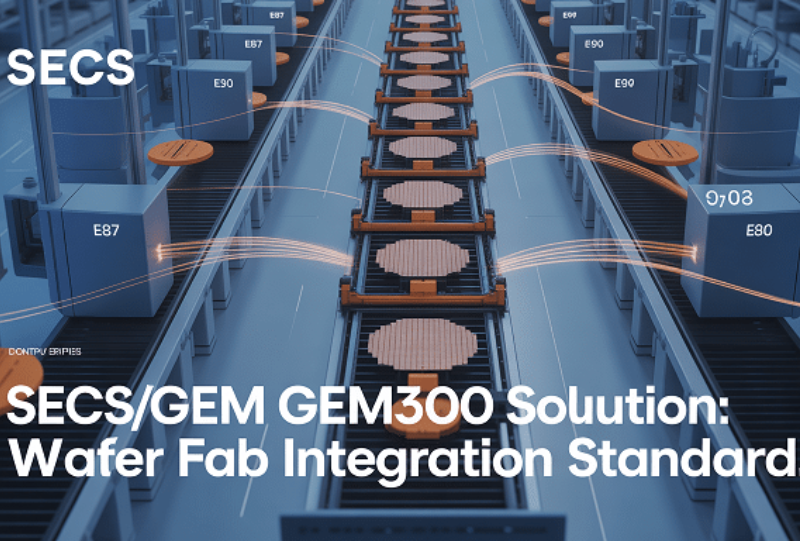
SECS/GEM GEM300 解決方案:晶圓廠整合標準

摘要

  • 協定概述:SECS/GEM 與 GEM300 代表半導體製造通訊的核心,實現設備到主機的無縫連接。
  • GEM300 的必要性:隨著晶圓廠過渡到 300mm 晶圓,像 E40、E87 與 E94 這類標準成為自動化物料搬運與製程管理的必要條件。
  • 營運效益:實施這些標準可減少人工錯誤、提高產能,並確保複雜製造環境中的資料完整性。 
  • 專業整合:使用專業的 GEM300 整合服務可協助 OEM 與晶圓廠在維持高可用性與效率的同時,應對合規性的複雜性。

介紹

根據 SEMI(2024),全球半導體製造設備支出達到創紀錄的 1000 億美元,這主要由先進邏輯與記憶體廠的大規模擴張所驅動。這波投資激增凸顯了在高產量環境中依賴複雜自動化以維持良率與效率的日益增加。這項技術飛躍的核心在於採用 SECS/GEM GEM300 解決方案,這些解決方案提供了現代製造廠在無需持續人工干預下運作所需的標準化通訊框架。

 矽晶圓在尺寸與價值上持續成長,使得人工搬運成為過去式。當一個晶圓盒代表數十萬美元時,將搬運或製程交由機率決定無法滿足現代工業要求。標準化通訊協定確保每一台設備,不論製造商為何,都能與製造執行系統(MES)講同一種語言。

建立這種共同語言不僅僅是拉線接線那麼簡單。它需要深入的架構性理解,從工具上的感測器到雲端資料庫,資料如何流動。本指南探討這些標準如何運作、為何它們對 300mm 廠房不可協商,及專業 SECS/GEM 實施如何確保競爭優勢。

現代晶圓廠的核心架構

半導體設備通訊標準 / 通用設備模型(SECS/GEM)擔任設備到主機通訊的主要介面。雖然 SECS-II 定義了訊息的結構,GEM 則增添一層智慧,定義了如何使用那些訊息來表示工具的狀態。沒有這個框架,工廠將成為一堆無法共享關鍵遙測資料的「黑盒子」。

SECS/GEM 實作基礎

成功的 SECS/GEM 實作聚焦於兩個主要層面。首先,傳輸層通常使用基於 TCP/IP 的高速 SECS 訊息服務(HSMS),以確保資料封包能快速通過網路。其次,訊息層將這些封包組織為有意義的單位,例如警報報告或製程狀態變更。

為何 300mm 晶圓要求更先進的標準

向 300mm 晶圓的轉變導入了 GEM300 標準,這是一套 SEMI 規範,旨在處理自動化物料搬運系統(AMHS)複雜性增加的情況。不同於人力仍可搬運較小晶圓盒的情況,300mm 廠房仰賴天車運輸(OHT)與機械手臂。

誰會想要在一個像足球場般大的廠內手動追蹤 300mm 晶圓?此類設施的規模使得人工追蹤不可能。GEM300 提供了「握手」協定,讓機器人能準確知道要接近哪一個 Load Port、要拾取哪一個承載盒,毫無猜測空間。

使用 GEM300 整合服務解決連接缺口

部署完全合規的系統需要在一片 SEMI 標準的迷宮中穿梭。許多原始設備製造商(OEM)發現從頭建立這些介面會耗盡內部資源。此時 GEM300 整合服務便能提供價值,透過提供與工廠需求對齊的預先驗證框架來協助。

300mm 的必要 SEAM 標準

要被視為「300mm 合規」,設備必須遵循一組特定標準,通常稱為 GEM300 套件。這些包括:

  • E40(製程管理):管理配方與製程工作的執行。
  • E87(承載管理):管控晶圓承載盒(FOUP)的移動與辨識。
  • E94(控制工作管理):連結製程工作以協調複雜序列。 
  • E90(基板追蹤):提供每片晶圓在工具內確切位置的可視性。

E87 在自動化中的關鍵角色

E87 或許是 300mm 廠房中最明顯的標準。它管理 Load Port 的狀態,確保工具保持準備接收承載盒。如果 E87 邏輯失效,AMHS 可能會嘗試將承載盒送到已被佔用的港口,進而導致機械碰撞或重大停機。

導覽設備介面解決方案

選擇正確的設備介面解決方案涉及在支援舊有設備與未來技術之間取得平衡。舊有工具可能仍依賴 RS-232 串列連接,而現代工具則使用高頻寬的乙太網路。強健的解決方案必須彌合這些差距,以提供生產現場的統一視圖。

從 RS-232 到 HSMS 的轉變

雖然半導體產業以尖端技術著稱,但舊有硬體常常存在數十年之久。HSMS(E37)取代了 1980 年代較慢的串列連線,提供了現代微影或蝕刻工具每秒追蹤數千個參數所需的頻寬。根據 Mordor Intelligence(2023)的報告,晶圓廠自動化市場在「棕地」升級(即為舊有設備加裝 HSMS 能力)方面正呈現 12% 的年複合成長率(CAGR)。

資料量與即時分析

現代 SECS/GEM GEM300 解決方案必須處理龐大的資料量。僅報告工具「正在運行」已不再足夠。MES 現在需要關於腔室壓力、氣體流率與射頻功率的即時更新。這些細緻資料允許進行預測性維護,系統能在元件真正故障前識別出故障徵兆。

GEM300 合規軟體的投資報酬率 (ROI)

投資於 GEM300 合規軟體是一項影響底線的策略性決定。當軟體遵循業界認可的標準時,工具「接線」與特性化所需的時間會從數月降至數週。

降低整合成本

標準化介面對晶圓廠而言是一種「即插即用」的解決方案。若無這些標準,每台工具都需客製化驅動程式,將為 CIM(電腦整合製造)團隊製造維護噩夢。標準化軟體確保 MES 能像與供應商 A 的工具溝通一樣輕鬆地與供應商 B 的工具通訊。

透過錯誤預防提升良率

人為錯誤仍然是晶圓報廢的主要原因之一。GEM300 消除了操作員手動選擇配方或輸入晶圓 ID 的需求。系統會自動驗證是否為正確的配方載入至正確的晶圓承載盒,防止代價高昂的製程錯誤。

實施 SECS/GEM GEM300 解決方案:最佳實務

成功部署需要有條不紊的方法。它始於對現有設備的差距分析,並以嚴格的「S-Message」測試結束,以確保符合工廠主機的要求。

選擇整合夥伴

尋找 SECS/GEM GEM300 解決方案的夥伴不僅僅需要程式開發技能。理想的夥伴了解 SEMI 標準的細微差異,且具有通過晶圓廠驗收測試(FAT)的成功經驗。他們應提供簡化 OEM 工程團隊實作的軟體開發套件(SDK)。

測試與驗證

測試是自動化中最常被忽略的階段。使用主機模擬器來模擬 MES 的行為,可讓工程師在受控環境中找到並修復錯誤。這可避免「星期五下午崩潰」——一次工具更新造成整條生產線停擺的情況。

晶圓廠自動化標準的未來趨勢

產業目前正朝向「智慧製造」時代邁進,在此 SECS/GEM 將與像 EDA(設備資料擷取,也稱為 Interface A)等更新協定共存。雖然 SECS/GEM 仍是控制與狀態報告的黃金標準,EDA 則為大資料分析提供一條獨立的高速管道。 

沒有統一的通訊協定,設施能否真正擴展?證據顯示答案是否定的。隨著特徵尺寸縮小到 3nm 以下,容錯空間幾乎不存在。透過 SECS/GEM GEM300 解決方案進行精準控制,是維持次世代晶片所需嚴格公差的唯一方法。 

試圖在沒有 GEM300 的情況下運行 300mm 廠,就像試圖用信鴿來組織快閃活動,理論上可行,但實務上註定災難。隨著我們邁向 450mm 或更大的「千兆級廠(Giga-fabs)」的可能迭代,這些標準所奠定的基礎將繼續成為全球電子產品生產的基石。

結論

半導體產業對忽視標準化力量者不留情面。實施健全的 SECS/GEM GEM300 解決方案可確保您的設施保持敏捷、以資料為驅動,並能應對全球市場不斷增長的需求。通過優先採用 GEM300 整合服務並投資於高品質的 GEM300 合規軟體,製造商可以彌合單機性能與整廠協同之間的差距。

Contact Us Today

獲得 SECS/GEM GEM300 解決方案的客製化諮詢


SECS/GEM 소개: 반도체 장비 통신

요약

  • SECS/GEM은 반도체 제조에서 장비를 공장 호스트 시스템과 연결하는 데 사용되는 주요 통신 표준입니다.
  • 이 프로토콜 스위트에는 SEMI E4(SECS-I), E5(SECS-II), E37(HSMS), E30(GEM)이 포함됩니다.
  • 이는 자동 데이터 수집, 레시피 관리, 원격 장비 제어를 가능하게 합니다.
  • 표준화는 통합 비용을 줄이고 OEM(Original Equipment Manufacturer)의 시장 출시 시간을 단축합니다.
  • 견고한 GEM 인터페이스 구현은 현대 스마트 제조와 대량 반도체 팹 자동화에 필수적입니다.

소개

Statista(2024)에 따르면, 글로벌 반도체 시장은 2024년 말까지 6,130억 달러의 가치에 도달할 것으로 전망됩니다. 이러한 대규모 성장은 더 작고, 더 빠르며, 더 효율적인 칩에 대한 끝없는 수요에 의해 촉진되고 있습니다. 이러한 목표를 달성하기 위해 공장은 외과 수술과 같은 정밀도로 운영되어야 하며, 바로 이 지점에서 SECS/GEM이 클린룸의 숨은 영웅으로 등장합니다.

통합된 언어가 없다면, 반도체 제조 공장(fab)은 디지털 바벨탑과 같을 것입니다. 서로 다른 공급업체에서 제작된 수억 달러 규모의 수백 대 장비가 나란히 놓여 있으면서도 단 하나의 상태 데이터 바이트조차 공유하지 못할 것입니다. SECS/GEM 표준은 이러한 장비들이 제조 실행 시스템(MES)으로 알려진 공장의 중추 신경계와 소통할 수 있도록 필요한 프레임워크를 제공합니다.

이 통신 프로토콜은 모든 실리콘 웨이퍼가 추적되고, 모든 공정 단계가 기록되며, 모든 알람이 실시간으로 처리되도록 보장합니다. 자동화 초보자이든 숙련된 시스템 통합자이든, 이 장비 통신 프로토콜을 이해하는 것은 칩 제조 세계에서 경쟁력을 유지하는 데 필수적입니다.

SECS/GEM이란 정확히 무엇인가?

이 용어는 SEMI(Semiconductor Equipment and Materials International)에서 개발한 서로 연관된 두 가지 표준의 결합입니다. SECS는 Semiconductor Equipment Communication Standard를 의미하고, GEM은 Generic Model for Communications and Control of Manufacturing Equipment를 의미합니다. 이 둘은 함께 하드웨어 수준에서 공장 관리 소프트웨어까지 데이터가 어떻게 전달되는지를 정의합니다.

계층화된 아키텍처

이 프로토콜을 각 층이 특정 목적을 수행하는 케이크와 같다고 생각해 보십시오. 가장 아래에는 물리적 및 전기적 연결을 처리하는 전송 계층이 있습니다. 그 위에는 전송되는 데이터의 구문과 형식을 정의하는 메시징 계층이 위치합니다.

SECS-I (SEMI E4) 및 HSMS (SEMI E37)

초기에는 장비들이 SECS-I 표준으로 정의된 직렬 케이블(RS-232)을 사용하여 통신했습니다. 일부 오래된 “레거시” 장비는 여전히 이를 사용하지만, 현대 팹은 고속 SECS 메시지 서비스(HSMS)로 전환했습니다. 이 새로운 표준은 TCP/IP 네트워크를 사용하여 이더넷 케이블을 통해 훨씬 더 높은 속도로 데이터를 전송할 수 있습니다.

SECS-II (SEMI E5)

연결이 설정되면, 장비는 메시지를 구조화할 방법이 필요합니다. SECS-II는 “스트림(Stream)”과 “펑션(Function)”으로 분류된 방대한 메시지 유형 라이브러리를 제공합니다. 이는 프로토콜의 사전 역할을 하여, 장비가 “작업 완료”를 알릴 때 호스트 시스템이 그 의미를 정확히 이해하도록 보장합니다.

GEM 계층(E30)의 역할

SECS-II가 사전이라면, GEM 인터페이스는 문법과 예절에 관한 책입니다. SECS-II는 단어를 제공하지만, 언제 어떻게 사용해야 하는지는 알려주지 않습니다. SEMI E30 표준은 장비의 동작을 정의하며, 특정 공장 요구사항을 지원하기 위해 어떤 SECS-II 메시지를 구현해야 하는지를 규정합니다.

호스트 시스템은 공정이 언제 시작되었는지 어떻게 알 수 있을까요? GEM 표준은 장비가 “컬렉션 이벤트(Collection Events, CE)”를 게시하도록 요구합니다. 이러한 이벤트는 웨이퍼가 로딩되거나 도어가 닫히는 등 중요한 상황이 발생할 때마다 공장에 알림을 트리거합니다.

상태 머신과 제어

SEMI SECS/GEM 표준의 핵심 기능 중 하나는 상태 머신 개념입니다. 이 모델은 장비가 “Manual”, “Remote”, “Local” 모드 중 어떤 상태에 있는지를 추적합니다. 이를 통해 공장 호스트가 기술자가 렌치를 들고 장비 내부에 있는 동안 실수로 장비를 작동시키는 일을 방지합니다. 흔히 말하듯, 안전이 최우선입니다.

팹이 반도체 팹 자동화에 의존하는 이유

반도체 제조는 지구상에서 가장 복잡한 산업 공정 중 하나입니다. 단 하나의 칩이 생산되기까지 수개월이 걸릴 수 있으며, 수천 단계의 공정을 거칩니다. 장비가 보정 범위를 벗어나면, 단 몇 분 만에 수백만 달러 상당의 재고를 망칠 수 있습니다.

실시간 모니터링 및 데이터 수집

자동화를 통해 팹은 온도, 압력, 가스 유량과 같은 데이터 포인트를 몇 밀리초마다 수집할 수 있습니다. 이 데이터는 통계적 공정 관리(SPC) 시스템으로 전달됩니다. 플라즈마 식각기의 압력이 극히 작은 비율만큼만 벗어나도, SECS/GEM 연결을 통해 MES가 즉시 장비를 정지시켜 라인에 남아 있는 웨이퍼를 보호할 수 있습니다.

레시피 관리

모든 배치마다 공정 파라미터를 수동으로 입력하는 것은 재앙의 지름길입니다. 장비 통신 프로토콜을 사용하면, 호스트가 특정 로트 ID에 따라 올바른 레시피를 장비로 직접 “다운로드”할 수 있습니다. 이는 인적 입력 오류를 제거하고, 장비가 항상 최신 설정을 사용하도록 보장합니다.

구현을 위한 핵심 개념

GEM 인터페이스를 개발하는 소프트웨어 팀에게는 여러 기술 용어가 매우 빠르게 익숙해질 것입니다. 단순히 데이터를 전송하는 것만으로는 충분하지 않으며, 올바른 형식으로 올바른 데이터를 전송해야 합니다.

  • SVID(Status Variable ID): 언제든지 읽을 수 있는 파라미터로, 예를 들어 히터의 현재 온도 등이 있습니다.
  • ECID(Equipment Constant ID): 타임아웃 값이나 속도 제한과 같이 장비의 동작 방식을 결정하는 설정입니다.
  • Alarms: 문제가 발생했을 때 비동기적으로 전송되는 메시지입니다. 모든 알람은 메시지 수신을 보장하기 위해 호스트에서 반드시 확인(acknowledge)되어야 합니다.
  • Reports: 사용자는 여러 SVID를 하나의 리포트로 그룹화하여 특정 이벤트가 발생할 때 자동으로 전송되도록 설정할 수 있습니다.

이러한 표준 없이 현대적인 팹을 구축하는 것이 가능할까요? 이론적으로는 가능하지만, 모든 나사마다 서로 다른 맞춤형 드라이버가 필요한 자동차를 만드는 것과 같습니다. 이는 어떤 정상적인 프로젝트 매니저도 고려하지 않을 물류적 악몽입니다.

장비 통신의 기술적 진화

이 프로토콜의 핵심은 수십 년 전에 만들어졌지만, Industry 4.0의 요구에 맞춰 지속적으로 진화해 왔습니다. 직렬 통신에서 HSMS로의 전환은 큰 도약이었지만, 업계는 이제 Interface A로도 알려진 EDA(Equipment Data Acquisition)와 같은 더욱 데이터 집약적인 표준을 향해 나아가고 있습니다.

SECS/GEM과 EDA 비교

SECS/GEM은 “명령 및 제어” 중심입니다. 장비를 운영하는 데 매우 적합합니다. 반면 EDA는 “데이터 중심”으로, 주요 제어 경로에 영향을 주지 않으면서 빅데이터 분석을 위한 대규모 데이터 세트를 수집할 수 있게 합니다. 대부분의 현대 대량 생산 시설은 효율 극대화를 위해 두 가지를 동시에 사용합니다.
McKinsey & Company(2023)의 보고서에 따르면, AI와 고급 분석은 반도체 기업에 연간 150억~250억 달러의 수익 증가를 제공할 수 있습니다. 이러한 수준의 AI 통합은 잘 구현된 SECS/GEM 스택이 제공하는 깨끗하고 구조화된 데이터 없이는 불가능합니다.

GEM 인터페이스 개발의 과제

수백만 달러짜리 리소그래피 장비용 소프트웨어를 작성하는 것은 모바일 앱을 만드는 것보다 훨씬 더 긴장되는 작업입니다. 위험 부담이 크고, 문서는 매우 방대합니다. OEM 소프트웨어 팀이 직면하는 가장 큰 과제 중 하나는 SEMI 표준에 대한 “컴플라이언스”를 보장하는 것입니다.

컴플라이언스 테스트

각 장비 제조사는 GEM Compliance Statement를 제공해야 합니다. 이 문서는 장비가 지원하는 메시지와 기능을 정확히 나열합니다. 이러한 인터페이스를 테스트하려면, 다양한 시나리오에서 장비가 올바르게 응답하는지 검증하기 위해 “호스트” 역할을 하는 특수 시뮬레이터 소프트웨어가 필요한 경우가 많습니다.

레거시 시스템 처리

종종 엔지니어는 표준의 일부가 완전히 정립되기 전에 제작된 오래된 장비를 통합해야 합니다. 이를 위해 오래된 SECS-I 신호를 현대적인 HSMS 메시지로 변환하는 “래퍼(wrapper)” 소프트웨어나 게이트웨이 하드웨어가 필요합니다. 이는 1980년대 모뎀 소리로만 말하는 장비를 위해 첨단 범용 번역기를 사용하는 것과 비슷합니다.

SECS/GEM을 통한 미래 대비

사람의 현장 개입이 전혀 필요 없는 “라이트 아웃 팹(Lights-Out Fab)”을 향해 나아가는 과정에서, SECS/GEM 표준은 여전히 기반이 됩니다. 이는 종종 새롭고 화려한 프로토콜에 부족한 안정성과 신뢰성을 제공합니다. 또한 광범위하게 채택되어 있기 때문에, 독점적 대안보다 이를 지원할 인재와 도구를 찾는 것이 훨씬 쉽습니다.

300mm 및 450mm 웨이퍼로의 전환은 반도체 팹 자동화에 대한 의존도를 더욱 높였습니다. 웨이퍼가 커질수록 배치당 위험도 커지므로, GEM 인터페이스의 원격 제어 및 모니터링 기능은 그 어느 때보다 중요해졌습니다.

결론

SECS/GEM 표준은 현대 반도체 산업을 하나로 묶는 보이지 않는 실입니다. 기계 간의 신뢰할 수 있고 표준화된 통신 방식을 제공함으로써, 세계 최고 수준의 기술을 생산하는 데 필요한 자동화 수준을 가능하게 합니다. 반도체 팹 자동화에 관여하는 모든 전문가에게 이 프로토콜을 숙달하는 것은 선택이 아니라 성공을 위한 핵심 요건입니다.

Contact Us Today

장비 자동화를 위한 SECS/GEM 구축 지원 받기