Alignment Film Coating Equipment SECS/GEM SDK Software Solutions

[vc_row][vc_column][vc_column_text css=””]

In the fast-evolving semiconductor and flat panel display (FPD) industries, precision, automation, and connectivity are the cornerstones of efficient manufacturing. One critical process that demands these qualities is alignment film coating, where even a minor deviation can impact yield and product quality. To ensure smooth communication and compliance with industry standards, equipment manufacturers need robust SECS/GEM SDK software solutions — and that’s where eInnoSys stands out.

[/vc_column_text][/vc_column][/vc_row][vc_row][vc_column width=”1/2″][vc_column_text css=””]Why Software Solutions Matter for Alignment Film Coating Equipment

In today’s smart factories, software is the bridge that connects complex equipment to the host systems, enabling full factory automation and real-time process control. For Alignment Film Coating Equipment, the right software ensures seamless communication, data collection, monitoring, and traceability.

Here’s why software solutions are essential for equipment OEMs and FPD manufacturers:

Factory Integration: Seamlessly connect equipment to factory host systems through SECS/GEM communication standards.

Process Visibility: Monitor and control every step of the film coating process in real-time for enhanced yield and consistency.

Data-Driven Insights: Collect, store, and analyze equipment data to predict maintenance needs and improve uptime.

Faster Time-to-Market: Reduce development time and integration challenges with ready-to-use SDKs that comply with SEMI standards.[/vc_column_text][/vc_column][vc_column width=”1/2″][vc_single_image image=”37850″ img_size=”full” alignment=”center” css=””][/vc_column][/vc_row][vc_row][vc_column width=”1/2″][vc_column_text css=””]Comprehensive Equipment Software Solutions by eInnoSys

eInnoSys offers a full suite of equipment software solutions designed specifically for semiconductor, FPD, and related high-tech manufacturing industries. Our solutions are built to help OEMs easily enable SECS/GEM, GEM300, and EDA (Interface A) communication on their equipment — without spending years on custom software development.

Our SECS/GEM SDK Highlights:

  • Plug-and-Play Integration: Rapidly implement SEMI-compliant host communication.
  • Customizable Framework: Tailor the SDK for the unique process needs of alignment film coating tools.
  • Cross-Platform Support: Compatible with Windows and Linux-based equipment controllers.
  • Comprehensive Documentation: Easy-to-follow integration guides, APIs, and example codes.
  • Global Support: Backed by experienced SECS/GEM engineers who assist in deployment, testing, and certification.

[/vc_column_text][/vc_column][vc_column width=”1/2″][vc_column_text css=””]Why Choose eInnoSys for Alignment Film Coating Equipment SDK Solutions?

When it comes to enabling SECS/GEM connectivity for alignment film coating equipment, choosing the right technology partner makes all the difference. Here’s what sets eInnoSys apart:

✅ Proven Industry Expertise: Decades of experience in semiconductor and FPD automation software development.

✅ End-to-End Solutions: From SECS/GEM SDKs to full equipment control software, eInnoSys covers the complete software stack.

✅ SEMI Standards Compliance: Our SDKs are fully compliant with SEMI E5, E30, E37, E39, and related standards.

✅ Faster Certification: Reduce time and cost of SECS/GEM compliance testing with pre-validated modules.

✅ Scalable Architecture: Our SDKs support future expansion, including EDA, IoT, and AI-driven analytics.[/vc_column_text][/vc_column][/vc_row][vc_row][vc_column width=”1/2″][vc_column_text css=””]With our SDK suite, OEMs and FPD manufacturers can:

  • Easily enable SECS/GEM communication on new or legacy equipment.
  • Improve production efficiency with real-time data exchange.
  • Reduce downtime with predictive maintenance integrations.
  • Shorten development cycles with pre-tested software components.
  • Stay ahead of Industry 4.0 trends with scalable digital solutions.

[/vc_column_text][/vc_column][vc_column width=”1/2″][vc_single_image image=”37849″ img_size=”full” alignment=”center” css=””][/vc_column][/vc_row][vc_row][vc_column][vc_column_text css=””]

As the semiconductor and FPD industries continue to advance, automation and data integration are key to achieving precision, efficiency, and scalability. With eInnoSys SECS/GEM SDK software solutions, Alignment Film Coating Equipment manufacturers can streamline factory connectivity, ensure SEMI compliance, and accelerate innovation.

Whether you’re developing new equipment or upgrading existing systems, eInnoSys provides the reliable, scalable, and smart software foundation you need to succeed in the era of intelligent manufacturing.

[/vc_column_text][/vc_column][/vc_row][vc_row][vc_column][vc_column_text css=””]

Expanded Frequently Asked Questions (FAQs)

[/vc_column_text][vc_toggle title=”What is SECS/GEM and why is it important for alignment film coating equipment?” css=””]SECS/GEM is a set of SEMI standards that define communication between manufacturing equipment and host systems. For film coating tools, it ensures standardized data exchange, process control, and automation.[/vc_toggle][vc_toggle title=”Can eInnoSys SDK integrate with my existing equipment controller?” css=””]Yes, our SECS/GEM SDK supports most industrial controllers, including those running on Windows or Linux platforms.[/vc_toggle][vc_toggle title=”Does eInnoSys provide customization for film coating process control?” css=””]Absolutely. We can tailor our SDK and software modules to support specific alignment and coating process parameters.[/vc_toggle][vc_toggle title=”Is your SDK compatible with Industry 4.0 or smart factory initiatives?” css=””]Yes, our SDKs are Industry 4.0-ready, supporting data analytics, IoT connectivity, and AI/ML integration.[/vc_toggle][vc_toggle title=”What is SECS/GEM and why is it important for alignment film coating equipment?” css=””]SECS/GEM is a SEMI communication standard that enables manufacturing equipment to communicate with factory host systems. For alignment film coating equipment, it ensures smooth automation, consistent data collection, and real-time process control across the production line.[/vc_toggle][vc_toggle title=”Can eInnoSys SDK integrate with my existing equipment controller?” css=””]Yes. eInnoSys SECS/GEM SDK supports major industrial platforms such as Windows, Linux, and embedded controllers, allowing seamless integration with both new and legacy alignment film coating equipment.[/vc_toggle][vc_toggle title=”How long does SECS/GEM integration take using your SDK?” css=””]Most customers achieve complete SECS/GEM integration within a few weeks, thanks to our ready-to-deploy SDK modules, detailed documentation, and expert support.[/vc_toggle][vc_toggle title=”Does eInnoSys provide customization for film coating process control?” css=””]Absolutely. Our SDK and software solutions can be customized to match the specific alignment, film coating, and curing process parameters required by OEMs or manufacturers.[/vc_toggle][vc_toggle title=”Is your SDK compatible with Industry 4.0 or smart factory initiatives?” css=””]Yes. eInnoSys SDKs are Industry 4.0-ready, supporting IoT data integration, AI/ML analytics, and predictive maintenance applications for advanced smart manufacturing.[/vc_toggle][vc_toggle title=”What SEMI standards does the eInnoSys SECS/GEM SDK comply with?” css=””]Our SDK is fully compliant with key SEMI standards including E5 (SECS-II), E30 (GEM), E37 (HSMS), E39 (Object Services), and GEM300 for 300mm equipment support.[/vc_toggle][vc_toggle title=”Does eInnoSys offer support after SDK implementation?” css=””]Yes, we provide comprehensive post-integration support, including troubleshooting, factory acceptance testing, remote assistance, and software updates to ensure long-term reliability.[/vc_toggle][vc_toggle title=”Can I upgrade older alignment film coating tools to be SECS/GEM compliant using your SDK?” css=””]Definitely. Our SDK allows retrofit upgrades for older or legacy equipment, enabling them to meet current SEMI communication and automation standards without full hardware redesign.[/vc_toggle][vc_toggle title=”Is training provided for my engineering or software team?” css=””]Yes. eInnoSys offers hands-on training programs covering SECS/GEM fundamentals, SDK integration, testing procedures, and best practices for film coating equipment developers.[/vc_toggle][vc_toggle title=”How does eInnoSys ensure data security and system reliability?” css=””]Our SDK uses secure communication protocols (HSMS/TCP) and is rigorously tested for fault tolerance, data integrity, and uptime reliability, ensuring consistent factory communication under demanding production environments.[/vc_toggle][/vc_column][/vc_row][vc_row][vc_column][/vc_column][/vc_row]
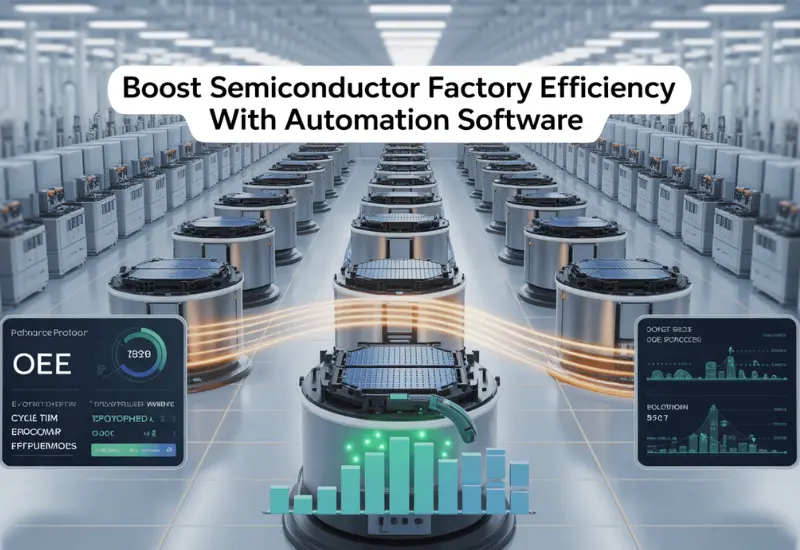
Boost Semiconductor Factory Efficiency with Automation Software

Summary

  • Modern semiconductor manufacturing demands extreme precision that manual processes fail to provide.
  • Implementing semiconductor factory automation software can reduce operational costs by up to 20% while increasing throughput (McKinsey, 2023).
  • Key technologies include SECS/GEM protocols, advanced MES integration, and AI-driven predictive maintenance.
  • Automation minimizes human error in cleanroom environments, protecting delicate silicon wafers from contamination.
  • The transition toward “Lights Out” manufacturing is a competitive necessity for 300mm fabs.

Introduction

According to McKinsey & Company (2023), AI and advanced analytics integrated into semiconductor factory automation software can reduce manufacturing costs by 15% to 20% for established fabs. This shift is essential as global demand for chips fluctuates, forcing facilities to find every possible margin for improvement. Efficiency is no longer a goal; it is a requirement for survival in a market where a single speck of dust or a millisecond of lag can ruin a million-dollar batch.

High-volume manufacturing requires a delicate balance of chemical precision, mechanical speed, and digital oversight. The introduction of robust fab automation solutions allows managers to oversee these complexities without constant manual intervention. By digitizing the workflow, companies ensure that every tool in the facility operates at its theoretical limit.

The current landscape of chip production is becoming more crowded and expensive. New facilities often cost upwards of $20 billion, making the software that runs them as valuable as the hardware itself. Adopting semiconductor factory automation software provides the backbone for these massive investments, ensuring that the return on investment remains high even as nodes shrink toward the sub-2nm frontier.

Why Software Defines the Modern Fab

Modern semiconductor manufacturing is less about the physical act of etching silicon and more about the data governing those etches. Human operators are remarkably talented, yet they are also walking biological contamination factories. A single skin cell can terminate a wafer’s journey. Automation software moves the human element away from the delicate front-end processes, placing them in control rooms where they can make strategic decisions rather than manual adjustments.

Eliminating the Human Variable

Does anyone actually miss the days of tracking wafer lots with physical clipboards and pens? Moving to a fully digital environment removes the risk of “fat-finger” errors where a technician might accidentally input the wrong recipe for a photolithography step. Software systems enforce strict compliance, ensuring that a tool will refuse to start unless the parameters match the pre-approved recipe perfectly.

Maximizing Equipment Effectiveness

High-end tools like EUV lithography machines are too expensive to sit idle. Industrial automation software tracks Equipment Health Rating (EHR) and Overall Equipment Effectiveness (OEE) in real-time. If a tool begins to drift from its baseline, the software triggers an alert before the tool fails. This proactive approach changes maintenance from a reactive headache into a scheduled, predictable task.

Core Components of Semiconductor Factory Automation Software

A comprehensive software suite acts as the nervous system for a production facility. It connects the “brains” (the planning systems) to the “muscles” (the robotic arms and process tools). Without a unified layer of semiconductor factory automation software, a fab is simply a collection of expensive machines that speak different languages.

MES Software for Semiconductors

The Manufacturing Execution System (MES) serves as the central hub for all production activities. It tracks every wafer from the moment it enters the fab as a blank slate until it leaves as a finished die. MES software for semiconductors manages lot genealogy, ensuring that if a defect is found later, the team can trace it back to a specific tool or chemical batch.

Inventory and Material Handling

The movement of Front Opening Unified Pods (FOUPs) is a logistical puzzle. Automated Material Handling Systems (AMHS) rely on software to prioritize specific lots. If a high-priority customer order needs to jump the queue, the software reroutes the FOUPs across the ceiling-mounted tracks without causing a traffic jam in the cleanroom.

SECS/GEM and Connectivity

Communication protocols like SECS/GEM allow the software to talk to tools from different vendors. This standardization is what makes fab automation solutions viable. It creates a universal translator so that a South Korean etch tool and a Dutch lithography machine can both report their status to a centralized server in the United States.

Achieving Semiconductor Process Optimization

Efficiency is a game of inches or in this case, nanometers. Semiconductor process optimization involves analyzing thousands of data points per second to find bottlenecks. When software identifies that a specific chemical mechanical planarization (CMP) tool is taking 5% longer than its peers, engineers can intervene before that delay ripples through the entire line.

Real-Time Data Visualization

Data is useless if it stays buried in a database. Modern software provides dashboards that allow fab managers to see the status of the entire floor at a glance. Visualizing these workflows makes it obvious where wafers are stacking up. Often, a simple software tweak to the scheduling algorithm can clear a bottleneck that appeared to be a hardware limitation.

Digital Twins and Simulation

Some automation suites now offer “Digital Twin” capabilities. This allows engineers to test a new process recipe in a virtual environment before applying it to physical silicon. Testing in a sandbox environment prevents costly mistakes and speeds up the time-to-market for new chip designs.

The Role of AI in Industrial Automation Software

Artificial Intelligence is moving past the “hype” phase and into the practical phase. In the context of industrial automation software, AI acts as a 24/7 supervisor that never sleeps or needs a coffee break. It looks for patterns that are too subtle for a human eye to detect, such as a microscopic vibration in a robotic arm that precedes a total failure by three days.

Predictive vs. Preventive Maintenance

Preventive maintenance is like changing your car’s oil every 5,000 miles, regardless of how you drive. Predictive maintenance is like the car telling you exactly when the oil is dirty. By using semiconductor factory automation software with AI, fabs avoid replacing perfectly good parts, which saves money and reduces tool downtime.

Yield Enhancement via Machine Learning

Machine learning models analyze yield maps to find the “signature” of specific faults. If a cluster of dead chips appears on the edge of every wafer, the AI can correlate that pattern with a specific cooling vent in a furnace. This level of insight would take a human engineer weeks to find; the software does it in minutes.

Navigating the Challenges of Implementation

Switching to a new software architecture is a bit like performing heart surgery while the patient is running a marathon. Fabs cannot simply stop production for a month to install new code. The process must be incremental.

  • Legacy Tool Support: Older tools might lack the sensors required for modern data collection.
  • Data Silos: Different departments often use different software, making it hard to get a “single source of truth.”
  • Cybersecurity: As fabs become more connected, they become bigger targets for industrial espionage.
  • Skill Gaps: Automation requires a workforce that is as comfortable with Python as they are with physics.

Despite these hurdles, the cost of staying manual is far higher than the cost of upgrading. A fab that fails to automate will eventually find itself unable to compete with the yields and pricing of “Lights Out” facilities.

Future Trends in Semiconductor Automation

The industry is currently looking toward “Autonomous Labs” and edge computing. As we move closer to the physical limits of silicon, the software must become more autonomous. We are seeing a move toward decentralized control, where individual tools make localized decisions to optimize their own performance without waiting for a command from the central MES.

Visualizing a fab where the machines “negotiate” with each other for priority might sound like science fiction, but it is the logical conclusion of current trends. If an etch tool knows it has a filter change coming up, it can signal the lithography tool to slow down slightly to prevent a pile-up. This level of harmony is the ultimate goal of semiconductor factory automation software.

Conclusion

The complexity of modern chipmaking has surpassed the capacity of manual oversight. Facilities that embrace semiconductor factory automation software gain a massive advantage in yield, speed, and cost-efficiency. By integrating MES, AI, and standardized communication protocols, manufacturers can turn their facilities into highly tuned, data-driven engines of production. If you want to keep your fab competitive in an era of shrinking nodes and rising costs, the software is your most important tool.

Contact Us Today

Get Professional Support to Optimize Production and Reduce Downtime


SECS/GEM 控制器軟體與 GUI|SEMI 自動化應用

摘要

  • 全球晶片製造對工具與工廠系統之間的高精度與可靠通訊有著極高要求。
  • 可靠的 SECS/GEM 控制器軟體是資料交換與製程控制的關鍵橋樑。
  • 現代 GUI 解決方案可提升操作人員效率,並在高產量製造環境中縮短訓練時間。
  • 遵循 SEMI 標準可確保與製造執行系統(MES)在多樣化設備組合中順利整合。 
  • 自動化有助於降低人為錯誤、提升產能,並支持產業邁向全自動化晶圓廠的轉型。

前言

根據 SEMI(2024)資料,全球半導體設備銷售總額預計將達到 1,090 億美元,突顯出對硬體的巨大投資,而這些投資需要高度複雜的協同運作。隨著晶圓廠規模與複雜度持續提升,強健的 SECS/GEM 控制器軟體已成為營運成功的關鍵因素。若缺乏標準化的機台與主機通訊方式,無塵室很快就會淪為一座座昂貴且彼此孤立的矽製程島嶼。

要彌補原始硬體能力與高階工廠控制之間的落差,僅靠基本連線遠遠不夠。這需要一個能深入理解 SEMI 標準細節,同時清楚呈現設備健康狀態的軟體層。有效的半導體設備自動化讓工程師能即時監控製程變數,避免昂貴的報廢,並確保每一片晶圓都符合嚴格的品質指標。

許多 OEM 面臨從零開始開發通訊層,或升級已無法滿足現代產能需求的既有系統之挑戰。選擇合適的 SECS/GEM GUI 與控制器套件,可大幅縮短新設備的上市時間,同時確保設備已為「無人化」製造做好準備,將人為介入降至最低。

SECS/GEM 控制器軟體在現代晶圓廠中的角色

SECS 是 Semiconductor Equipment Communication Standard(半導體設備通訊標準)的縮寫,而 GEM 則代表 Generic Model for Communication and Control of Manufacturing Equipment(製造設備通訊與控制通用模型)。兩者共同構成晶圓廠自動化軟體的核心骨幹。本質上,控制器軟體扮演著翻譯者的角色,將設備內部的機械動作轉換為工廠中央系統可理解的語言。

此軟體層負責處理從警報回報到遠端指令執行的所有功能。當 MES 希望在某台設備上啟動特定製程配方時,會透過 SECS/GEM 介面發送指令。控制器軟體會驗證該請求、檢查設備狀態,並啟動製程。誰會想在週日下午手動檢查紀錄檔,而不是讓自動化系統在毫秒內標示出異常呢?

透過 SEMI SECS/GEM 標準化資料交換

SEMI SECS/GEM 套件包含多項相互配合的標準,以確保互通性。SEMI E5(SECS-II)定義了訊息結構,而 SEMI E37(HSMS)則負責高速乙太網通訊,這已在很大程度上取代了舊有的序列連線。這些通訊協定確保來自不同供應商的設備能共存於同一晶圓廠中,而不會發生通訊中斷。

可以將 SECS/GEM 視為晶片世界的世界語,只不過這次大家真的在使用它。它為從微影設備到簡單量測站的各類設備提供了共同語彙。透過標準化的 SECS/GEM 控制器軟體,OEM 得以避免為每一個工廠主機撰寫客製化驅動程式的惡夢。

HSMS 與 SECS-I 的比較

雖然部分舊型晶圓廠仍使用 RS-232 序列連線(SECS-I)的既有設備,但產業已明確轉向高速 SECS 訊息服務(HSMS)。此轉變提供了更高的頻寬,以支援 300mm 晶圓製程所產生的大量資料流。現代控制器軟體必須具備同時支援兩者的彈性,但重點仍放在乙太網通訊協定的速度與可靠性。

透過 SECS/GEM GUI 提升操作體驗

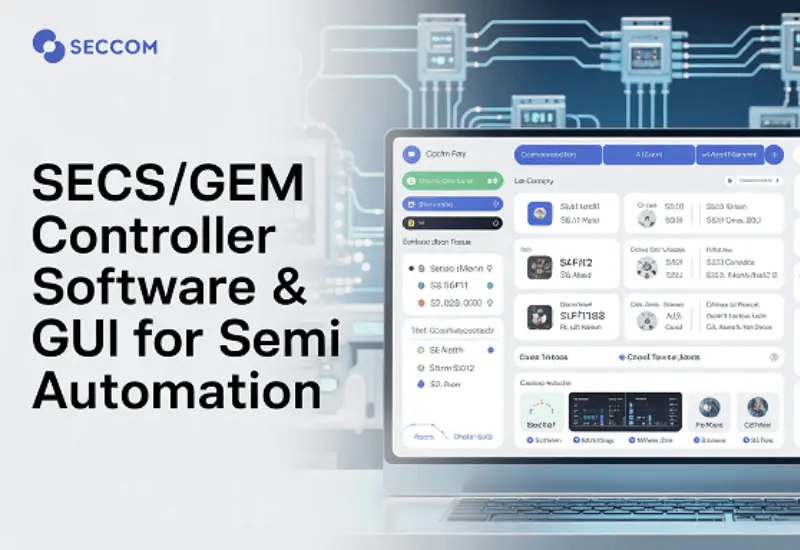
若操作人員無法理解控制器的運作,再強大的控制器也毫無價值。這正是優秀的 SECS/GEM GUI 發揮關鍵作用的地方。過去,許多設備介面彷彿停留在磁碟片與 CRT 顯示器的年代。如今,操作人員期望直覺化的圖形介面,能在一眼之間掌握設備狀態。

現代 GUI 應以優先顯示關鍵資訊的方式呈現即時警報、製程進度與通訊紀錄。你目前的介面是真的在幫助操作人員,還是在製造混亂?若技術人員必須點開五層選單才能確認主機是否連線,那麼這套軟體就成了瓶頸,而非助力。

複雜狀態模型的視覺化呈現

GEM 標準高度依賴狀態模型,例如「設備狀態」或「控制狀態」模型。高品質的 SECS/GEM GUI 會透過清楚的圖示或顏色標示來呈現這些狀態,協助技術人員快速判斷設備為何處於「離線」或「本地」狀態,而非應有的「遠端」模式。

清晰的視覺化可降低同時管理多台設備之人員的認知負擔。當軟體能清楚描繪設備邏輯時,故障排除將從數小時的猜測,縮短為幾分鐘的分析。這種清晰度對於維持現代製造所需的高設備稼動率至關重要。

先進晶圓廠自動化軟體的關鍵效益

投資高階晶圓廠自動化軟體並非小事,但其投資報酬通常體現在良率提升與停機時間降低。根據 Gartner(2023)報告,工業自動化可使整體設備效率(OEE)提升 15% 至 20%。在半導體產業中,單一晶圓批次的損失可能就高達數千美元,這些百分比代表著可觀的資本價值。

除了即時的財務收益外,自動化還能提供人力無法複製的一致性。自動化控制器可確保製程配方每一次都完全依照設定執行,並完整記錄所有事件,形成可供工程師長期最佳化製程的「黑盒子」資料來源。

透過即時警報管理降低報廢

SECS/GEM 控制器軟體的主要功能之一是警報與事件管理。當感測器偵測到溫度偏差時,軟體會立即通知主機。這樣的即時回饋機制可讓 MES 在更多晶圓於非最佳條件下加工前即暫停生產。

如果你的控制器軟體是一位同事,它會是帶甜甜圈來的那位,還是對每封公司郵件都「全部回覆」的那位?好的控制器提供的是可行動的資料「甜甜圈」,而不是低優先序警告的「全部回覆」雜訊。智慧型警報過濾可確保操作人員只看到需要立即處理的問題。

遠端指令執行

現代自動化允許高度的遠端控制。工廠主機可透過 SECS/GEM 介面變更配方、啟動批次,甚至執行遠端重置。這項能力構成「智慧晶圓廠」的基礎,在其中操作人員實際到場的需求已降至最低。

整合挑戰與解決之道

導入 SECS/GEM 控制器軟體往往需要面對既有硬體與客製需求所構成的迷宮。許多舊型設備在設計之初並未考量現代網路需求,為這些設備進行改造,必須仰賴能同時與 PLC 控制器或客製 API 介接,並向工廠呈現標準 SECS/GEM 介面的彈性軟體解決方案。

既有設備是否能說現代語言?答案是肯定的,前提是作為中介的軟體夠強健。挑戰在於如何將設備內部暫存器正確對應至標準 GEM 變數(VID)、狀態變數(SVID)與設備常數(EC)。

變數與事件的對應

將設備「GEM 化」的過程,包含定義哪些資料點對工廠而言是重要的,範圍從氣體流量到機械手臂完成的循環次數皆在其中。強而有力的軟體夥伴能協助 OEM 清楚定義這些變數,確保最終的 SECS/GEM 介面既能提供使用者所需的完整資訊,又不會對網路造成過度負載。

測試與合規

設備出貨前,SECS/GEM 介面必須經過嚴格測試。透過模擬工廠主機的測試工具,開發人員可驗證設備對所有可能指令的回應是否正確。合規測試可確保設備符合 SEMI 標準,避免在客戶端最終安裝時出現整合問題。

半導體設備自動化的未來

產業目前正關注更先進的標準,例如 SEMI EDA(Equipment Data Acquisition),亦稱為 Interface A。雖然 SECS/GEM 仍是主要的控制標準,EDA 則提供一條專用於資料收集與分析的高頻寬通道。

然而,SECS/GEM 控制器軟體並不會消失。它仍然是最可靠的指令與控制方式。未來將採取混合式架構,由 SECS/GEM 負責設備運轉的「業務邏輯」,而其他通訊協定則處理機器學習與預測性維護所需的大量資料。

AI 與預測性維護

隨著 AI 導入晶圓廠,SEMI SECS/GEM 介面所提供的資料成為預測模型的燃料。透過分析歷史事件紀錄,AI 能在元件實際故障前預測其失效時點。這種從反應式維護轉向主動式維護的轉變,唯有在底層控制器軟體提供乾淨且可靠資料時才能實現。

當透明度可以實現時,何必滿足於黑盒系統?能從設備中擷取的資料越多,工廠就越聰明。未來,先進分析功能將整合至 SECS/GEM GUI,讓操作人員不僅能看到設備目前的狀態,還能預測下一個班次可能發生的情況。

選擇合適的 SECS/GEM 解決方案夥伴

對許多 OEM 而言,選擇在內部建立 SECS/GEM 團隊,或與如 Einnosys 這樣的專家合作,是一項重要決策。自行開發通訊架構不僅耗時,還需要對 SEMI 標準有極深的理解,而這正是一般軟體開發人員所缺乏的。

專業的 SECS/GEM 控制器軟體供應商可提供可客製化的預建函式庫與 GUI 範本,大幅降低開發成本,並確保最終產品符合最新產業要求。同時,也能提供內部團隊難以長期維持的支援深度。

擴充性與支援

隨著公司成長,其自動化需求也會持續演進。可擴充的軟體解決方案能隨設備產品線一同成長,從單腔室的研發設備一路支援到多模組量產系統。可靠性至關重要,在晶圓廠中,任何因軟體導致的停機,其成本往往高於軟體本身。

結論

半導體產業的演進仰賴設備與管理系統之間無縫的資料流動。導入高效能的 SECS/GEM 控制器軟體,是確保設備符合現代製造嚴苛需求的最佳方式。透過標準化通訊與直覺式 SECS/GEM GUI 的結合,製造商得以提升良率、改善設備可用率,並清楚邁向半導體設備自動化的未來。