Summary
- Drastic Downtime Reduction: Implementing predictive maintenance can decrease unplanned machine failures by up to 70% (Deloitte, 2022).
- Financial Optimization: Manufacturers see an average ROI of 10x through reduced repair costs and better spare parts management.
- Asset Longevity: Real-time monitoring extends the useful life of heavy machinery by preventing “run-to-failure” cycles.
- Safety & Compliance: Automated alerts prevent catastrophic failures, ensuring a safer work environment and easier regulatory adherence.
- Operational Excellence: Data-driven insights streamline labor allocation, allowing technicians to focus on high-value tasks rather than routine checks.
Introduction
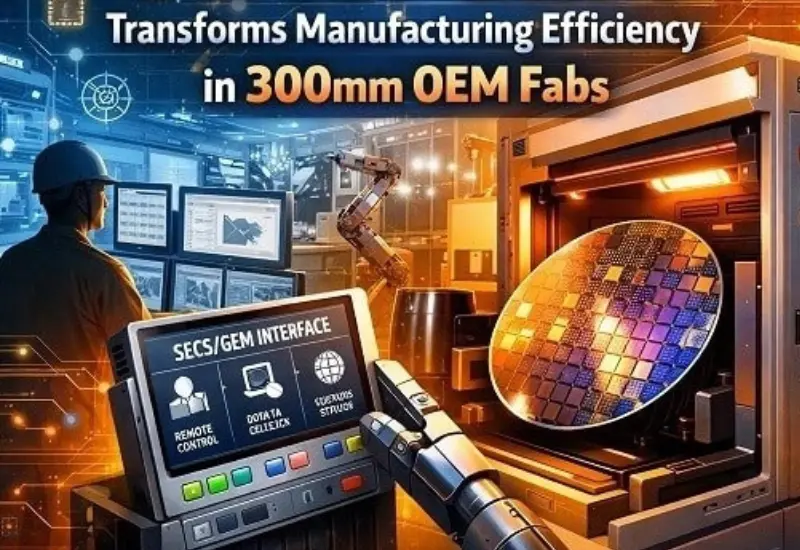
According to SEMI (2024), global 300mm fab equipment spending is projected to reach a record $137 billion by 2027 as the industry expands to meet AI and automotive chip demand. This massive investment highlights a significant transition where manual handling disappears in favor of total automation. Within this landscape, the implementation of SECS/GEM for 300mm OEM fabs serves as the backbone for all data exchange.
For any OEM entering this space, compliance with specific communication protocols is an entry ticket. High-volume manufacturing facilities require tools that “speak” the same language as the factory’s Manufacturing Execution System (MES). Without this synchronization, the multi-billion-dollar facility grinds to a halt.
Modern OEM wafer equipment must handle complex tasks like automated carrier delivery and substrate tracking without human error. These machines operate within a digital ecosystem where every movement is logged, analyzed, and optimized in real-time.
Understanding SECS/GEM Communication Standards
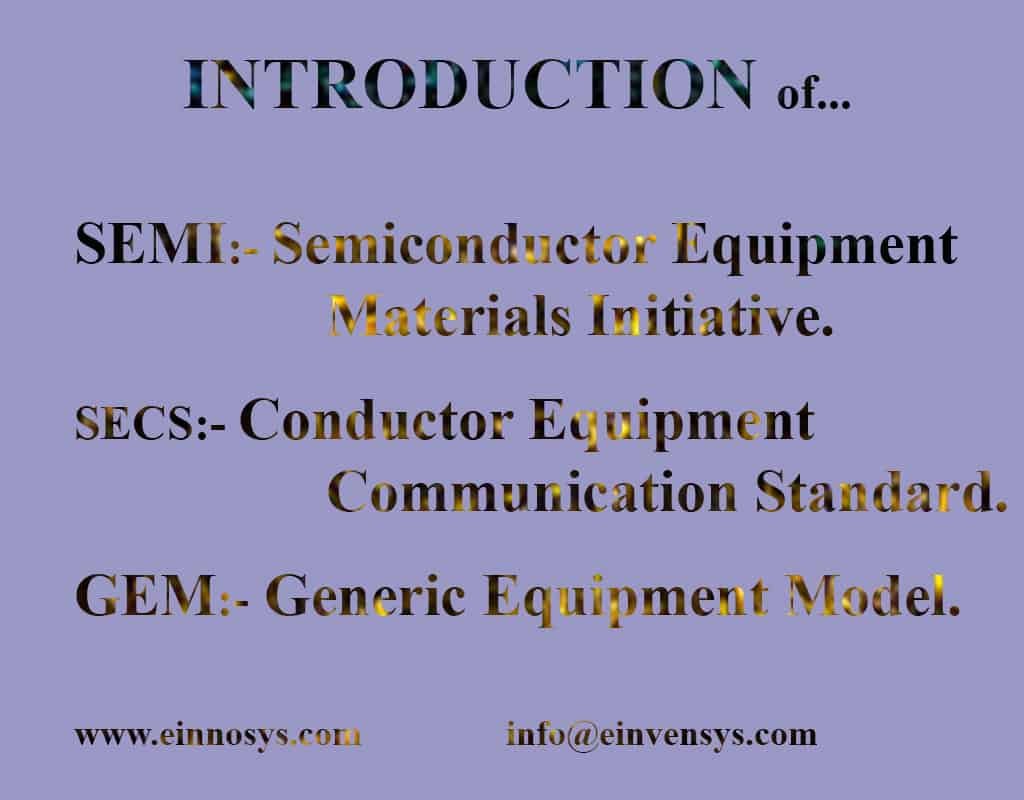
The SEMI Equipment Communications Standard (SECS) and Generic Model for Communications and Control of Manufacturing Equipment (GEM) define how equipment and host systems interact. While SECS-I and SECS-II provide the syntax and message structure, GEM adds the semantic layer. This ensures that a tool from one vendor behaves predictably when connected to a host from another.
The Evolution from 200mm to 300mm Requirements
In older 200mm facilities, automation was often optional or semi-automated. However, 300mm wafers are heavier and more fragile, making robotic handling a necessity. This shift introduced the “GEM300” suite of standards, which expands upon basic GEM to handle the specific needs of larger substrate processing.
Key Protocols in the GEM300 Suite
To achieve full host equipment integration, OEMs must implement several specific SEMI standards:
- E30 (GEM): The foundation for status collection and remote control.
- E40 (Process Management): Manages the execution of recipes and process jobs.
- E87 (Carrier Management): Oversees the movement and placement of FOUPs (Front Opening Unified Pods).
- E90 (Substrate Tracking): Monitors the location of every individual wafer inside the tool.
- E94 (Control Job Management): Coordinates the sequencing of multiple process jobs.
Boosting Semiconductor Manufacturing Efficiency via Automation
Why does standardized communication matter so much for the bottom line? Efficiency in a fab is measured by throughput, yield, and tool uptime. When SECS GEM communication is optimized, the host system can make split-second decisions based on live tool data.
Consider the impact of alarm management. A tool that fails to report the specific cause of a stoppage forces a technician to spend an hour diagnosing the issue. A GEM-compliant tool sends a specific alarm code immediately, allowing the MES to trigger a repair ticket or reroute material to another machine.
Data-Driven Process Optimization
Modern fabs function as giant data engines. Every sensor reading, from gas flow rates to chamber pressure, can be collected via the High-Speed Message Services (HSMS/E37) protocol. This granular intelligence allows engineers to perform predictive maintenance, fixing a component before it breaks and ruins a batch of expensive silicon.
Reducing Human Error through Remote Control
Human presence in a cleanroom is a primary source of contamination. In fact, even a tiny skin cell can ruin a 2nm circuit. By utilizing fab automation software, OEMs allow operators to control tools from a remote command center. This “lights-out” manufacturing approach is the gold standard for 300mm facilities.
Challenges in Host Equipment Integration for OEMs
Building a world-class etching or lithography tool is difficult enough. Adding a complex software layer that complies with dozens of SEMI standards adds another level of frustration. Many OEMs struggle with the nuance of state machines and message timing.
How many times has a tool shipment been delayed because the software failed a “Host Acceptance Test”? These tests are rigorous. The factory host expects the tool to respond to specific commands within milliseconds. If the software architecture is clunky, the tool becomes a bottleneck rather than an asset.
The Complexity of Multi-Vendor Environments
A typical 300mm fab contains equipment from dozens of different suppliers. SECS/GEM for 300mm OEM fabs ensures that the “Tower of Babel” problem is avoided. Without these standards, the factory integration team would need to write custom code for every single machine, a task that would be both expensive and impossible to maintain.
Overcoming Legacy Code Hurdles
Some OEMs attempt to patch old 200mm software to work in 300mm environments. This rarely ends well. The 300mm standards require a more robust handling of “Object Services” (E39), which older systems lack. Starting with a purpose-built automation framework is usually the faster route to compliance.
Choosing the Right Fab Automation Software
For an OEM, the decision to “build vs. buy” its SECS/GEM interface is pivotal. Building a compliant stack from scratch can take years of development and testing. Conversely, utilizing a proven fab automation software solution allows the engineering team to focus on their core competency: the wafer processing technology itself.
Scalability and Future-Proofing
The semiconductor industry moves fast. Today it is 300mm; tomorrow, we might see more 450mm research or even more complex chiplet integration. A flexible software interface can adapt to new SEMI standards without requiring a total rewrite of the tool’s control logic.
Streamlining the Integration Process
A high-quality GEM driver offers a graphical interface for defining the tool’s variables, events, and alarms. This simplifies the task for the software engineer, who can map these internal data points to the SECS/GEM messages required by the fab host.
The Role of HSMS in High-Speed Data Exchange
While the original SECS-I protocol relied on serial communication (RS-232), modern 300mm fabs use HSMS over Ethernet. This allows for massive bandwidth. According to a Gartner report (2023), the volume of data generated by a single fab is expected to grow by 500% over the next five years. HSMS is the pipe that makes this possible.
Is your OEM wafer equipment prepared for this data deluge? High-speed communication is no longer a luxury. It is a fundamental requirement for Advanced Process Control (APC), where the host adjusts tool parameters during a process step to maintain yield.
Conclusion
The transition to high-volume 300mm production requires a radical commitment to connectivity. By prioritizing SECS/GEM for 300mm OEM fabs, equipment manufacturers ensure their tools remain competitive in a landscape that demands perfection. Standardized SECS GEM communication reduces the friction of deployment and maximizes the long-term value of the equipment. As fabs become smarter and more autonomous, the ability to provide seamless host equipment integration will remain the defining factor for success.
Get Expert Support to Boost Efficiency with SECS/GEM Automation