When Should You Use SECS GEM SDK in Your Projects?

Summary

  • Timely Adoption: The right time to choose an SECS GEM SDK is immediately upon starting a new equipment development project or when facing performance, compliance, or maintenance issues with a legacy system.
  • OEM Advantage: Original Equipment Manufacturers (OEMs) gain drastically accelerated Time-to-Market (often 60%+ faster), assured compliance with SEMI standards (like E30, E40, E87), and a significant reduction in long-term maintenance costs.
  • Cost & Speed: SDKs offer a superior return on investment (ROI) compared to building from scratch, cutting development costs and offering a proven, reliable, and pre-tested connectivity layer, which is crucial in a market projected to grow significantly by 2030.
  • Integration Power: A commercial SECS GEM SDK abstracts the complexity of the underlying SECS-II HSMS protocol, allowing engineers to focus on the equipment’s core process and application logic, not on low-level messaging.
  • Future-Proofing: SDKs provide essential tools like a SECS/GEM simulator and built-in support for advanced standards like GEM300 compliance, making equipment easier to integrate with modern MES and IIoT platforms.

Introduction

The semiconductor manufacturing landscape is defined by precision, speed, and standardization. For any piece of equipment—from an etching tool to a deposition system to be viable in a modern factory, it must communicate seamlessly with the factory’s host system (MES). This communication standard is universally defined by SEMI’s SECS/GEM SDK suite of protocols.

Choosing the right approach for implementing this critical communication layer is a fundamental business decision for Original Equipment Manufacturers (OEMs). Do you build it yourself, or do you leverage a specialized SECS GEM SDK? The numbers speak for themselves. The global semiconductor industry is projected to reach a value of over $1 trillion by 2030, driven heavily by automation and data exchange efficiency, a level of growth that leaves little room for delays caused by custom, error-prone connectivity solutions.

The question for every OEM is not if they need equipment-to-host communication, but how to implement it as efficiently as possible.

Data Snapshot: SDK vs. Custom Build Savings


SECS/GEM Implementation Comparison


SECS/GEM Implementation Comparison
Criteria Commercial SECS/GEM SDK In-House Custom Implementation
Time to Market Fast — 60%+ faster due to pre-built SECS/GEM stack, simulators & GEM300 support. Slow — Months of protocol development, validation, and debug cycles.
SEMI Compliance Guaranteed compliance (E30, E37, E40, E87, E90, etc.) High risk of hidden compliance issues; requires continuous updates.
Maintenance Cost Low — vendor-managed updates & patches. High — continuous engineering effort to maintain & test.
Scalability Supports edge, cloud, containers & distributed MES integration. Limited — scaling requires major redesign.
Engineering Effort Minimal — focus on equipment logic, not protocol complexity. Significant — full SECS-II & HSMS stack must be engineered & tested.
Risk Level Low — pre-tested, production-ready, field-validated. High — bugs, race conditions & protocol-edge cases.

Key Takeaway:
A commercial SECS/GEM SDK offers faster development, lower cost, easier SEMI compliance, and long-term stability compared to in-house implementations.

When is the Right Time to Choose an SECS/GEM SDK?

The decision to adopt a commercial SDK shouldn’t be a last-minute addition to a project plan. It should be a foundational choice made early in the equipment development lifecycle.

The Early-Stage Catalyst: Starting a New Equipment Line

The most optimal time to choose an SECS GEM SDK is at the very beginning of a new machine or equipment control system design. This allows the integration to be a parallel task, not a sequential bottleneck.

  • Avoid Feature Creep: When developers try to build their own connectivity layer, they often underestimate the complexity of managing message parsing, state machines, and the nuances of the SECS-I protocol or HSMS SECS GEM connection handling. Using an SDK allows developers to focus on what makes the equipment unique, the process control.
  • Mandated Compliance: If your customer is a Tier-1 foundry, they almost certainly mandate compliance with standards like SEMI E30 GEM and other E-series specifications. Trying to reverse-engineer these specifications into bug-free code is a costly gamble. An SDK provides this compliance out of the box.

Addressing Crisis Points in Legacy Systems

Sometimes, the right time is when your current, custom solution is actively failing you. If you’ve built your own system from scratch a decade ago, you might be facing one of these critical pain points:

  • High Maintenance Burden: Your in-house solution breaks every time you update the equipment’s operating system or when a new GEM300 compliance requirement is introduced.
  • Performance Instability: Your communication driver struggles under high message volume, leading to data loss or connection drops, a disaster in a factory setting.
  • Hiring Challenges: Finding engineers proficient in your proprietary, aging equipment software developers, and connectivity code is becoming nearly impossible, leading to high support costs.

At this point, switching to a professional SDK is a strategic move, not a technical fix. It’s about securing your product’s long-term viability and ensuring seamless equipment connectivity SDK for future generations.

What Key Advantages Do OEMs Gain by Using a SECS/GEM SDK?

For semiconductor equipment manufacturers (OEMs), the benefits of adopting a specialized SDK go straight to the bottom line, impacting market reputation, engineering productivity, and product launch timelines.

Accelerated Time-to-Market

This is arguably the most significant advantage. An OEM’s success is directly tied to how quickly its new equipment can be installed and accepted by a factory.

Pre-Built Reliability: A commercial SDK has been tested across hundreds of different factory hosts and equipment types. This minimizes the extensive internal QA necessary to vet a custom driver. Instead of spending months debugging message handling, you are focused on integrating the SDK’s high-level API.

Focus on Core Competency: By externalizing the entire communication layer, controls, and embedded systems, engineers can dedicate their time to optimizing the core process, the true value-add of the equipment. We often see a 60% or greater reduction in equipment-to-host integration time.

Guaranteed Compliance and Reduced Risk

Compliance with the SEMI standards is non-negotiable. Non-compliance means your machine doesn’t get put on the production line.

SEMI Standards Abstraction: A quality SDK handles the low-level handshake procedures, error codes, and message formats (SECS-II HSMS) automatically, abstracting it into simple, application-level function calls for the developer.

Built-in Testing Tools: Most commercial SDKs include a robust SECS/GEM simulator or driver tester. This tool is invaluable for QA engineers, allowing them to rapidly test all required scenarios (e.g., equipment constants, event reports, alarms) against a simulated host environment before the machine even reaches the customer site. This drastically reduces the risk of expensive, late-stage fixes. What’s the point of having the fastest tool if it can’t talk to the host?

Comparing SECS/GEM SDKs to Custom In-House Implementations

The “build vs. buy” decision always comes down to a few key variables: cost, speed, and maintainability. In the specialized domain of semiconductor connectivity, the SECS GEM library option overwhelmingly wins.

Initial Cost vs. Total Cost of Ownership (TCO)

While an SDK has an upfront licensing cost, a custom build carries a significant hidden cost.

Custom Build: Requires dedicating multiple senior equipment software developers or R&D engineers for 6-12 months. This includes writing the protocol stack, debugging, testing for edge cases (like network disconnects or message corruption), and generating all compliance documentation. The long-term cost of updating this code over a product’s 10-year lifespan is astronomical.

SDK: The cost covers a pre-tested, actively maintained product. The vendor is responsible for all updates, bug fixes, and future compliance with new SEMI standards. This significantly reduces the long-term engineering burn rate, which is the definition of a lower Total Cost of Ownership (TCO).

Maintainability and Future-Proofing

Maintainability is the single biggest differentiator for automation managers and technical product managers.

Code Rot: In-house code is prone to “code rot.” Key developers leave, documentation fades, and the code becomes a black box that no one wants to touch, especially when it is coupled to older operating systems.

Vendor Support: When a factory requires a shift to a new standard, say, adding support for the latest E87 (Carrier Management) or E90 (Substrate Tracking), an SDK vendor will push out an update. For a custom solution, this means a new 3-month development project for your team, potentially delaying a customer acceptance test.

Seamless MES Integration and IIoT Readiness

A modern SDK does more than just handle SECS-II HSMS messaging; it acts as an abstraction layer to facilitate MES integration for SECS/GEM.

By providing clean, well-documented APIs, the SDK makes it simpler for factory automation teams to connect the equipment to higher-level platforms like Manufacturing Execution Systems (MES) and modern Industrial Internet of Things (IIoT) platforms. This is the most effective way to integrate SECS/GEM-enabled equipment by using a commercial, tested SDK as the robust bridge.

The SECS GEM SDK in Practice: Reducing Integration Time

How does a commercial solution like a SECS GEM SDK translate into tangible time savings for system integrators? It boils down to eliminating the need to re-invent fundamental, yet complex, components.

Abstracting the Protocol Stack

Imagine trying to write a web browser that includes its own TCP/IP stack; it’s wasteful and inefficient. The same applies to SECS GEM integration.

Low-Level vs. High-Level: Developers using an SDK don’t deal with streams, functions, byte arrays, or checksums. Instead of writing code to parse a complex $S_1F_{13}$ or $S_{64}F_{1}$ message, they simply register a C# event handler or Python function with a call like OnHostConnectRequest() or HostDataReported().

State Machine Management: A professional SDK handles the entire SEMI E30 state machine (e.g., Disabled, Equipment Offline, Local, Remote) automatically. This is a massive task in a custom build, managing transitions, handling timeouts, and ensuring reliable communication across different network conditions. An SDK guarantees the state machine is implemented correctly to the letter of the standard, freeing the developers from this complex, non-value-added work.

This is where the magic happens. By reducing the complexity of the connectivity layer from a year-long project to a few months of focused application coding, OEMs can meet aggressive product launch deadlines and secure a competitive advantage.

Conclusion

The choice between a custom implementation and a commercial SECS GEM SDK is a decision between short-term frugality and long-term strategic success. For any OEM serious about playing in the high-stakes, hyper-competitive semiconductor industry, leveraging a proven, compliant, and continuously updated SDK is the only viable path forward. It accelerates Time-to-Market, drastically lowers the Total Cost of Ownership, and future-proofs your equipment against evolving factory automation standards, ensuring your innovative process technology can be seamlessly adopted by the world’s leading fabs.

FAQs
  • 1. When is the right time to choose an SECS/GEM SDK for your equipment integration project?

    The ideal time to adopt an SECS/GEM SDK is during the initial architecture phase of a new equipment development project. Integrating the SDK early ensures the equipment’s control software is built on a foundation of proven, compliant communication protocols, avoiding costly rework later. It is also the right time when a legacy custom system is failing to meet current factory throughput, compliance, or maintainability requirements. The goal is to make communication a parallel, dependable task, not a sequential bottleneck.

  • 2. What key advantages do OEMs gain by using a SECS/GEM SDK instead of building from scratch?

    Original Equipment Manufacturers gain three critical advantages: Speed, Compliance, and Cost Control. A quality SDK can reduce the time required for host-side connectivity integration by 60% or more, accelerating Time-to-Market. It provides guaranteed, pre-tested compliance with all mandatory SEMI standards (E30, E40, E87), drastically reducing certification risk. Finally, by offloading maintenance, updates, and bug fixes to the SDK vendor, OEMs dramatically lower the long-term Total Cost of Ownership (TCO) compared to maintaining an in-house solution.

  • 3. How do SECS/GEM SDKs compare to custom in-house implementations in terms of cost, speed, and maintainability?

    Custom implementations typically have a lower initial software cost but are slower, taking 6-12 months of senior engineering time, and are extremely expensive to maintain over the product’s 10-year life due to debugging and required updates. In contrast, an SDK has an upfront license cost but offers superior speed (2-4 months integration time) and vastly better long-term maintainability. SDK vendors handle all protocol stack updates and compliance issues, effectively fixing the TCO and allowing the OEM’s engineers to focus on core product features.

  • 4. In what ways does a SECS/GEM SDK significantly reduce equipment-to-host integration time?

    A SECS/GEM SDK reduces integration time by abstracting the low-level complexity of the SECS-II HSMS protocol stack. Instead of writing code to handle network connections, message parsing, state machine transitions, and error recovery, developers use simple, high-level API calls (like sending a variable or reporting an event). This elimination of foundational, non-value-added coding allows the team to spend their time only on mapping the equipment’s unique data points (like process variables and alarms) to the host interface, which is the only part that needs customization.

  • 5. What is the most effective way to integrate SECS/GEM-enabled equipment with MES and IIoT platforms?

    The most effective approach is to utilize a robust commercial SECS/GEM SDK that offers a flexible, modern API. The SDK acts as the highly reliable equipment connectivity SDK bridge, ensuring compliant communication with the host. By stabilizing the connectivity layer, it allows the integration team to easily connect the SDK’s high-level data stream rather than raw protocol messages to a factory’s Manufacturing Execution System (MES) or IIoT platform via technologies such as MQTT or REST. This separates the factory communication (handled by the SDK) from the data consumption (handled by MES/IIoT).

SECS/GEM Integration Guide: Compliance Testing & Implementation

Connectivity is power in semiconductor and electronics manufacturing. Each machine, process, and data item is part of the bigger picture of attaining a seamless automation process, as well as intelligent decision making. The SECS/GEM integration is one of the most significant frameworks that helps to make this transformation and it is a standardized communication protocol that allows closing the gap between equipment and factory automation systems.

You may be updating old systems or establishing a new production facility, but you need to understand how to be able to test compliance with the SECS/GEM and deploy SECS/GEM software and SECS/GEM host integration to make sure that your manufacturing processes are not obsolete in the future

Step 1: Evaluating Equipment Fit

Assessment of the current setup is the first process towards a successful integration of SECS/GEM equipment. The equipment you are using should be able to communicate on SEMI SECS/GEM standard (E5/E30). Most of the modern tools are already equipped with built-in SECS/GEM features, yet older systems may need some of the following elements: communication gateways, or adapter software.

Unless your old machine is native SECS/GEM, there may be a need to use specialized SDKs or middleware, which translates proprietary protocols into SECS-II messages that can be used in the GEM model. This will make all your data, process parameters as well as alarm reports available under one integrated automation platform.

An extensive compatibility test eliminates future delays at great expense and makes sure that your SECS/GEM protocol implementation has a firm foundation.

Step 2: Selecting the SDK and Development Tools of the SECS/GEM

The proper SDK and development tools of SECS/GEM are the next step after compatibility has been checked. A sound SDK makes it easier to cope with command processing, message decoding and event handling.

SECS/GEM software libraries have been written in different programming environments, including .NET, C++, or Java. These devices enable developers to develop layers of communication that are effective in managing both the host (factory) and equipment end.

Further, a SECS/GEM simulator can be used in the development phase to exchange messages without connecting to real hardware to save time and resources. The correct tools minimize the complexity, accelerate integration and assure that your system passes all areas of testing in the SECS/GEM compliance test.

Step 3: Implement SECS/GEM Interface

The SECS/GEM interface is used to provide the interface between the host system and the equipment.

In implementation, specify all pertinent data variables, state models and event reports which represent the behavior of your machine. They need to be defined in terms of the SEMI E5 (SECS-II message format) and E30 (GEM model) specifications in order to become consistent and interoperable.
Every message transaction, such as equipment status, start process, etc., has to fit in the conventional GEM event objects. The well-designed interface can facilitate the SECS/GEM communication as well as reduce downtime and improve traceability and the use of equipment.

Step 4: Integration by Testing and Validating

It is testing that gives theory reality. SECS/GEM interface testing should be done comprehensively before deployment so that the accuracy of messages, their synchronized performance, and their synchronization are all deliberated.

Test benches or leverage SECS/GEM simulation tools to determine the interactions between the host and the equipment in different conditions: normal operations, alarm, disconnection, and recovery sequences. This assists you in identifying the irregularities before their impact to production.

SECS/GEM full compliance testing ensures that the implementation you have made is compliant to the SEMI standards, communicates correctly, and reacts predictably in a real world situation.

Step 5: Deploy, Monitor, and Maintain

After being tested, it is now time to put your SECS/GEM host integration into production. Long-term reliability depends on continuous monitoring and updating on a regular basis.

The proactive maintenance plan should be included to maintain stable communication links and all SEMI standard changes or firmware updates should be installed beforehand. Having an expert like eInnoSys assist you in maintaining your system to be compliant, scalable, and optimised with regards to performance.

Constant updates also enable the integration to keep up with newly added equipment, automation frameworks or cloud-based analytics tools without interfering with any of the current workflows.

The Role of SECS/GEM in Smart Manufacturing in the Present Day

SECS/GEM protocol is not merely a communication layer, it is the core of Industry 4.0 in the manufacturing of semiconductors and electronics.

Allowing standardized data exchange, SECS/GEM will allow factories to have all the data on equipment performance, production measures as well as quality trends. Such visibility drives predictive maintenance, live analytics, and artificial intelligence-based decision-making which eventually results in less downtime and higher yield.

Current smart factories have developed SECS/GEM software to integrate machines with, and connect to MES (Manufacturing Execution Systems), ERP systems and cloud-based dashboards — forming a single digital ecosystem.

The Reasons eInnoSys is the Best SECS/GEM Integration Partner

We think that real automation is based on perfect communication, which is the starting point at eInnoSys. Having years of experience in SECS/GEM equipment integration, we assist semiconductor and electronics manufacturers in the integration of legacy equipment into the digital age, fast, safely, and effectively.

This is what is unique about eInnoSys:

  • SECS/GEM Solutions — Our engineers will guarantee complete SECS/GEM compliance testing with SECS/GEM interface design through verification and backward SECS/GEM communication.
  • High Simulation Tools — Our own SECS/GEM simulator enables you to be able to test and verify integrations prior to live deployment in order to minimize downtime.
  • Tailored Integration Method — We will tailor the SECS/GEM host integration to your current infrastructure and there will be minimal disturbance to the running operations.
  • Long-Term Support — We monitor, update, and optimize your automation environment in addition to first deployment to ensure that it is at its best.

We are committed to ensuring that SECS/GEM software implementation is hassle-free and scalable — so that your factory can be able to achieve increased throughput, reduced costs and smarter automation.

Conclusion

Unlike a technical upgrade, the incorporation of SECS/GEM with your current manufacturing equipment is a strategic position that will lead to a smarter and data-driven future.

Using a systematic methodology — checking the compatibility, selecting the optimal tools, creating a compliant interface, testing hard and finally maintaining the situation — manufacturers would open up new horizons of visibility and control in their operations.

Having an appropriate crisis communication plan among your host and equipment, you will minimize errors, increase efficiency, and make faster and more informed decisions.

Make your automation systems future-proof with the help of eInnoSys and become the full potential of SECS/GEM integration because in the age of smart manufacturing, the interconnected equipment implies the interconnected success.

Frequently Asked Questions About SECS/GEM Integration

  • 1. How do I know if my equipment supports SECS/GEM?

    SECS/GEM (SEMI E5 & E30 standards) is a communication protocol that connects manufacturing equipment with factory automation systems like MES or ERP. It standardizes data exchange across different machines, enabling real-time monitoring, predictive maintenance, and smart manufacturing efficiency.

  • 2. What is SECS/GEM and why is it important?

    Check your equipment’s specs for SEMI E5 (SECS-II) and E30 (GEM) support. Most modern tools include SECS/GEM by default, while older systems may require a communication gateway or middleware. eInnoSys offers compatibility assessments for legacy equipment integration.

  • 3. What is a SECS/GEM simulator?

    A SECS/GEM simulator mimics equipment or host communication, allowing developers to test integrations without using real machines. It’s used for testing, training, and troubleshooting—saving time and reducing production risks.

  • 4. What are the steps in SECS/GEM compliance testing?

    Compliance testing includes verifying SECS-II message formatting, equipment state transitions, event reporting, synchronization, and stress testing. Proper validation ensures reliable communication and SEMI standard compliance.

  • 5. How does SECS/GEM enable smart manufacturing?

    SECS/GEM forms the backbone of Industry 4.0 by enabling standardized, real-time data exchange. It supports AI-driven analytics, predictive maintenance, and improved equipment utilization—helping manufacturers cut downtime and improve yield.

SECS/GEM Standaarddiensten voor Efficiënte Fabrieksautomatisering

Summary

Standardization benefits: Het implementeren van SECS/GEM verkort de integratietijd van apparatuur met wel 40% en waarborgt tegelijkertijd leveranciersneutrale communicatie.

Data Accuracy: Real-time dataverzameling elimineert fouten door handmatige logging en biedt één “single source of truth” voor MES- en ERP-systemen.

Compliance: Het bereiken van volledige GEM-compliance is verplicht voor moderne semiconductor-OEM’s om concurrerend te blijven op wereldwijde markten.

Efficiency Gains: Geautomatiseerd receptbeheer en mogelijkheden voor afstandsbediening verhogen de Overall Equipment Effectiveness (OEE) aanzienlijk.

Scalability: Deskundige integratiediensten stellen fabs in staat om hun activiteiten op te schalen zonder maatwerkcode voor elk nieuw hulpmiddel dat aan de productievloer wordt toegevoegd.

Introduction

Volgens Statista (2024) zal de wereldwijde markt voor semiconductorproductieapparatuur dit jaar naar verwachting een duizelingwekkende $122,8 miljard bereiken. Naarmate fabs uitbreiden om te voldoen aan de honger naar AI-chips en autosensoren, is de druk om maximale uptime te handhaven onverbiddelijk. Deze groei vereist naadloze communicatie tussen complexe machines en de hostsystemen die ze beheren. SECS/GEM-standaarddiensten bieden het essentiële raamwerk dat dit hightech gesprek zonder haperingen mogelijk maakt.

Handmatige gegevensinvoer en gefragmenteerde communicatieprotocollen zijn de vijanden van een moderne fab. Wanneer tools verschillende talen spreken, wordt de productievloer een chaotische toren van Babel. Door gestandaardiseerde protocollen te adopteren, kunnen fabrikanten de kloof tussen hardware en software overbruggen. Deze diensten zorgen ervoor dat elk stuk apparatuur, ongeacht de fabrikant, zich houdt aan één uniforme communicatielogica.

Efficiëntie in een semiconductoromgeving is afhankelijk van snelheid en precisie. Elke seconde stilstand vertaalt zich in duizenden dollars aan verloren inkomsten. Einnosys biedt gespecialiseerde SECS/GEM-standaarddiensten om apparatuurproducenten en fabs te helpen hun datapijplijnen te stroomlijnen en hun meest kritieke workflows te automatiseren.

The Foundation of Modern Factory Automation Services

De SEMI Equipment Communications Standard/Generic Equipment Model (SECS/GEM) vormt de ruggengraat van slimme productie. Het definieert hoe apparatuur communiceert met het Manufacturing Execution System (MES). Zonder deze standaarden blijft een fabriek een verzameling geïsoleerde machines in plaats van een samenhangend, intelligent organisme.

Why Standardization Trumps Custom Scripts

In de beginjaren van automatisering schreven ingenieurs vaak maatwerkdrivers voor elk nieuw hulpmiddel. Deze aanpak is fragiel en kostbaar om te onderhouden. Gestandaardiseerde communicatie zorgt ervoor dat, zodra een hostsysteem is geconfigureerd, het kan communiceren met elk GEM-compatibel hulpmiddel. Deze plug-and-play-mogelijkheid maakt moderne fabrieksautomatiseringsdiensten zo effectief.

The Role of SEMI Standards (E5, E30, E37)

Om de efficiëntiewinsten te begrijpen, moet men kijken naar de specifieke betrokken standaarden.

  • SEMI E5 (SECS-II): Definieert de berichtstructuur en -inhoud.
  • SEMI E30 (GEM): Definieert welke SECS-II-berichten in specifieke situaties moeten worden gebruikt.
  • SEMI E37 (HSMS): Biedt het hogesnelheidstransportprotocol over Ethernet.

Enhancing OEE Through SECS GEM Integration Services

Overall Equipment Effectiveness (OEE) is de gouden standaard voor het meten van fabproductiviteit. Een hoge OEE vereist hoge beschikbaarheid, prestaties en kwaliteit. Onze SECS GEM-integratiediensten hebben rechtstreeks invloed op deze metrics door dataverzameling en toolbesturing te automatiseren.

Wanneer een operator handmatig een receptnaam moet invoeren, is het risico op een typefout groot. Eén verkeerd teken kan leiden tot een afgekeurde batch wafers ter waarde van een klein fortuin. Geautomatiseerd receptbeheer via GEM-protocollen zorgt ervoor dat het MES de juiste parameters rechtstreeks naar de tool stuurt.

Real-Time Monitoring and Error Detection

Wachten tot een technicus opmerkt dat een tool is gestopt, is een luxe die geen enkele fab zich kan veroorloven. SECS/GEM maakt onmiddellijke alarmering mogelijk. Op het moment dat een sensor een afwijking detecteert, ontvangt het MES een melding. Deze directe feedbacklus maakt “lights-out”-productie mogelijk, waarbij het systeem sneller op problemen reageert dan een mens ooit zou kunnen.

Data Collection for Predictive Maintenance

Geavanceerde semiconductorsoftwarediensten gebruiken de datastromen die door GEM worden geleverd om te voorspellen wanneer een onderdeel mogelijk zal falen. Door variabelen zoals vacuümdruk of motortemperatuur in de tijd te volgen, kunnen fabs onderhoud plannen voordat een storing optreedt. Deze verschuiving van reactief naar proactief onderhoud bespaart miljoenen aan ongeplande stilstand.

Navigating the Path to GEM Compliance

Voor Original Equipment Manufacturers (OEM’s) is het leveren van een tool zonder GEM-compliance een breekpunt. De meeste Tier-1-fabs weigeren zelfs apparatuur te bekijken die niet kan integreren met hun bestaande automatiseringshost. Het vanaf nul opbouwen van deze mogelijkheden is echter een ontmoedigende taak voor een hardwaregerichte organisatie.

Simplifying the OEM Journey

Wil uw engineeringteam echt zes maanden besteden aan het lezen van SEMI-handleidingen, of richten ze zich liever op het perfectioneren van het fysieke proces van de tool? De meesten kiezen voor het laatste. Onze diensten bieden een “black box”-oplossing waarbij we uw bestaande hardware en software omhullen met een GEM-compatibele laag. Hierdoor kan uw tool met minimale wijzigingen aan uw kernlogica deelnemen aan het fabnetwerk.

Testing and Validation

Compliance is meer dan een vinkje; het vereist rigoureus testen. Wij gebruiken geavanceerde simulatietools om te garanderen dat uw apparatuur correct reageert op hostcommando’s. Dit verificatieproces voorkomt gênante en kostbare integratieproblemen tijdens de eerste installatie van de tool bij een klant.

The Impact of Equipment Communication Services on Labor Costs

Arbeid blijft een van de hoogste kostenposten in chipproductie. Automatisering helpt het aantal medewerkers dat nodig is om apparatuur te monitoren te verminderen, maar alleen als die apparatuur eenvoudig te beheren is. Uitgebreide apparatuurcommunicatiediensten maken monitoring op afstand mogelijk, waardoor één engineer tientallen tools vanuit een centrale controlekamer kan overzien.

Reducing Human Intervention

Elke keer dat een mens een cleanroom betreedt, brengt hij deeltjes met zich mee. Het verminderen van de noodzaak voor fysieke interactie met de tool verbetert de yield. GEM-ondersteunde afstandsbediening maakt het starten, stoppen en pauzeren van batches mogelijk via de MES-interface. Dit houdt de cleanroom schoner en het personeel veiliger.

Streamlined Training and Onboarding

Wanneer communicatie gestandaardiseerd is, wordt de interface voor verschillende tools consistenter. Operators en softwareteams besteden minder tijd aan het leren van de eigenaardigheden van propriëtaire software van een specifieke leverancier. Deze consistentie versnelt de “time-to-productivity” voor nieuw fabpersoneel.

Future-Proofing with Advanced Semiconductor Software Services

De industrie beweegt momenteel richting GEM300-standaarden, die nog robuuster zijn. Deze standaarden, zoals E40 (Process Management) en E94 (Control Job Management), bieden nog fijnmazigere controle over het productieproces.

Is Your Fab Ready for Industry 4.0?

De overgang naar “Smart Manufacturing” of Industry 4.0 is onmogelijk zonder een solide datafundament. SECS/GEM biedt dat fundament. Als uw data vastzit in een propriëtaire silo, kunt u geen AI of machine learning gebruiken om uw yields te optimaliseren.

Scalability and Flexibility

Een belangrijk voordeel van onze SECS/GEM-standaarddiensten is de mogelijkheid om op te schalen. Of u nu een klein R&D-lab runt of een enorme 300 mm-volume fab, het protocol blijft hetzelfde. U kunt nieuwe apparatuurtypen toevoegen of uw MES upgraden zonder u zorgen te maken dat de onderliggende communicatielaag faalt.

Conclusion

Efficiëntie in de moderne fab is geen luxe; het is een vereiste om te overleven. Naarmate de industrie richting de biljoen-dollargrens groeit, zullen de bedrijven die floreren degenen zijn die standaardisatie omarmen. Door SECS/GEM-standaarddiensten te gebruiken, zorgt u ervoor dat uw fabriek wendbaar blijft, uw data nauwkeurig blijft en uw apparatuur op topprestaties blijft draaien.
Met jarenlange ervaring in de semiconductorloopgraven weet Einnosys dat “goed genoeg” niet overleeft in high-pressure fabs. Waarom worstelen we met protocol-time-outs wanneer onze specialisten alles afhandelen, van initiële consultancy tot site acceptance testing? Wij zorgen ervoor dat uw apparatuur slim en communicatief is en vereenvoudigen zo het pad door de toenemende complexiteit van de industrie. Door robuuste SECS/GEM-standaarddiensten te leveren, helpen wij u technische hoofdpijn te omzeilen en uw productievloer om te vormen tot een echt efficiënte, datagedreven krachtpatser.

Contact Us Today

Krijg stapsgewijze hulp bij het implementeren van SECS/GEM-standaarden in uw fabriek

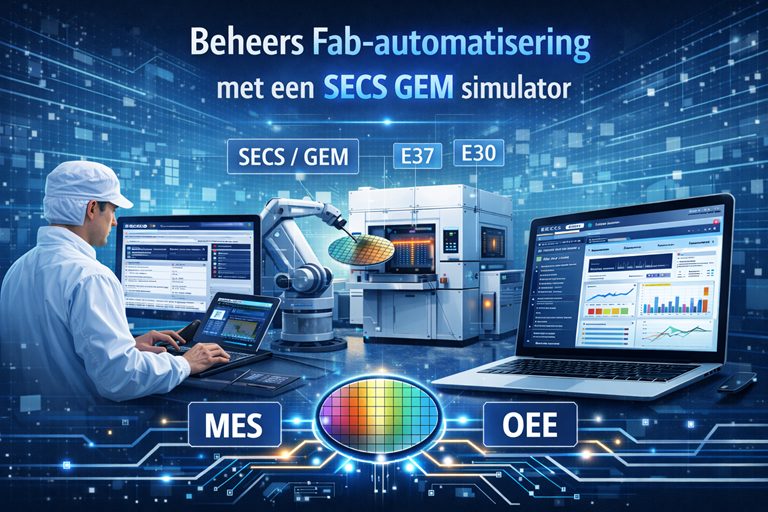
Beheers Fab-automatisering met een SECS GEM-simulator

Samenvatting

Een SECS GEM-simulator fungeert als een cruciale brug voor het testen van communicatie tussen apparatuur en host zonder fysieke hardware.

De tool waarborgt naleving van de SEMI E30-standaard en vermindert het risico op kostbare fouten op de productievloer.

Simulators maken snelle ontwikkeling mogelijk voor apparatuurfabrikanten en fab-automatiseringsingenieurs door complexe scenario’s na te bootsen.

Belangrijke voordelen zijn geautomatiseerde scripttests, berichtlogging en nalevingsvalidatie.

De implementatie van deze tools verkort de time-to-market en verhoogt de algehele efficiëntie van de fab.

Inleiding

Volgens SEMI (2024) bereikten de wereldwijde verkopen van halfgeleiderproductieapparatuur in 2023 een waarde van 106,3 miljard dollar, wat wijst op een sterke verschuiving naar slimmere en beter verbonden fabrieken. Naarmate deze faciliteiten complexer worden, moet de aansturende software foutloos blijven. Een SECS GEM-simulator is het primaire instrument om te verifiëren dat apparatuur en hostsystemen dezelfde taal spreken, nog voordat de eerste wafer de machine binnengaat.

Zonder deze digitale tweelingen staan ingenieurs voor de moeilijke taak om live hardware te debuggen, met risico op dure stilstand of fysieke schade. Deze technologie creëert een virtuele omgeving waarin het SECS GEM-protocol kan worden geanalyseerd, verfijnd en geperfectioneerd. Door het gedrag van zowel een fab-host als de apparatuur zelf te simuleren, biedt de simulator een veilige sandbox voor innovatie.

Fab-automatisering is afhankelijk van nauwkeurige timing en datanauwkeurigheid. Betrouwbaarheid is cruciaal bij nanometerschaal-precisie. Het gebruik van een SECS GEM-testtool zorgt ervoor dat elk bericht, van statusvariabelen tot remote commands, de strikte logica volgt die vereist is voor massaproductie.

Wat is een SECS GEM-simulator?

In de wereld van halfgeleiderproductie is communicatie alles. Een SECS GEM-simulator is een softwaretoepassing die is ontworpen om de SECS/GEM-interface van een stuk halfgeleiderapparatuur (de “equipment-kant”) of het Manufacturing Execution System van de fabriek (de “host-kant”) te emuleren. Hiermee kunnen ontwikkelaars hun software-implementaties testen zonder dat de daadwerkelijke tegenpartij aanwezig hoeft te zijn.

Inzicht in de SEMI E30-standaard

De GEM-standaard (Generic Model for Communication and Control of Manufacturing Equipment), ook bekend als SEMI E30, definieert hoe het SECS GEM-protocol moet worden gebruikt om een consistente interface voor fab-automatisering te bieden. De standaard beschrijft hoe apparatuur moet reageren op hostcommando’s en hoe statusinformatie wordt gerapporteerd. De simulator valideert of de software deze regels volgt en zorgt ervoor dat een tool van Leverancier A voorspelbaar functioneert wanneer deze wordt aangesloten op het netwerk van Fab B.

De rol van SECS-I en SECS-II

De communicatiestack is gelaagd. SECS-I (E4) en HSMS (E37) verzorgen het fysieke datatransport, terwijl SECS-II (E5) de structuur van de berichten definieert. De simulator fungeert als zowel interpreter als actor door deze berichten te genereren en te verifiëren dat de antwoorden overeenkomen met de verwachte resultaten.

Waarom u een SECS GEM-testtool nodig hebt

Testen op de daadwerkelijke productievloer is een kostbare gok. Eén uur stilstand in een moderne fab kan tienduizenden dollars kosten. Door een SECS GEM-testtool te gebruiken, verplaatsen bedrijven het debugproces “naar links” in de ontwikkelcyclus en worden fouten ontdekt wanneer ze nog goedkoop te verhelpen zijn.

Versnellen van de setup voor equipment-hostcommunicatie

Het configureren van equipment-hostcommunicatie vormt vaak een knelpunt tijdens de installatie van tools. Met een simulator kan het host-softwareteam hun drivers ontwikkelen terwijl de hardware nog in een ander land wordt geproduceerd. Zodra de tool arriveert, is de communicatie-interface al bewezen, wat resulteert in een echte “plug-and-play”-ervaring.

Foutinvoer en robuustheidstests

Hoe reageert uw systeem als de netwerkverbinding midden in een proces wegvalt? Of als een tool een ongeldige variabele rapporteert? Een simulator stelt ingenieurs in staat om bewust fouten te injecteren—iets wat men zelden zou durven doen met een lithografiemachine van 100 miljoen dollar. Dit vergroot de robuustheid van de fab-automatiseringssimulatieomgeving.

Belangrijke functies van SECS GEM-simulators

Een hoogwaardige simulator biedt meer dan eenvoudige berichtuitwisseling. Hij levert een complete set tools voor diepgaande analyse en geautomatiseerde validatie.

Berichtlogging en realtime monitoring

Elk S1F1-bericht (“Are You There?”) en S1F2-antwoord (“I Am Here”) moet worden vastgelegd. De simulator biedt een voor mensen leesbaar logbestand van elke uitgewisselde byte. Deze transparantie is essentieel wanneer twee verschillende softwareteams discussiëren over wie de handshake heeft laten crashen.

Scripting en automatisering van testcases

Handmatig testen is traag. Geavanceerde SECS GEM-simulators ondersteunen scripttalen zoals Python of C#. Hierdoor kunnen QA-teams bibliotheken met testcases opzetten die automatisch draaien bij elke software-update. Als een ontwikkelaar de logica van een “Remote Command” breekt, detecteert de geautomatiseerde testsuite dit binnen enkele seconden.

Nalevingstests voor SEMI-standaarden

Veel simulators bevatten ingebouwde nalevingscontroles voor de SEMI E30-standaard. Deze modules doorlopen een checklist van verplichte GEM-vereisten, zoals State Models en Event Reporting, om te garanderen dat de apparatuur “GEM-compliant” is.

De voordelen van fab-automatiseringssimulatie

Volgens een rapport van Gartner (2023) verkorten digitale tweelingen en simulatieomgevingen de systeemintegratietijd met tot wel 30%. In de halfgeleiderindustrie betekent dit een snellere “Time to Money” voor nieuwe faciliteiten.

Scenario 1 – Ontwikkeling van equipment-software

Voor apparatuurfabrikanten fungeert de simulator als de fab-host. Hij kan remote start-commando’s verzenden, data opvragen en alarmen bevestigen. Hierdoor kan de interne besturingssoftware van de apparatuur volledig worden getest voordat deze de fabriek verlaat.

Scenario 2 – Testen van fab-hostsystemen (MES)

Fab-automatiseringsingenieurs gebruiken de SECS GEM-simulator juist om een vloot machines te simuleren. Zij kunnen een fabriek met bijvoorbeeld 50 tools nabootsen om te zien of het MES de databelasting aankan. Deze stresstests zijn essentieel om een hoge doorvoer te behouden.

Technisch inzicht: SECS/GEM debuggen zonder simulator is als het proberen op te lossen van een puzzel van 5.000 stukjes met een effen blauwe lucht, terwijl je wanten draagt. Het is technisch mogelijk, maar waarom zou iemand zichzelf dat aandoen?

Datavergelijking – handmatig vs. gesimuleerd testen

De onderstaande tabel toont de efficiëntiewinst bij de overgang van handmatig, hardware-gebaseerd testen naar het gebruik van een gespecialiseerde SECS GEM-testtool.

Het selecteren van de juiste SECS GEM-protocoltools

Bij het kiezen van een simulator moet men verder kijken dan alleen de prijs. De beste tools bieden flexibiliteit, ondersteuning voor de nieuwste HSMS-standaarden en een gebruiksvriendelijke interface.

Ondersteuning voor meerdere standaarden

Hoewel GEM de basis vormt, vereisen moderne fabs vaak aanvullende standaarden zoals GEM300 (E87, E40, E94, E90). Uw SECS GEM-simulator moet deze geavanceerde state-modellen aankunnen zonder voor elk bericht maatwerkcode te vereisen.

Gebruikersinterface en visualisatie

Een omslachtige, alleen-tekstinterface vertraagt de voortgang. Zoek naar tools die state-machines visualiseren en duidelijke, boomstructuur-weergaven van SECS-II-berichtstructuren bieden. Het begrijpen van de hiërarchie van een complex S16F15-bericht is veel eenvoudiger wanneer deze visueel wordt weergegeven.

Toepassingen in geavanceerde productie

Naarmate we richting Industrie 4.0 bewegen, breidt de rol van fab-automatiseringssimulatie zich uit naar voorspellend onderhoud en AI-gedreven optimalisatie.

Virtuele inbedrijfstelling

Virtuele inbedrijfstelling omvat het testen van de volledige besturingslogica van een productielijn vóór fysieke installatie. De SECS GEM-simulator levert de datastroom die nodig is om deze virtuele modellen te voeden. Zo wordt gegarandeerd dat de logica voor materiaalafhandeling en toolverwerking gesynchroniseerd is.

Training en opleiding

Nieuwe ingenieurs hebben een veilige leeromgeving nodig. Simulators bieden een risicovrije leeromgeving waarin zij het SECS GEM-protocol kunnen verkennen zonder angst om een noodstop te activeren op een live productielijn. Dit versnelt het inwerkproces voor fab-automatiseringsteams.

Regressietests

Elke keer dat een softwarepatch wordt uitgebracht, bestaat de kans op “regressie”, waarbij oude bugs terugkeren of nieuwe ontstaan. Geautomatiseerde simulatiesuites zorgen ervoor dat nieuwe functies bestaande, stabiele communicatiepaden niet verstoren.

Conclusie

In de high-stakes omgeving van halfgeleiderproductie is precisie de enige valuta die telt. Een SECS GEM-simulator biedt ontwikkelaars en ingenieurs het noodzakelijke vangnet en zorgt ervoor dat software robuust, compliant en klaar is voor de eisen van de cleanroom. Door een SECS GEM-simulator in uw workflow te integreren, elimineert u giswerk en richt u zich op wat echt belangrijk is: opbrengst en doorvoer.

Wilt u equipment-hostcommunicatie sneller testen, SEMI-naleving garanderen en implementatierisico’s verminderen? Ons team biedt professionele SECS GEM-simulatoroplossingen en maatwerk integratieservices voor OEM’s en fabs.

👉 Vraag vandaag nog een demo of technisch consult aan en ontdek hoe u uw automatiseringsprojecten kunt versnellen.

Veelgestelde vragen

Kan ik een SECS GEM-simulator gebruiken om GEM300-standaarden te testen?

Ja. De meeste professionele simulators ondersteunen de GEM300-suite, waaronder E40 (Process Job Management), E87 (Carrier Management) en E94 (Control Job Management). Deze zijn essentieel voor 300mm-waferfabs die geautomatiseerde materiaalafhandelingssystemen (AMHS) gebruiken.

Is een simulator beter dan testen op de daadwerkelijke apparatuur?

Simulatie is een vereiste, maar geen volledige vervanging. Het vangt ongeveer 95% van de logica- en protocolfouten af. Een laatste validatie op de fysieke hardware blijft echter noodzakelijk om rekening te houden met hardware-specifieke timing en sensornuances.

Vereist een SECS GEM-simulator speciale hardware?

Nee. De meeste moderne simulators draaien op standaard Windows- of Linux-werkstations. Ze communiceren via TCP/IP met behulp van het HSMS-protocol, wat betekent dat geen gespecialiseerde seriële kabels nodig zijn, tenzij u legacy SECS-I (RS-232)-apparatuur test.

Kunnen deze tools meerdere machines tegelijk simuleren?

Geavanceerde simulators kunnen meerdere “instanties” starten, elk met een eigen IP-adres of Device ID. Dit maakt grootschalige fab-belastingstests mogelijk.

全面 SECS/GEM 模擬器指南:功能與優勢

摘要

  • 關鍵測試基礎設施:SECS/GEM 模擬器提供一個無風險的數位環境用於半導體設備測試,以軟體模型取代昂貴的硬體。 
  • 協定遵循:這些工具驗證 GEM 協定功能,確保 Host(MES)與設備之間的無縫通訊。 
  • 效率提升:透過使用模擬,晶圓廠與 OEM 可以減少停機時間,加速部署,並避免對昂貴矽晶圓造成實體損害。 
  • 可擴展性與高量能:現代模擬器支援大量資料收集與多執行緒通訊情境,這在 300mm 製程中相當常見。
  • 策略性部署:實施模擬器可加速 OEM 的「到廠時間」(Time to Fab),並簡化自動化工程師的整合工作。

前言

根據 Statista (2024) 的資料,全球半導體市場的估值已超過 6,000 億美元,僅製造設備的銷售就突破 1,000 億美元。隨著設施朝向完全自動化邁進,完美的機器到 Host 通訊需求變得至關重要。在這種情況下,高效能的 SECS/GEM 模擬器成為任何整合團隊不可或缺的資產。 

在製造執行系統(MES)與產線設備之間建立可靠連線常常充滿語法錯誤與時序問題。若為了每一項小的軟體調整都依賴實體硬體,將注定導致昂貴的延遲。相反地,基於軟體的模擬提供了一種用於協定驗證的數位雙生(digital twin)方法。 

現代晶圓廠自動化工具必須處理持續不斷的資料報告與警報觸發。如果開發人員試圖在實際生產線上測試這些功能,便有可能中斷價值數百萬美元的製程。模擬器允許在接觸矽晶圓之前,以安全的試誤方式完善複雜的通訊序列。

SECS/GEM 模擬器的架構

在其核心,該軟體模擬半導體設備或 Host 電腦的行為。它能夠使用 SECS-II(SEMI E5)與 HSMS(SEMI E37)語言,這些是產業的基礎。透過建立設備的虛擬版本,工程師可以觸發在現實中危險或難以複製的情境。

SECS-II 與 HSMS 支援

強大的 SECS/GEM 軟體套件必須同時處理高速 SECS 訊息服務(HSMS)以及較舊的 SECS-I 串列協定。HSMS 是 300mm 晶圓廠中 TCP/IP 通訊的標準,允許快速的資料交換。模擬器扮演 socket 層的監聽端或發起端,建立進一步對話所需的「握手」。 

模擬器維持 SEMI 標準要求的狀態機。它追蹤設備是處於「Local」或「Remote」模式並作出相應回應。這可防止 Host 在機台處於人工維護時試圖啟動製程。

訊息記錄與除錯

工程師使用設備通訊模擬器的主要原因之一是其日誌功能。當訊息失敗時,軟體會提供 SML(SECS Message Language)標記的詳細追蹤。這讓開發者能精確看到是哪個資料變數遺失或為何標頭格式錯誤。 

在筆電螢幕上修正「格式錯誤」,遠比在潔淨室地板上排查一台凍結的機器容易。這些日誌可匯出並在 OEM 與晶圓廠團隊之間分享,以釐清介面哪一側發生故障。此透明度減少相互指責並加速達到「準備生產」的里程碑。

SECS/GEM 模擬器的關鍵功能

現代模擬工具不僅僅是簡單的訊息發送器。它是一整套設計用來模擬工具的各種特性。從狀態變數到複雜的警報樹,模擬器必須提供設備數位介面的完整表示。

動態變數管理

每一台半導體設備都有數百個狀態變數(Status Variables, SV)與設定變數(Equipment Configuration Variables, ECV)。高品質的模擬器允許工程師即時變更這些值。你可以模擬泵浦壓力下降或雷射溫度上升,觀察 Host 軟體的反應。

SML 腳本與自動化

為何要手動發送訊息,當你可以腳本整個配方序列?進階模擬器具有腳本引擎,允許自動化回歸測試。你可以撰寫模擬 24 小時生產週期的腳本,發送數千條訊息,以確保 MES 在負載下不會出現記憶體洩漏或當機。

多節點能力

在現代晶圓廠中,單一 Host 會與數百台工具通訊。功能強大的 SECS/GEM 模擬器可以在單一伺服器上啟動多個虛擬設備實例。這讓自動化管理者能測試其網路基礎設施的可擴展性。MES 是否能夠處理在同一時間由 50 台設備同時傳送「Alarm Set」訊息?模擬提供答案。

核心功能與 GEM 協定功能

製造設備通訊與控制的一般模型(GEM)定義了機器應如何行為。模擬器必須不只是發送原始位元組;它必須理解訊息背後的邏輯。這包括狀態機管理與事件驅動的報告。

遠端控制與資料收集

有效的 GEM 協定功能包括 Host 可以遠端啟動或停止製程的能力。模擬器允許 MES 開發者發送遠端命令(Remote Command),並觀察虛擬設備是否以正確的命令確認碼(Command Acknowledge)回應。同樣地,它可以模擬高頻資料串流,仿真每毫秒回報溫度讀值的感測器。

警報管理與安全機制

測試工廠對災害的反應至關重要。你幾乎不可能真的放火燒一座爐子來檢查 MES 是否捕捉到警報。使用模擬器,你可以用滑鼠點擊就觸發「致命錯誤」或「安全互鎖」。這能驗證工廠軟體是否正確通知操作員並中止相關的生產步驟。

訊息佇列(Spooling)與資料完整性

當網路連線中斷時,設備必須「排隊(spool)」其訊息並在連線恢復後發送。用實體硬體測試這種邏輯通常非常困難。模擬器允許你刻意斷開 TCP 連線、等待虛擬工具填滿其緩衝區,然後重新連線以驗證停機期間是否沒有資料遺失。

為何晶圓廠依賴 SECS/GEM 模擬器技術

OEM 與半導體晶圓廠之間的關係如同規格之舞。OEM 需要證明其工具符合晶圓廠的自動化需求。晶圓廠則需確保新工具能與其現有 Host 正常通訊而不會導致系統性當機。

加速開發週期

對於 OEM 軟體團隊而言,等待工具的機械組裝完成才能開始軟體測試是一個巨大的瓶頸。透過使用 SECS/GEM 模擬器,軟體團隊可以在實體硬體仍處於設計階段時撰寫並測試整個通訊介面。這種平行處理能把總開發時程縮短數月。

驗證 MES 更新

晶圓廠自動化管理者經常更新其 MES 或中介軟體以提升效率。在將更新推上線之前,他們會使用模擬器來代表工廠中每種工具型式。這確保針對量測工具的變更不會意外破壞與化學氣相沉積(CVD)系統的通訊。

詳細的半導體設備模擬情境

要真正理解其價值,必須檢視模擬器防止災難發生的具體情境。這些使用案例超越了簡單的連通性檢查,深入高量能製造的邏輯。

情境 1:「幽靈」訊息

有時 Host 會傳送設備無法識別的訊息。在現場環境中,設備可能會直接忽略該訊息,或進入不可復原的錯誤狀態。模擬器能即時識別這類「Unknown Stream/Function」錯誤,使開發者在工具出貨前就能對缺失的訊息進行對映。

情境 2:高量事件回報

在高吞吐量製程中,工具每分鐘可能產生數百條事件報告(S6F11)。半導體設備模擬可以配置為對 Host 進行「壓力測試」。透過淹沒 Host 的事件,工程師可以識別出資料庫或網路交換器中的瓶頸,這些瓶頸在真實生產環境會導致資料延遲。

情境 3:配方參數驗證

晶圓廠使用複雜的配方來控制晶圓上的化學與物理製程。如果 Host 傳送的配方參數超出範圍,工具必須拒絕它。模擬器允許你測試這些邊界條件。你可以驗證當 Host 要求攝氏 5000 度的溫度時,工具是否正確回送 S7F4(Recipe Parameter Error)。

高量產製造中模擬的投資報酬率(ROI)

根據 Gartner (2023) 的報告,高端製造的停機成本每分鐘可高達 1 萬美元。在半導體晶圓廠中,一批晶圓的價值可達數十萬美元,風險更高。模擬器在首次捕捉到可能導致「報廢」事件的邏輯錯誤時,便足以回本。

縮短現場整合時間

當工具抵達晶圓廠時,「掛接(Hook-up)」階段是與時間賽跑。如果通訊介面失敗,工具將閒置,消耗空間與電力卻無法產生收益。使用模擬器進行出貨前測試可確保工具在上線時能做到「即插即用」。

無風險培訓

在實體設備上訓練新自動化工程師充滿壓力。模擬環境創造了一個安全的「沙盒」,讓他們可以探索 SECS/GEM 的細節而不必擔心觸發硬體碰撞。他們有練習空間。工程師可以反覆練習發送 S1F3(Selected Status Request)與閱讀 S6F11(Event Report)訊息,一次又一次,直到語法變得自然。幾乎變成自動化的。

選擇合適的 SECS/GEM 軟體

選擇正確的工具實際上取決於你在半導體生態系中的角色。情境在此非常重要。有些選項較為輕量,為簡單的命令列工具;另一些則為功能完整的套件,包含圖形使用者介面、儀表板與更深入的控制。不同工作。不同需求。

建議選擇的功能:

  • SML 腳本:能撰寫自訂腳本以自動化複雜的訊息序列,特別是在工作流程凌亂時。 
  • 合規測試:內建 SEMI E4、E5、E30 與 E37 標準的檢查,讓問題及早浮現而非事後才發現。 
  • 變數模擬:允許你即時變更狀態變數(SV)與資料變數(DV),而無需重新啟動或重新配置所有內容。 
  • 多節點模擬:能從單一工作站模擬多台設備。單一系統,眾多節點。

克服常見的實施挑戰

儘管好處明顯,一些團隊仍因為設置所需時間而猶豫採用模擬。為複雜工具建立虛擬模型需要準確的 GEM 手冊。然而,在模擬器中定義變數與事件所花的努力,與為晶圓廠撰寫工具文件所需的努力相同。

處理非標準實作

有時較舊的工具使用一種偏離標準的 SECS/GEM「風格」。彈性的設備通訊模擬器允許工程師覆寫標準行為以符合這些舊有的怪癖。對於同時維持新 300mm 工具與舊 200mm 設備混合的晶圓廠而言,這點至關重要。

安全性與網路設定

現代晶圓廠網路高度安全。非常安全。模擬器為工程師提供一個實際的方式來測試防火牆與連接埠配置而無風險。透過模擬來自不同網路區段的 Host,團隊可以驗證 HSMS 流量是否通過必要的安全層並不會被阻擋。這比聽起來還要重要。

結論

SECS/GEM 模擬器是連接複雜工廠軟體與精密製造硬體之間的不可或缺工具。它創造了一個安全、可重複且深度分析的測試環境。在那裡工程師可以嘗試與突破界限,而不必時時擔心生產停機。這份自由改變了團隊的工作方式。無論你是推動更快工具驗收的 OEM,或是優化複雜 MES 的晶圓廠經理,模擬成為靜默的推手。真正解鎖自動化效率的關鍵,確實在於此。

Contact Us Today

獲取逐步指導,快速掌握 SECS/GEM 模擬器


SECS/GEM Simulator Introduction and Features

[vc_row][vc_column width=”1/2″][vc_column_text css=””]In semiconductor manufacturing, reliable communication between equipment and host systems is essential for productivity, compliance, and automation. SECS/GEM (SEMI Equipment Communication Standard / Generic Equipment Model) provides the foundation for this communication. However, validating SECS/GEM implementation on new or legacy equipment can be time-consuming and complex.

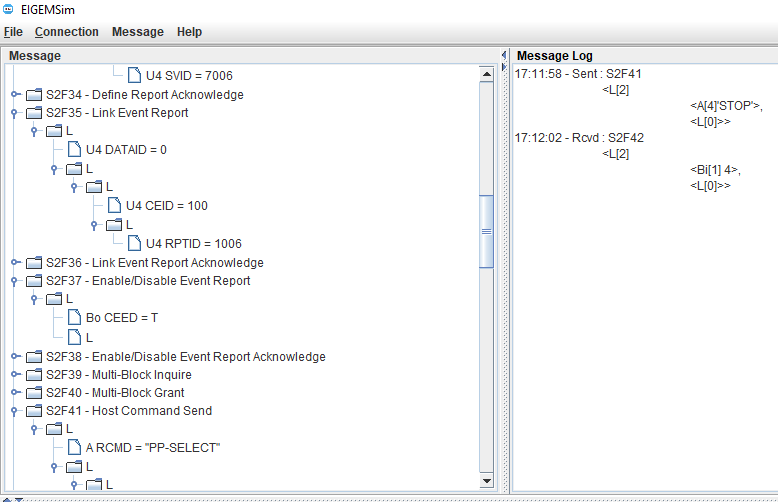
To address this, EINNOSYS has developed EIGEMSim, a powerful SECS/GEM simulator designed to help OEMs, fabs, and assembly/test facilities test and verify SEMI compliance. With EIGEMSim, engineers can simulate both equipment and factory host environments, making it an indispensable tool for development, integration, and testing.[/vc_column_text][/vc_column][vc_column width=”1/2″][vc_single_image image=”37139″ img_size=”full” alignment=”center” css=””][/vc_column][/vc_row][vc_row][vc_column][vc_column_text css=””]What is EIGEMSim?

EIGEMSim is a software application that allows seamless testing of SECS/GEM communication. Depending on the use case, it can be configured to act either as the equipment or as the factory host. This flexibility enables teams to validate their integration scenarios without requiring a physical host system or equipment during early development stages.

The simulator supports creation, configuration, transmission, and receipt of SECS messages. To simplify operations, EIGEMSim uses a Message Dictionary, which facilitates message transfers and ensures accuracy in communication testing.[/vc_column_text][vc_column_text css=””]Creating and Configuring SECS Messages

One of the strengths of EIGEMSim is its flexibility in creating and configuring messages. Engineers can:

Use a built-in wizard that guides them step-by-step in defining SECS messages.

Or, write messages in SML (SEMI Markup Language) format using any text editor and then import the SML file directly into EIGEMSim.

This dual approach caters to both beginners and advanced users, providing efficiency and control during development. All messages sent and received are automatically logged, giving developers a complete record for analysis and troubleshooting.[/vc_column_text][/vc_column][/vc_row][vc_row][vc_column][vc_column_text css=””]Key Features of EIGEMSim

EIGEMSim comes packed with features that simplify SECS/GEM compliance testing and integration:

✅ Cross-Platform Support – Runs seamlessly on both Windows and Linux environments.

✅ Pre-Configured Messages – Includes the most commonly used SECS messages, helping users start compliance testing quickly.

✅ User-Friendly Interface – Intuitive design for easy configuration and message transmission.

✅ Dual Configuration – Can be set up as equipment or factory host, depending on the testing scenario.

✅ Comprehensive Logging – Records all incoming and outgoing messages for review, debugging, and documentation.[/vc_column_text][/vc_column][/vc_row][vc_row][vc_column][vc_column_text css=””]Why Choose EIGEMSim?

For OEMs and fabs, validating SEMI compliance is critical before deploying equipment in production environments. Traditional testing methods can be slow and require multiple hardware components. EIGEMSim removes these bottlenecks by providing a software-only, configurable simulator that reduces both time-to-market and testing costs.

With its ability to simulate different roles (equipment or host) and its ready-to-use message library, EIGEMSim accelerates development while ensuring compliance with SEMI SECS/GEM standards.

SECS/GEM integration is at the heart of modern semiconductor factory automation, and reliable testing tools are key to ensuring success. EIGEMSim by EINNOSYS empowers equipment manufacturers, fabs, and assembly/test facilities to streamline compliance testing, reduce complexity, and achieve faster integration.

Whether you’re developing new semiconductor equipment, upgrading legacy systems, or validating host communication, EIGEMSim offers the flexibility and reliability you need.

👉 Learn more about EIGEMSim and other SECS/GEM solutions from EINNOSYS at einnosys.com[/vc_column_text][/vc_column][/vc_row]